Solar panels vs solar roof tiles: Choosing the right solar option
A comparison of solar panels vs solar roof tiles is crucial for saving energy and generating environmentally friendly electricity for your home or office in Australia, as choosing the right system ensures the cost, beauty, durability, and long-term energy savings of your home. Both technologies convert sunlight into electricity, but they differ in design, installation costs, and maintenance, which play a key role in choosing the most effective and cost-effective option for homeowners.
Solar Panels vs Solar Roof Tiles – Basic Overview
Solar Panels vs Solar Roof Tiles are two of the main options in modern solar technology that are used by Australian residents to generate electricity for their homes or offices, and understanding the differences between them helps buyers make the right decision. Both systems convert sunlight into energy, reduce electricity bills, and keep the environment clean. Typically, solar panels are installed as separate units on the roof, while solar roof tiles become part of the roof itself, providing a single, beautiful look.
Both technologies use different materials and installation methods, which affect performance, durability, and cost. The amount of energy produced depends on the weather, roof orientation, sunlight, and the efficiency of the technology used. Considering the Australian climate, both systems can be cost-effective solutions in the long term, but the right option should be chosen based on design and personal preference.
What Are Solar Panels
Solar panels are devices that generate electricity from sunlight and are usually installed on a roof as modules, creating a rooftop solar system. They are highly effective at generating electrical energy, as each panel absorbs sunlight and helps increase the system’s efficiency. The panels are easy to install and fit almost all types of roofs, helping to meet the electricity needs of a home or office. They are easy to maintain and often last a long time. In a power generation system, it is possible to maximize each panel’s energy capacity by choosing the right location and angle.
What Are Solar Roof Tiles
Solar roof tiles become part of the roof directly, providing beauty and power generation through building-integrated photovoltaics technology. They are specially designed to look like a single unit, not panels, and to blend perfectly with the house’s overall look. Tesla Solar Roof Australia is a popular brand in the Australian market, known for its high durability and powerful performance. Each tile absorbs sunlight and generates electricity, which is directly connected to the house’s electrical system. Although their installation is usually more expensive than panels, it can be cost-effective in the long run due to their beauty and durability.
Cost Comparison in Australia
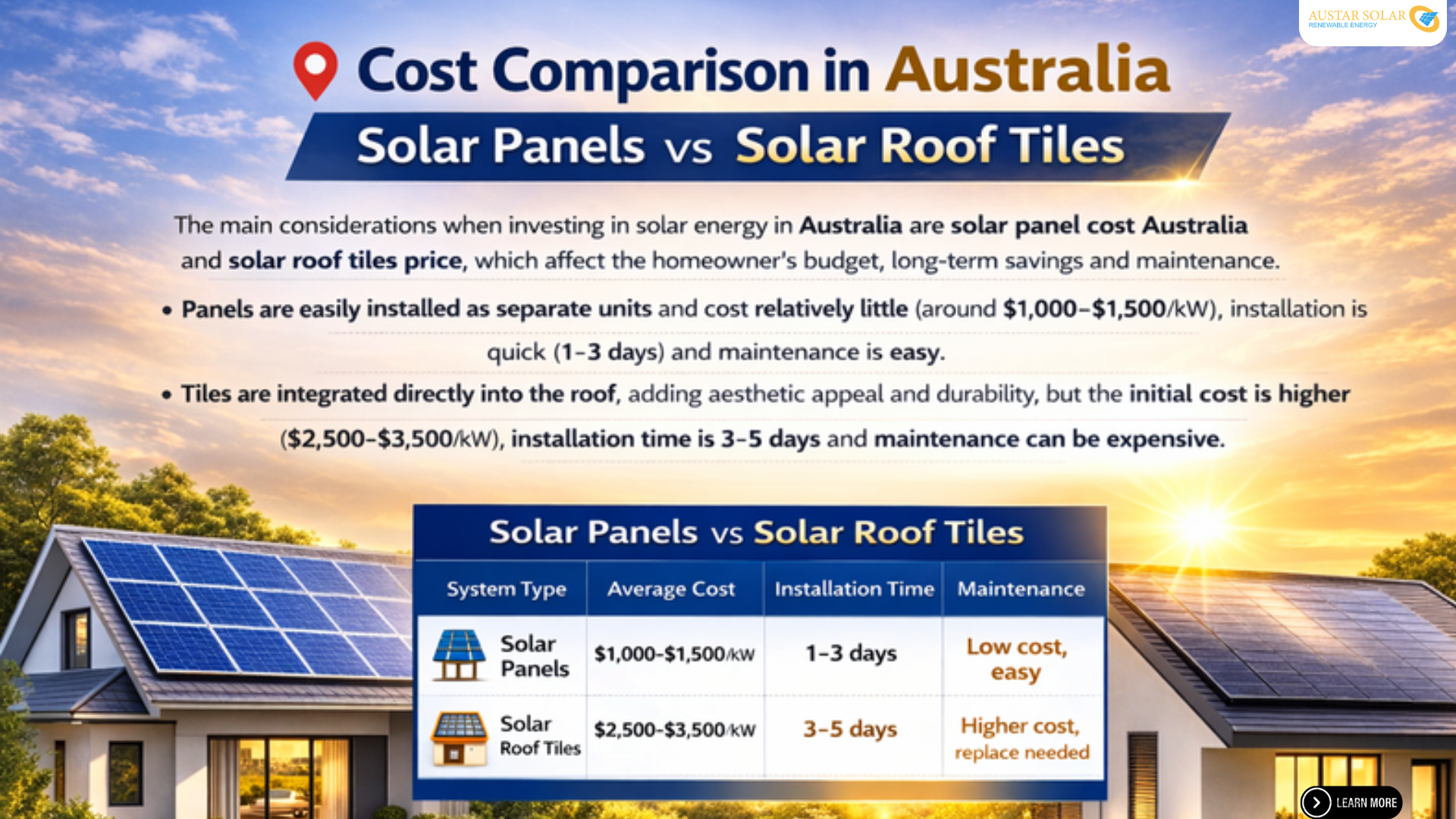
The main considerations when investing in solar energy in Australia are the cost of solar panels and the price of solar roof tiles, which affect homeowners’ budgets, long-term savings, and maintenance. Panels are easily installed as separate units and cost relatively little (around $1,000–$1,500/kW). Installation is quick (1–3 days), and maintenance is easy. Tiles are integrated directly into the roof, adding aesthetic appeal and durability, but the initial cost is higher ($2,500–$3,500/kW), installation time is 3–5 days, and maintenance can be expensive. Now the difference is clarified through the table:
Installation Cost Comparison
| System Type | Average Cost | Installation Time | Maintenance |
| Solar Panels | $1,000–$1,500/kW | 1–3 days | Low cost, easy |
| Solar Roof Tiles | $2,500–$3,500/kW | 3–5 days | Higher cost, replacement needed |
- Initial investment difference: Panels have a lower initial cost compared to tiles.
- Long-term value: Tiles are more durable and long-lasting.
- Repair cost variation: Tile replacement is expensive if damaged, but panels can be easily repaired.
Panels are initially cost-effective and can be installed quickly. At the same time, tiles have a higher upfront cost but are long-term cost-effective due to their durability, aesthetics, and property value.
Energy Efficiency & Performance
The main goal of home solar power in Australia is to maximize electricity generation and long-term savings, thereby reducing electricity bills and protecting the environment. Panels are generally efficient at producing large amounts of energy and are easy to maintain, while tiles can enhance a home’s beauty and value but produce slightly less energy. Proper location, roof angle, and local weather conditions ensure the durability and effectiveness of both systems, resulting in a consistent energy supply and long-term cost savings.
Power Output Comparison
Solar panels generally deliver high power output per unit, and increasing the number of panels makes it easier to meet the house’s total power demand. Each module absorbs sunlight and directly generates electricity, thereby increasing the efficiency of the entire rooftop solar system. The location, angle, and size of the panels are considered to ensure stable power generation and power per kilowatt.
Solar roof tiles generate electricity from each tile, working in harmony with the house’s aesthetics. Although the power output may be slightly lower than that of panels, modern technology can still achieve high solar energy efficiency.
Weather Performance in Australia
Weather differences across Australia’s regions affect power generation. Hot, dry, or humid weather can affect the performance of both systems, but modern solar panels are resistant to heat and humidity. The panels can maintain stable power generation during heavy rain, storms, or temperature fluctuations.
Solar roof tiles are similarly weather-resistant, but the tiles have higher installation and replacement costs to consider. When installed in the right location, both systems provide a stable, reliable power supply that effectively meets the home’s daily energy needs.
Design & Aesthetic Appeal
- Compact Design: The panels are mounted on the roof as a separate unit, making installation easy and compatible with the roof system.
- Seamless Integration: The tiles become part of the roof directly, which provides a single beautiful look and enhances the elegance of the home.
- Color & Finish Options: Tiles and panels come in a variety of colors and finishes that perfectly match the home’s outdoor design.
- Property Value Impact: The property’s market value can also increase significantly due to increased beauty.
Considering the design and beauty, tiles give a premium look and a unified appearance, and panels ensure easy installation and functionality. The right option should be chosen according to the home environment and personal preferences.
Durability & Lifespan
- Material Strength: Both tiles and panels are made using premium materials that can withstand heavy rain, storms, and temperature fluctuations.
- Longevity: Panels typically have a lifespan of 25–30 years, while tiles can last more than 30 years.
- Maintenance Frequency: Panels are easy to clean and inspect, while tiles require more frequent attention.
- Weather Resistance: Both systems can withstand heat, humidity, and UV rays, which maintains power production over the long term.
With high-quality components and proper installation, both systems ensure a long-term, efficient, and reliable power supply. Tiles offer premium benefits in durability and beauty, while panels ensure easy maintenance.
Installation Process
Following the correct steps in the home solar installation process is very important, as it ensures the system’s effectiveness and longevity. Solar panels are generally installed on the roof as separate units, whereas tiles become a direct part of the roof and provide complete integration. If the installation process is not done properly, the energy production can be reduced, and the need for maintenance increases.
Installation Step Comparison
| Step | Panels | Tiles |
| Preparation | Roof inspection and cleaning | Roof assessment and planning |
| Mounting | Install mounting racks | Remove the old roof and lay tiles |
| Panel/Tile Placement | Attach panels to racks | Place tiles with electrical wiring |
| Wiring & Connection | Connect to the inverter & system | Integrate with the home electrical system |
| Final Testing | Power output check | System performance check |
For example:
- Preparation: In both cases, it is essential to check the roof’s condition to ensure durability.
- Mounting: Panels can be easily installed on racks; tiles require prior changes to the roof infrastructure.
- Placement: Panels are installed as separate units, and tiles are integrated to enhance aesthetics.
- Wiring & Connection: Both systems ensure electrical connectivity, but tiles are directly integrated into the house’s electrical system.
- Final Testing: In the final step, the power output is tested to ensure proper functionality.
Panel installation is quick and easy; tiles require more time and effort to install, but they ensure beauty and complete integration, which increases the property’s value and energy savings in the long run.
Government Rebates & Incentives
The Australian government offers a variety of solar rebates and incentives to encourage investment in solar energy systems, which can help reduce the initial cost for homeowners. These rebates typically vary by home location, system capacity, and the type of government program. Both panels and tiles are eligible for these incentives, but the terms and conditions of the process and application process may differ.
- Federal Incentives: Direct payments or tax credits are available from the national government, which cover a large portion of the installation cost.
- State Rebates: Various state government schemes incentivize the installation of panels or tiles, with incentives that vary by local regulations.
- Feed-in Tariffs: Income can be earned by selling excess electricity generated to the grid, which increases savings in the long run.
With these rebates and incentives, homeowners can reduce the upfront cost and ensure long-term energy savings.
By using government rebates and incentives, Australian homes can more cost-effectively adopt solar power, thereby reducing energy costs and helping protect the environment.
Maintenance Needs
Regular maintenance is essential for the long-term performance of solar energy systems, ensuring stable electricity generation and long-term solar power savings. Solar panels generally require little maintenance, as they are mounted on the roof as separate units and are easy to clean. Energy production can temporarily decrease if dust, leaves, or bird droppings accumulate on the panels, so a quick inspection every six months is sufficient.
Solar roof tiles require relatively more attention because they are integrated. Professional inspection may be required to detect damage or cracks, as tile replacement is expensive and time-consuming. Regular and proper maintenance of both systems ensures reliable power output and extends equipment longevity.
- Cleaning: Maximum power output can be maintained by removing dust and debris.
- Inspection: Panels or tiles should be inspected for cracks, damage, or loose connections.
- Professional Service: A complete inspection and repair by a professional once a year is effective.
Regular maintenance and professional inspections ensure both systems maintain consistent power output, leading to cost savings and sustainability in the long run.
Property Value Impact
Installing a solar power system not only reduces your electricity bill but can also significantly increase the market value of your property. Many buyers consider energy efficiency, beauty, and long-term savings when buying a home in Australia. Choosing the right Solar Panels vs Solar Roof Tiles can increase both the attractiveness and investment value of your home.
- Increased Market Appeal: Homes with installed solar systems are more attractive to buyers, increasing the likelihood of a quick sale.
- Higher Resale Value: Both tiles and panels increase a property’s market value, but the tiles’ premium look yields greater long-term growth.
- Energy Efficiency Recognition: Energy efficiency and energy savings create a positive perception among home buyers.
- Sustainability Factor: Using environmentally friendly technology increases a home’s value and social acceptance.
Properly installing Solar Panels vs. Solar Roof Tiles can increase the beauty, energy efficiency, and market value of your home, ensuring long-term savings and investment value.
Comparative Analysis of Solar Panels vs Solar Roof Tiles in Australia
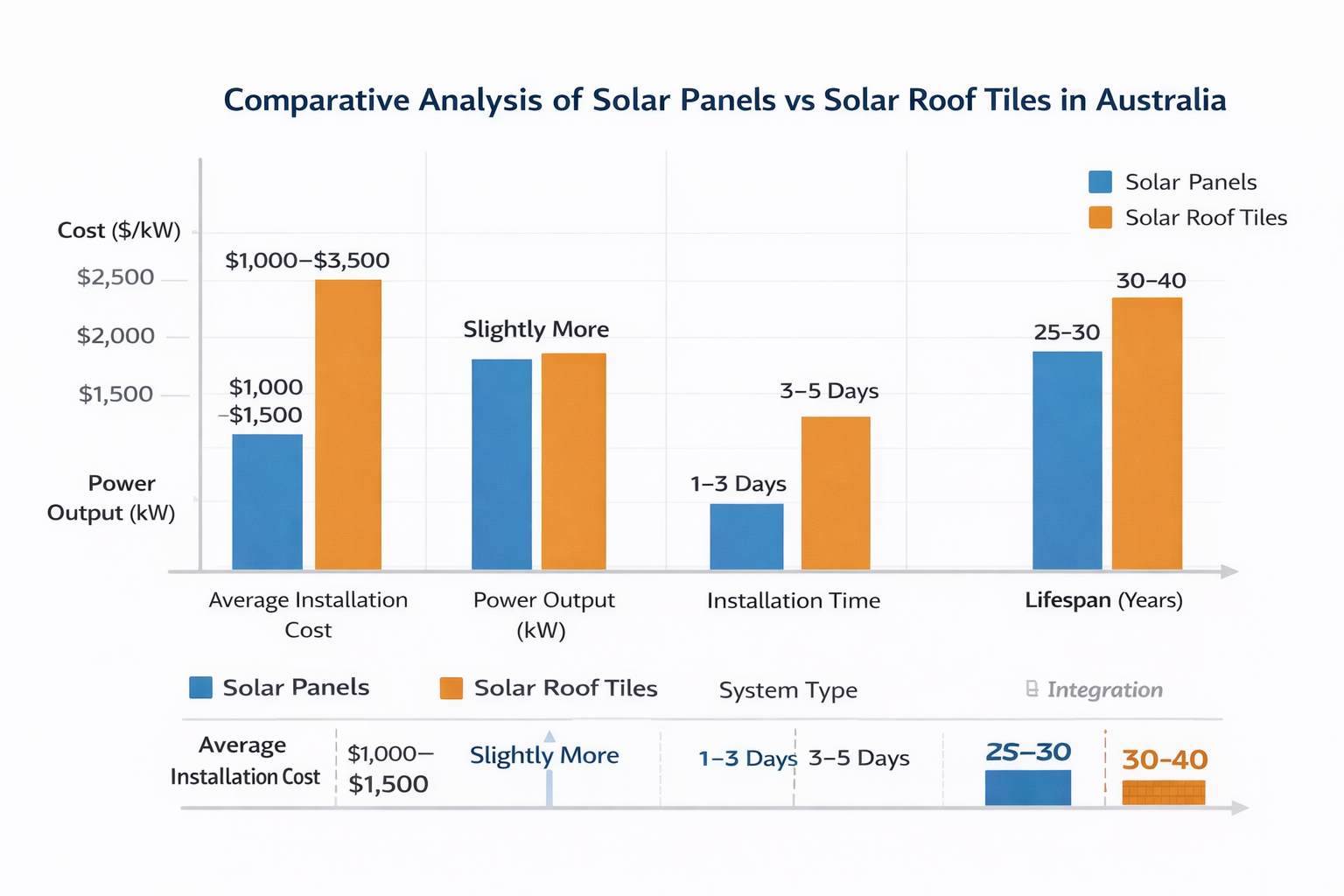
This graph compares solar panels vs solar roof tiles in Australia on four key aspects: Installation Cost, Power Output, Installation Time, and Lifespan. Panels are quick to install, cost less, and generate power faster, while tiles offer premium aesthetics, durability, and increased property value, albeit at a higher cost.
- Installation Cost: Panels cost relatively less; tiles have a higher initial cost.
- Power Output: Panels produce slightly more power; tiles provide about the same performance.
- Installation Time: Panels install quickly (1–3 days), tiles take longer (3–5 days).
- Lifespan: Tiles have a longer lifespan (30–40 years), and panels have a lifespan of 25–30 years.
- Overall Insight: Panels are simple, less expensive, and ensure faster power generation; tiles have a premium look, durability, and increased property value.
Which Is the Best Solar Option for Homes
Choosing the right solar energy option for homes in Australia is very important, as it affects the home’s cost, energy production, and property value. There are two main options on the market: separate solar panels and integrated solar roof tiles. To make the right choice, it is necessary to determine the best solar option for homes.
- Cost Efficiency: Panels have a low initial cost and are quick to install, making them a great choice for budget-conscious homeowners.
- Design & Aesthetics: Tiles become a direct part of the roof and enhance the home’s beauty, providing a premium look and increasing property value.
- Energy Output: Panels are generally more efficient at generating energy and can be easily scaled up for larger systems.
- Durability: Tiles are durable and weather-resistant, ensuring long-term durability.
- Maintenance: Panels are easy to maintain and cost-effective, while tiles require more attention to maintain.
- Government Incentives: Both systems are eligible for government rebates and incentives, but the process and terms may vary.
The right option depends on the homeowner’s budget, roof size, aesthetics, and long-term savings goals. If cost and easy installation are the main objectives, panels are a good fit. If premium look and durability are the main considerations, tiles are best. In this way, it is possible to ensure the right investment by determining the best solar option for homes.
FAQs
Which system costs less in Australia?
Solar panel costs in Australia are relatively low, making them suitable for homeowners’ budgets for small- to medium-sized systems. Panel installation is quick and easy, reducing the initial cost, while solar roof tiles are expensive and can be costly for the premium look and durability they offer.
Are solar roof tiles durable?
Solar tiles are highly durable, ensuring longevity. The tiles can withstand weather stress, temperature fluctuations, and heavy rain. With proper installation and regular maintenance, they can produce reliable electricity for more than 30 years, ensuring long-term energy savings.
Do panels produce more electricity?
Solar panels generally provide high solar energy efficiency and increase energy production per unit. Electricity production is stable, depending on the location, angle, and roof size of the panels, which reduces electricity bills in the long run and effectively meets the home’s daily needs.
Are roof tiles better for design?
Solar roof tiles become part of the roof and provide a seamless, premium look. They enhance the home’s elegance and increase the property’s market value. It is the preferred option for design-conscious homeowners, where beauty and energy production are ensured together.
What about Tesla Solar Roof Australia?
Tesla Solar Roof Australia is a premium, integrated system that provides beauty, durability, and energy production together. It is long-lasting, UV- and weather-resistant, but the initial cost is relatively high. It can meet the home’s full energy needs using modern technology.
Do both qualify for the solar rebate in Australia?
Both systems are eligible for the solar rebate in Australia. Rebates are available for panel or tile installation as per government schemes and local incentives. The application process and terms may vary, but if applied correctly, it can reduce costs and ensure energy savings in the long run.
Which lasts longer?
Solar roof tiles typically provide durability of more than 30 years, which ensures sustainable energy production in the long run. The panel lifespan is 25–30 years, which ensures easy maintenance and low cost. Therefore, tiles are a premium option for long-term durability and a stable power supply.
Are installation times different?
Solar panels can usually be installed in 1–3 days, making the process quick and easy. Since solar roof tiles are integrated, the installation time can be up to 3–5 days. Tiles require prior changes to the roof infrastructure, and professional installation is very important.
Which increases property value more?
Solar roof tiles are more effective at increasing the property’s market value, as they add beauty, a premium look, and longevity. While panels also add value to a property, the premium integration and appeal of tiles have a greater impact on buyers.
Which is ideal for new homes?
For new homes, the right option should be selected considering the roof design and budget. If beauty and integration are the main goals, solar roof tiles are the best. Solar panels are suitable for new homes when budget and quick installation are required. Both ensure energy savings.
Solar Panels vs Solar Roof Tiles: The Ultimate Verdict on the Best Option
In the comparison of Solar Panels vs Solar Roof Tiles, panels offer quick installation, low cost, and easy maintenance, whereas tiles provide a premium look, longevity, and property value. Choosing the right option, considering the budget, beauty, energy needs, and long-term savings of the home, maximizes energy savings and property value.