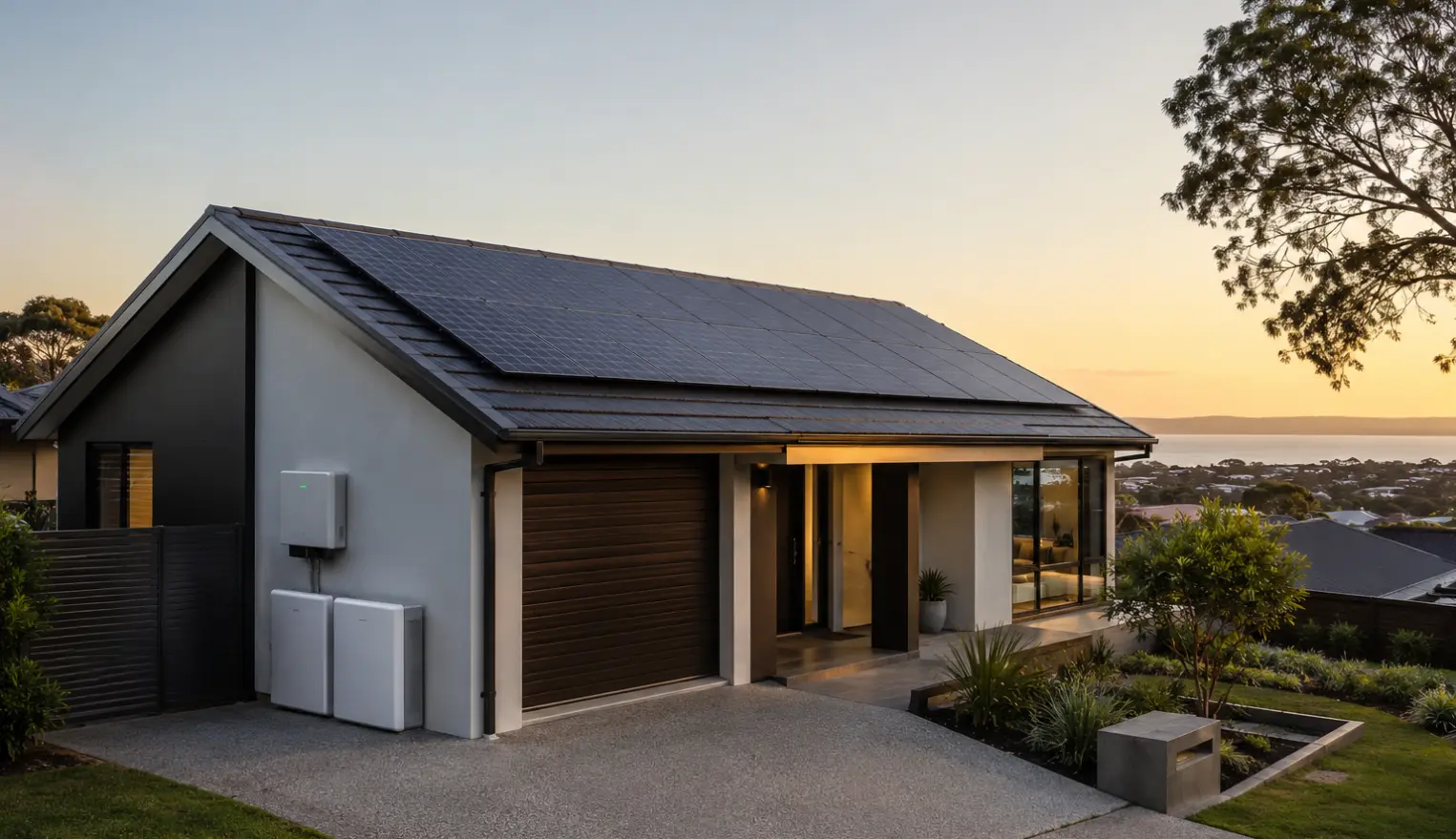

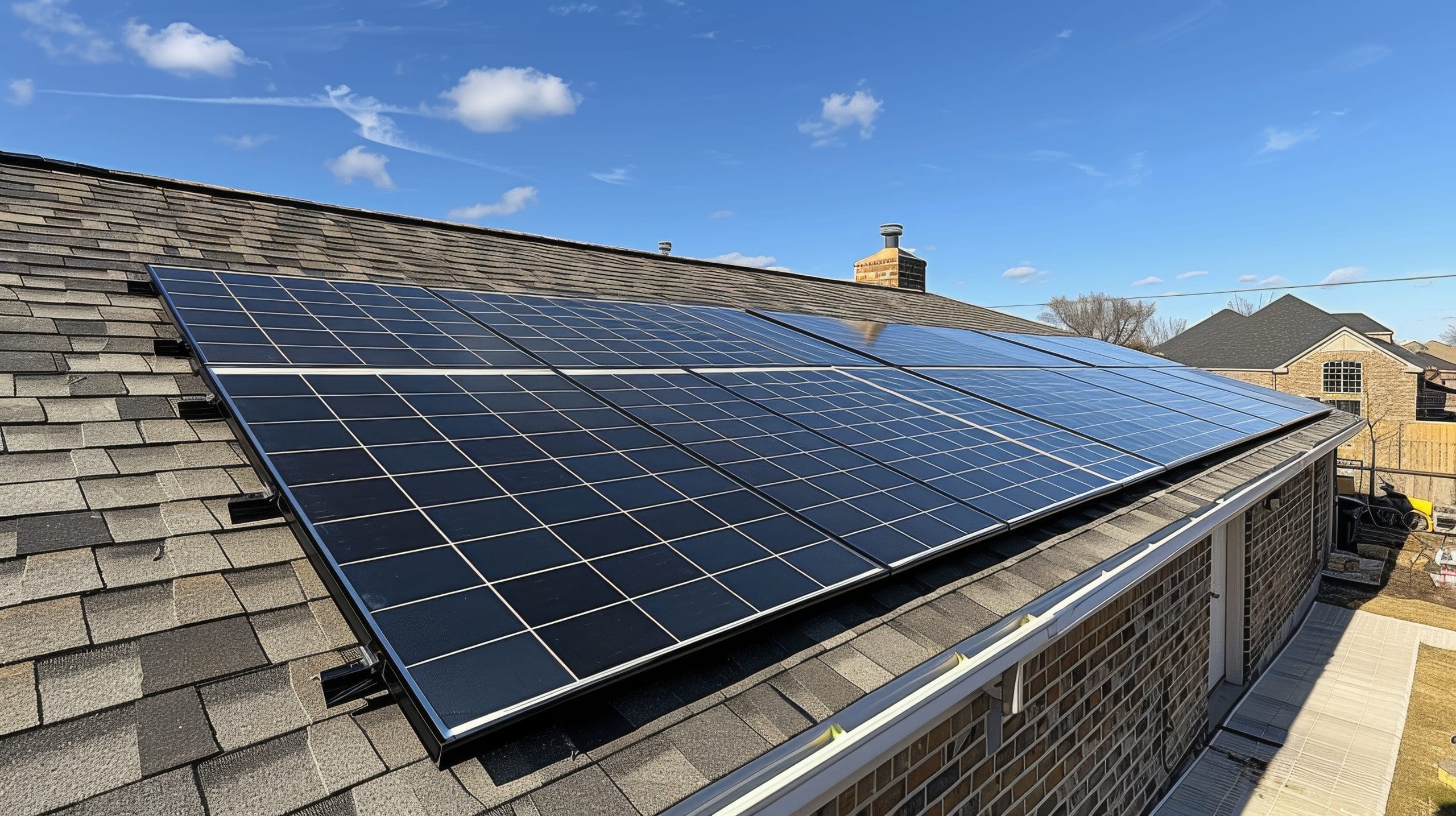
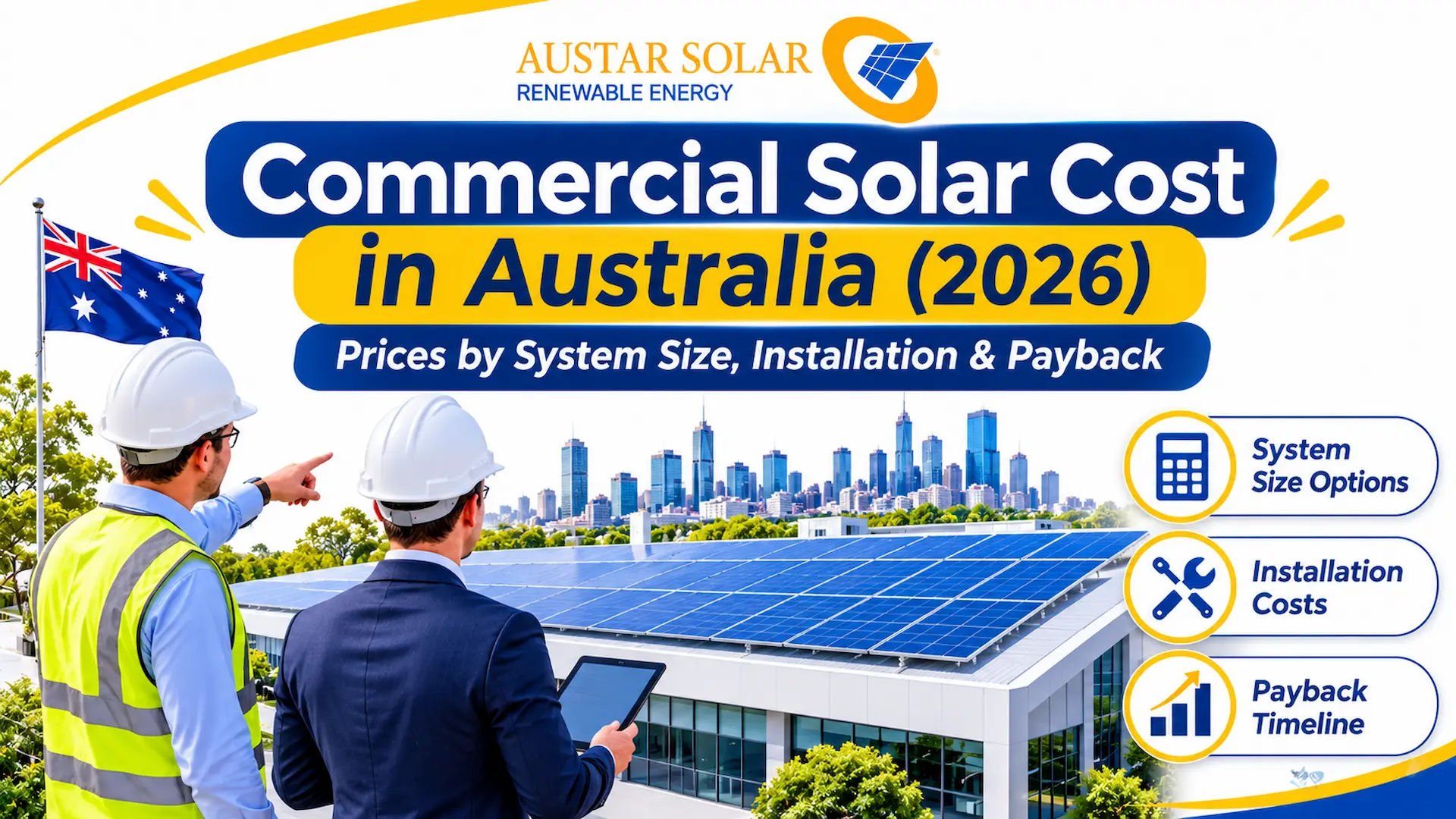
If you’re researching commercial solar costs in Australia, expect to pay around $0.70–$1.07 per watt for an installed system after applicable STCs. A 30 kW commercial solar system typically costs $22,000–$32,000, while a 100 kW system may cost $70,000–$100,000, including GST.
For businesses with high daytime electricity consumption, commercial solar can deliver a payback period of around 3–5 years. However, the total commercial solar cost depends on system size, roof conditions, equipment selection, electrical upgrades, and network approval requirements.
In this guide, we’ll break down commercial solar costs by system size, explain installation expenses and government incentives, and show you how to estimate your business’s solar payback period in 2026.
Key takeaways
- Bigger systems cost less per watt. You’ll pay about $0.73 to $1.07 at 30 kW and $0.70 to $0.95 at 200 kW.
- Budget for extras. Three-phase and switchboard upgrades can add $2,000 to $15,000 or more.
- From 1 October 2026, systems above 100 kW and up to 1 MW can claim upfront STCs, though applications don’t open until mid to late November.
- The more solar power you use on site, the faster you get your money back.
Commercial solar prices by system size
Here’s roughly what you’ll pay for commercial solar after STCs, GST included, for a standard metal roof. These numbers leave out network and switchboard upgrades, and the daily generation figures assume about 4 peak sun hours.
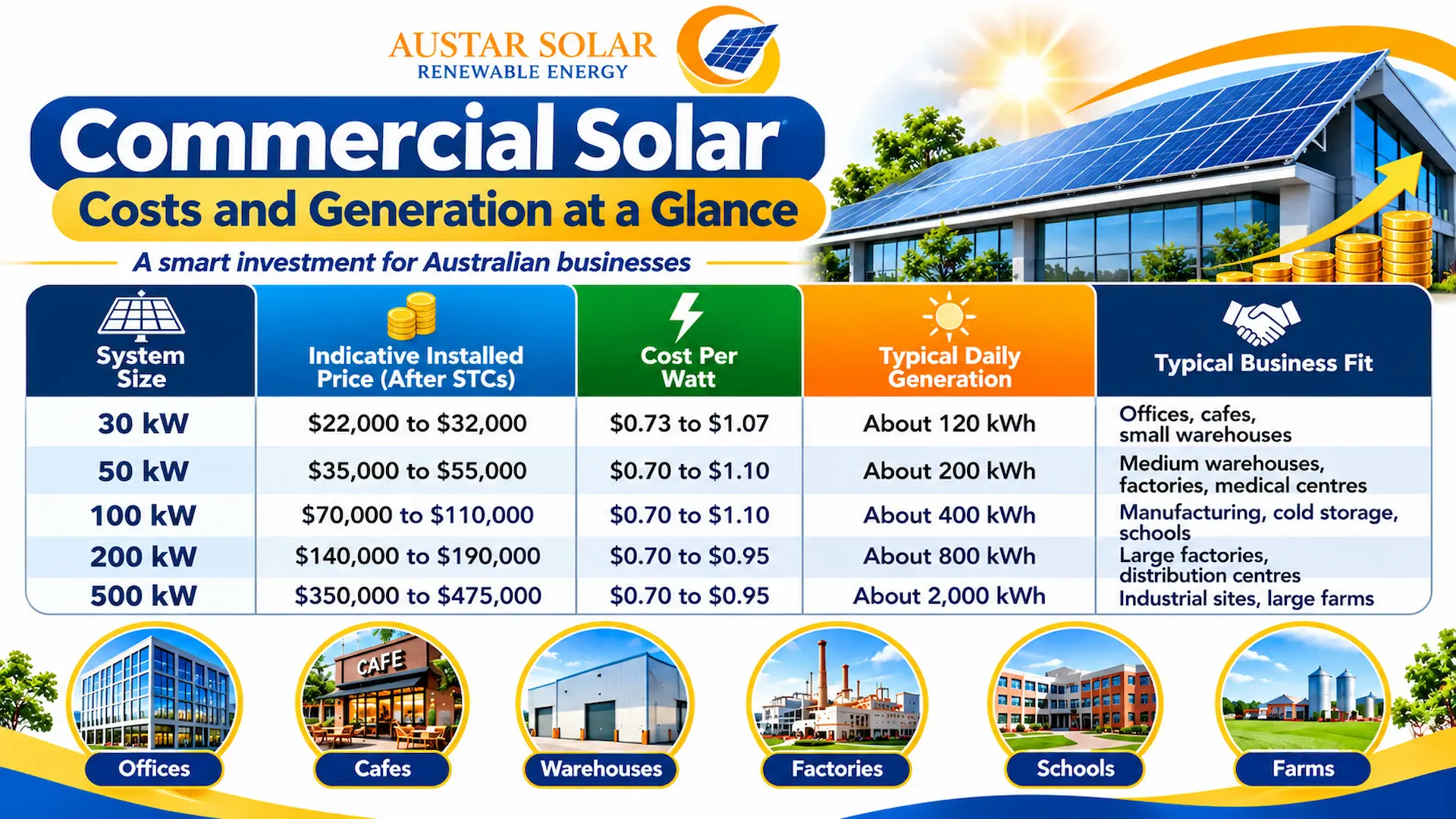
| System size | Indicative price (after STCs) | Cost per watt | Typical daily generation | Typical fit |
| 30 kW | $22,000 to $32,000 | $0.73 to $1.07 | About 120 kWh | Offices, cafes, small warehouses |
| 50 kW | $35,000 to $52,000 | $0.70 to $1.04 | About 200 kWh | Medium warehouses, factories, medical centres |
| 100 kW | $70,000 to $100,000 | $0.70 to $1.00 | About 400 kWh | Manufacturing, cold storage, schools |
| 200 kW | $140,000 to $190,000 | $0.70 to $0.95 | About 800 kWh | Large factories, distribution centres |
| 500 kW | $350,000 to $475,000 | $0.70 to $0.95 | About 2,000 kWh | Industrial sites, large farms |
The 200 kW and 500 kW rows are quoted project by project, so treat them as a ballpark.
A quick word on GST. Quotes usually include it, and if your business is GST-registered, you claim it back, which makes your real cost about one-eleventh lower. That’s why the payback examples use ex-GST figures.
Is commercial solar cheaper per watt than residential?
Almost always. Fixed costs get spread across more panels, and commercial roofs tend to be big and low-pitch, so crews work faster.
| System | Typical cost per watt |
| 6.6 kW home system | About $0.85 to $1.40 |
| 30 kW business system | About $0.73 to $1.07 |
What is included in a commercial solar quote?
A good quote lists every line so you can compare installers like for like. You should see panels and inverters, mounting and cabling, monitoring, labour and design, the network application, commissioning, and STC assignment. Panels and inverters usually take the biggest slice, but the split varies by site, so ask for it itemised.
What affects commercial solar cost?
If two quotes for the same size look far apart, one of these is usually the reason.
Roof type, pitch and access
Metal roofs are the cheapest to work on. Tile, concrete and flat roofs that need tilt frames cost more, and multi-storey buildings can add elevated work platforms or cranes.
Equipment quality
To qualify for STCs, your panels and inverters must be approved by the Clean Energy Council (CEC). String inverters cost the least, while optimisers or microinverters add cost but give you panel-level monitoring and better shade tolerance.
Location and STC zone
Your postcode decides your STC zone, which sets how many certificates you earn and so how big your upfront discount is. Labour and travel costs also differ between metro and regional areas.
Installation and electrical upgrade costs
These items most often push a final quote above the headline price. The figures are indicative and vary a lot by site.
| Upgrade | When it is needed | Indicative cost |
| Three-phase upgrade | Single-phase site above about 10 kW | $3,000 to $15,000 or more |
| Switchboard upgrade | Older or full boards | $2,000 to $10,000 |
| Network assessment fee | Systems above 30 kW | From about $580 (Ausgrid example) |
| Interface protection | Varies by network, commonly larger systems | $3,000 to $8,000 |
| Structural report | Older roofs, tile or heavy loads | $1,000 to $3,500 |
Three-phase power
Most commercial systems above about 10 kW need it, and many networks cap how much you can generate per phase. Ausgrid, for example, auto-approves most inverter connections up to 10 kW per phase. Ask your installer to confirm your supply type early.
Network approval above 30 kW
You’ll need written approval from the network before you switch on, and it charges an assessment fee. Ausgrid charges $583.03 for 30 to 200 kW systems without interface protection and from $1,141.80 with it, and it aims to respond within 10 business days. Fees and rules differ between networks such as Energex, Ergon, Western Power and CitiPower/Powercor, so ask which applies to you.
Export limits
Under zero-export or limited-export rules, surplus power earns no feed-in credit. If the grid needs work, you could also face network upgrade charges.
Commercial solar incentives in 2026
There are five ways to bring your net cost down.
STCs up to 100 kW
Under the Small-scale Renewable Energy Scheme, most businesses take STCs as an upfront discount. You’ll need an accredited designer and installer plus CEC-approved equipment. The deeming period shortens every year until the scheme ends in 2030, so installing sooner earns more.
Mid-scale STCs above 100 kW to 1 MW
Systems installed from 1 October 2026 can claim STCs, up to 1 MW combined on your site. Applications aren’t expected to open until mid to late November 2026, but anything installed from 1 October stays eligible.
Tax deductions
The instant asset write-off covers assets under $20,000 per asset, or ex GST if you’re GST-registered. Most commercial systems cost more, so they usually go into the small business pool or get depreciated over their effective life.
Battery rebate
Small businesses can claim the Cheaper Home Batteries Program. Since 1 May 2026, only the first 50 kWh of usable capacity earns it, at 100% of the STC factor up to 14 kWh, 60% to 28 kWh and 15% to 50 kWh.
State programs
Schemes like Victoria’s VEU and the NSW PDRS battery incentive change often, so check the relevant government site first.
How to calculate commercial solar payback
Payback is your net cost divided by your annual savings. Work out annual generation (kW × daily yield × 365), apply your self-consumption percentage, multiply by your usage tariff, add exported kWh × feed-in tariff, then subtract tax benefits and incentives from the cost.
Example: 30 kW system
| Input | Value |
| Net price (inc GST) | $27,000 |
| Net price (ex GST) | About $24,500 |
| Annual generation | 43,800 kWh |
| Self-consumption | 70% (30,660 kWh) |
| Usage tariff | $0.22 per kWh |
| Feed-in tariff | $0.05 per kWh |
| Annual savings | About $7,400 |
| Payback | About 3.3 years |
This assumes 120 kWh a day and counts no tax benefit.
How self-consumption changes payback
Here’s the same 30 kW system at different levels of self-consumption.
| Self-consumption | Annual savings | Payback |
| 40% | About $5,200 | About 4.7 years |
| 60% | About $6,700 | About 3.7 years |
| 80% | About $8,100 | About 3.0 years |
What shortens or extends payback?
Payback gets shorter with heavy daytime use, high tariffs, and low demand charges. It gets longer with export limits, low self-consumption, and finance interest. Real returns also reflect panel degradation (commonly around 0.5% a year) and an inverter replacement somewhere between years 10 and 15.
Case studies
These are illustrative scenarios built from the typical figures above, not named clients.
Case study 1: a suburban cafe (30 kW)
A cafe on a single-phase supply runs refrigeration, coffee machines and air conditioning until mid-afternoon, so about 70% of its solar output gets used on site. It’s the same 30 kW system as above, but this site needs upgrades first.
- The extras came to about $4,500 inc GST for three-phase and switchboard work.
- The total was about $28,600 ex GST, against $24,500 without them.
- Payback stretched to about 3.9 years, up from 3.3.
The upgrade added roughly seven months to payback. It’s far better to find that out at the site assessment than after signing, so the switchboard should be its own line on the quote.
Case study 2: a cold storage facility (100 kW)
A cold storage site runs compressors around the clock, but its heaviest loads fall in the daytime. Self-consumption reaches 60%, and the rest is exported at 1c per kWh.
- The system is 100 kW, quoted at $85,000 inc GST after STCs, or about $77,300 ex GST.
- It generates about 146,000 kWh a year.
- Annual savings come to about $19,900, for a payback of about 3.9 years.
At 100 kW, this site sits at the top of the small-scale STC range. A slightly larger system would move to the mid-scale route, so ask your installer to check the certificate path before the design is locked in.
Own it, lease it, or buy through a PPA?
If you lease your premises, you’ll need written landlord approval, and your lease should comfortably outlast your payback period. Finance options include equipment finance, green loans, and power purchase agreements (PPAs), where a provider installs the system, and you buy the power. Interest and PPA margins stretch payback, so compare the 10-year outcome and not just the upfront price.
How to get an accurate commercial solar quote?
- Gather 12 months of interval data, your switchboard and supply details, and roof plans.
- Collect at least three itemised quotes.
- Check each installer’s accreditation and confirm the STC value is shown clearly.
- Confirm the network approval path and any fees.
- Compare warranties, monitoring, and what happens at inverter replacement.
Watch out for vague STC values, no separate switchboard line, no mention of network approval, unaccredited installers, and pressure to sign quickly.
Commercial Solar Cost FAQs
How much does commercial solar cost in Australia?
Expect about $0.70 to $1.07 per watt, installed and after STCs. That’s roughly $22,000 to $32,000 for a 30 kW system and $70,000 to $100,000 for 100 kW. Upgrades come on top.
Is commercial solar worth it for small businesses?
Yes, if most of your power use happens during the day. Our 30 kW example pays itself back in about 3.3 years, ex GST.
How long does commercial solar take to pay itself off?
Most businesses that use the bulk of their solar on site see 3 to 5 years. The same 30 kW system takes about 4.7 years at 40% self-consumption and 3.0 years at 80%.
What are STCs and how do they work?
Small-scale Technology Certificates are earned under the Small-scale Renewable Energy Scheme, and most businesses take them as an upfront discount. Your postcode decides how many you earn, and the number shrinks every year until the scheme ends in 2030.
Can a system above 100 kW get STCs?
Yes. Systems above 100 kW and up to 1 MW installed from 1 October 2026 can claim mid-scale STCs. Applications aren’t expected to open until mid to late November 2026, but anything installed from 1 October stays eligible.
Can I claim the GST back on a solar system?
If your business is GST-registered, yes. Quotes usually include GST, and claiming it back makes your real cost about one-eleventh lower.
Do I need three-phase power for commercial solar?
Most commercial systems above about 10 kW do, and many networks cap generation per phase. An upgrade can cost $3,000 to $15,000 or more, so ask your installer to confirm your supply type at the site assessment.
Conclusion: Is Commercial Solar a Good Investment for Australian Businesses?
Commercial solar can be a worthwhile long-term investment for Australian businesses looking to reduce electricity expenses and improve energy independence.
With indicative installation prices starting at around $0.70 per watt for larger systems, businesses can choose a system that matches their electricity consumption and available roof space. Those with consistent daytime energy demand may recover their investment in approximately 3–5 years, depending on installation costs, electricity tariffs and self-consumption.
However, the cheapest quote does not always deliver the best long-term value. Equipment quality, electrical upgrades, network approval, export restrictions and warranty coverage all deserve careful consideration.
If you’re considering commercial solar for your business, start with an assessment of your electricity usage and installation requirements. Austar Solar provides tailored commercial solar solutions across NSW and ACT, helping businesses find suitable solar systems for their energy needs.
Contact Austar Solar today for a commercial solar assessment and an itemized installation quote.