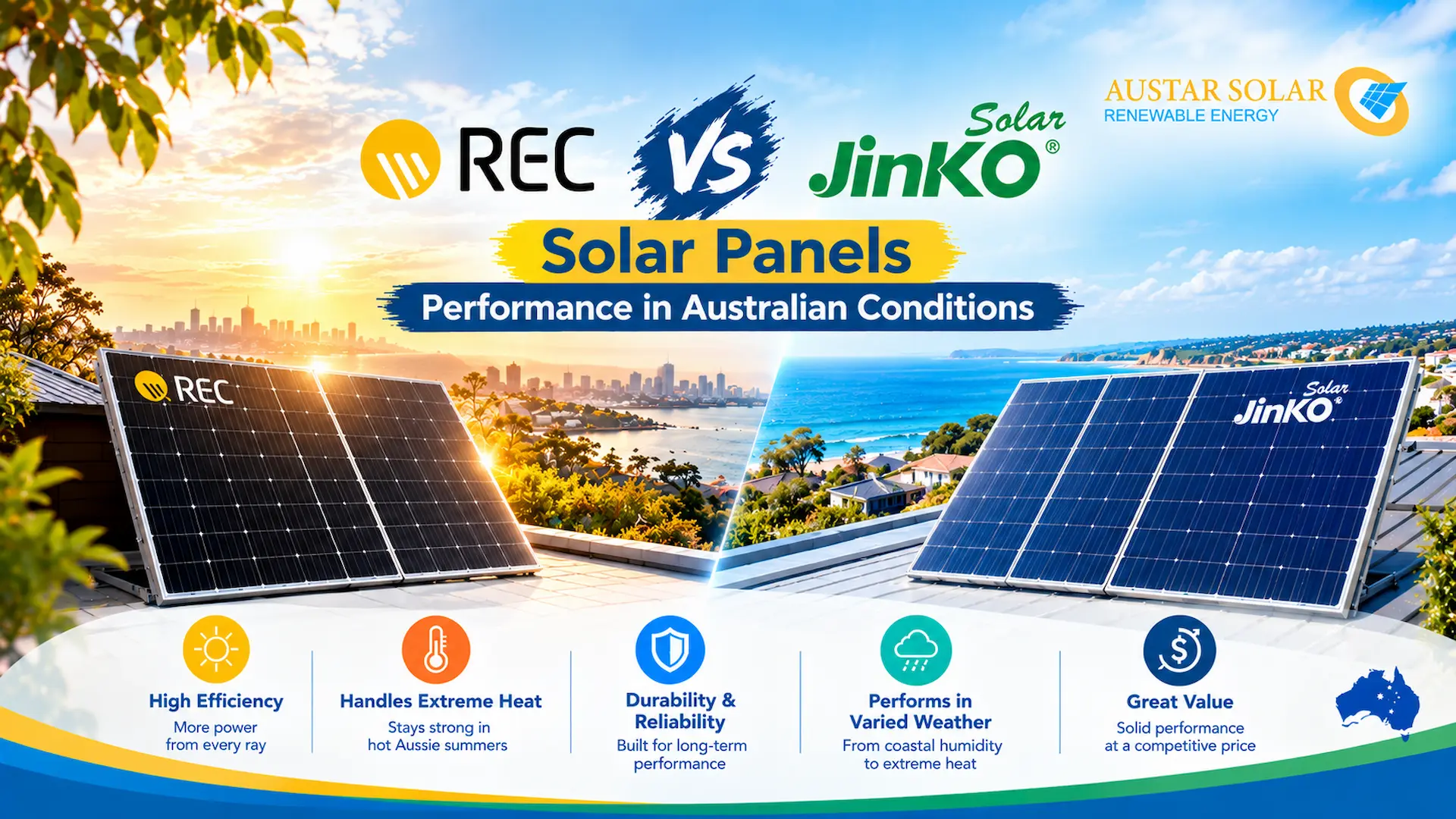
REC vs Jinko Solar Panels is a key choice for Australian homeowners comparing solar options. Both brands offer reliable panels, but they differ in price, performance, warranty, and value.
REC is the better choice for homeowners who prioritise premium quality and long-term performance. Jinko is a better fit for buyers who want strong performance at a lower price. Your choice should also depend on your roof space, electricity use and budget.
This guide compares REC and Jinko solar panels in Australia across price, efficiency, real-world performance, customer feedback and warranties. It also explains each brand’s main advantages and disadvantages.
By the end, you will know which solar panel brand offers better value for your Australian home.
Overview of REC solar panels in Australia
REC solar panels are premium panels designed for high energy output and long-term use. REC’s Alpha Pure-RX range uses heterojunction technology and can reach up to 470W output with 22.6% efficiency. This makes REC a strong option for Australian homes with limited roof space.
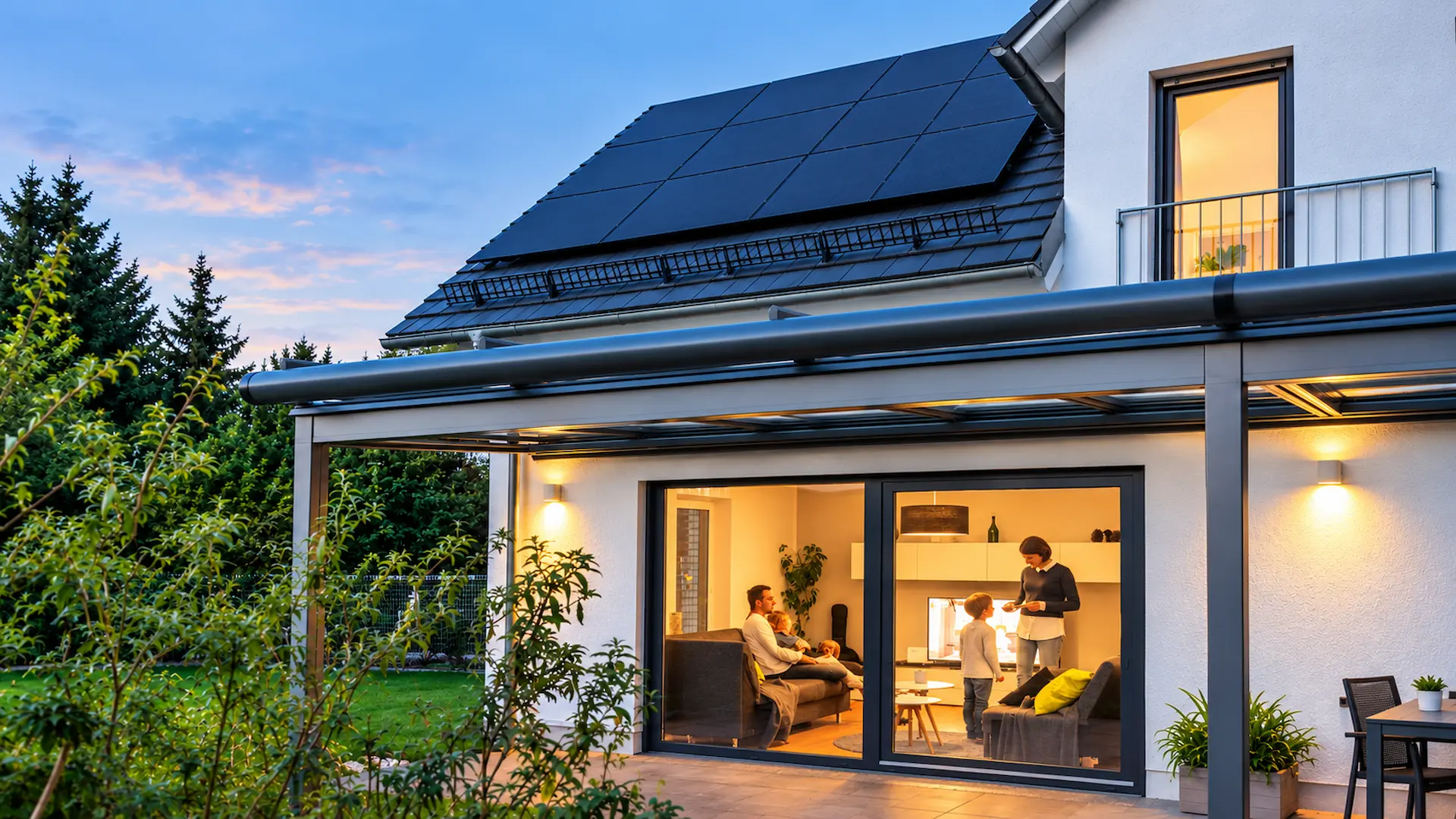
How REC Solar Panels Work
- Solar cells absorb sunlight and convert it into DC electricity.
- The inverter changes DC electricity into AC electricity for household use.
- Your home uses the solar power first.
- Extra electricity can charge a battery or go to the grid.
- Heterojunction technology helps maintain strong performance across different temperatures.
- Some REC panels use bifacial cells that can capture additional light from the rear side.
Key Features
- High output: Alpha Pure-RX panels can reach up to 470W.
- High efficiency: Efficiency can reach up to 22.6%.
- HJT technology: Improves energy conversion and temperature performance.
- Low degradation: REC specifies a 0.25% annual degradation rate for Alpha Pure-RX.
- Durable design: The panels are designed to handle demanding weather conditions.
- Long warranties: The range includes a 20-year product warranty and 25-year performance warranty under standard terms.
- Australian suitability: REC offers models and certifications suited to Australian solar installations.
Pros
- High efficiency for smaller roofs
- Strong long-term energy performance
- Low degradation rate
- Durable panel construction
- Suitable for premium solar systems
- Works well with battery storage
Cons
- Higher upfront cost than many standard panels
- Premium features may not suit tight budgets
- Installation quality affects overall system performance
- Extended warranty benefits may require specific installer conditions
Best Use For
- Homes with limited roof space
- Premium residential solar systems
- Homes with high daytime electricity use
- Battery-ready solar installations
- Homeowners prioritising long-term performance over the lowest upfront price
Available REC Models in Australia
| Feature | REC Alpha Pure-R | REC Alpha Pure-RX |
| Cell Type | 80 HJT half-cut bifacial | 88 HJT half-cut bifacial |
| Power Output (STC) | 400W–430W | 450W–470W |
| Max Efficiency | Up to 22.3% | Up to 22.6% |
| Temp. Coefficient (Pmax) | -0.26%/°C | -0.24%/°C |
| Dimensions (mm) | 1730 x 1118 x 30 | 1728 x 1205 x 30 |
| Weight | 21.5 kg | 22.7–23.4 kg |
| Warranty | 20–25 yrs product, 25 yrs (92%) power | 20–25 yrs product, 25 yrs (92%) power |
In short, REC solar panels are a strong choice in Australia when you want high efficiency, durability, and reliable long-term solar generation.
Overview of Jinko Solar Panels in Australia
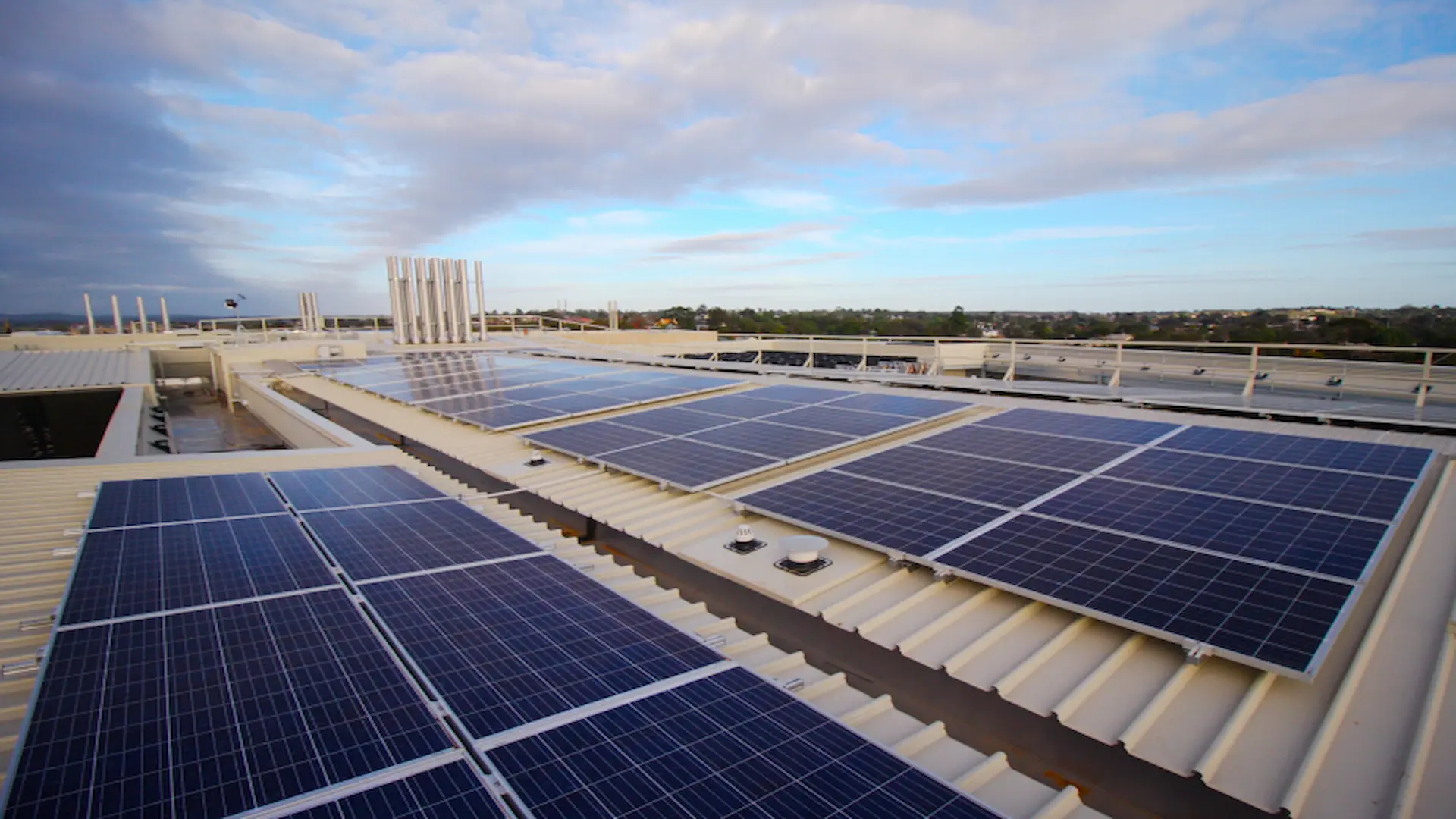
Jinko Solar panels are widely used for residential and commercial solar systems in Australia. The Tiger Neo range uses N-type TOPCon technology and offers high efficiency, strong temperature performance, and long-term power warranties. Current Tiger Neo models can reach up to 24.8% efficiency, depending on the model.
How Jinko Solar Panels Work
- Solar cells absorb sunlight and produce DC electricity.
- An inverter converts DC electricity into AC power.
- Your home uses the solar electricity first.
- Extra power can charge a battery or export to the grid.
- Bifacial models can also capture reflected light from the rear side.
Key Features
- TOPCon technology: Improves efficiency and energy generation.
- High efficiency: Some Tiger Neo 3.0 models reach 24.8%.
- High power output: Newer Tiger Neo models can reach 670W.
- Bifacial design: Selected models generate electricity from both sides.
- Low degradation: Some models use a 0.35% annual degradation rate.
- Long warranty: Many Tiger Neo models offer up to 30 years of linear power warranty.
- Good temperature performance: The panels are designed to maintain output in higher temperatures.
Pros
- High panel efficiency
- Strong power output
- Advanced N-type TOPCon technology
- Bifacial options available
- Long power warranty
- Suitable for different solar system sizes
Cons
- Specifications vary between Jinko models
- Larger high-output panels may need more roof space
- Warranty terms depend on the specific Australian model
- Higher-end models can cost more than basic panels
Best Use For
- Australian residential solar systems
- Homes with high electricity consumption
- Roofs needing high-output panels
- Battery-ready solar systems
- Commercial solar installations
- Homeowners wanting high efficiency and long-term performance
Available Jinko Solar Panels In Australia
Jinko Solar currently lists several panel ranges for the Australian market. The main current options include Tiger Neo III, Tiger Neo, and Tiger Pro models.
| Jinko Solar Panel Series | Available Power Range | Peak Efficiency | Panel Type | Warranty |
| Tiger Neo III 48QL6-DV | 460W–485W | Up to 24.27% | N-type, dual glass | 25-year product, 30-year linear |
| Tiger Neo 54 HL4 | 410W–430W | Up to 22.6% | N-type, half-cell | 25-year product, 30-year linear |
| Tiger Neo 60 HL4 | 460W–480W | Up to 22.24% | N-type, half-cell | 25-year product, 30-year linear |
| Tiger Pro 72HC | Up to 550W | Up to 21.35% | Monofacial | 25-year linear |
| Tiger Pro 72 HC Bifacial | Up to 545W | Up to 21.16% | Bifacial, dual-glass option | Varies by model |
| Tiger Pro 78TR | Up to 585W | Up to 21.4% | Monofacial | Varies by model |
| Tiger Pro 60TR | 440W | Up to 21.25% | Half-cell | 12-year product |
| Tiger HLM 60 HC | 370W | Up to 20.28% | P-type, half-cell | 12-year product, 25-year linear |
| Tiger Neo 60TR | 370W | Up to 21.25% | N-type, monofacial | 20-year product |
| Tiger Neo 66TR All-Black | 390W | Up to 21.22% | N-type, all-black | 25-year product |
For more detailed info: [Datasheet of Jinko Solar Panels]
Overall, Jinko Solar is a strong option for Australian buyers seeking high-efficiency panels with modern TOPCon technology, strong output, and long-term performance.
Technical Comparison
REC and Jinko both offer high-efficiency solar panels for Australian homes. The comparison below uses the REC Alpha Pure-RX and Jinko Tiger Neo ranges because they represent each brand’s current high-performance panel technology. Specifications can vary by exact model.
| Technical Factor | REC Alpha Pure-RX | Jinko Tiger Neo |
| Cell Technology | Heterojunction (HJT) | N-type TOPCon |
| Maximum Power Output | Up to 470W | Up to 670W |
| Maximum Efficiency | Up to 22.6% | Up to 24.8% |
| Bifacial Design | Yes | Yes on selected models |
| Temperature Coefficient | About -0.24%/°C | Up to -0.26%/°C, depending on model |
| Annual Degradation | 0.25% | Up to 0.4% linear degradation, depending on model |
| Power Warranty | 25 years | Up to 30 years |
| Power at Warranty End | At least 92% in year 25 | Model-dependent |
| Panel Size | About 2.08 m² | Model-dependent |
| Main Technology Advantage | HJT with strong temperature and low-light performance | TOPCon with high efficiency and high power output |
| Best For | Premium residential systems and limited roof space | High-output residential and commercial systems |
| Main Strength | Low degradation and strong long-term performance | Higher maximum efficiency and wattage |
| Main Limitation | Lower maximum wattage than newer high-output Jinko models | Specifications vary significantly between Tiger Neo models |
REC specifies 450W to 470W output, up to 22.6% efficiency, and 0.25% annual degradation for Alpha Pure-RX. Jinko lists up to 670W output, 24.8% efficiency, and up to 30 years of power warranty for its Tiger Neo range.
Solar Panels Performance Comparison in Australia
REC and Jinko both perform well in Australian conditions, but REC has an advantage in hot climates. The REC Alpha Pure-RX reaches about 22.6% efficiency and uses heterojunction technology. Its temperature performance helps reduce output losses on very hot roofs. Jinko Tiger Neo panels reach around 22.6% efficiency in current models and use N-type technology.
REC Vs Jinko Real-Life Performance
- REC: Better suited to homeowners who prioritise long-term output and performance in hot weather.
- Jinko: Strong output with a lower typical system cost, making it attractive for value-focused buyers.
- REC warranty: Alpha Pure-RX offers up to 25 years of product coverage and 92% warranted output after 25 years when ProTrust conditions apply.
- Jinko warranty: Selected Tiger Neo models offer 25 years of product coverage and 30 years of performance coverage, with 87.4% output guaranteed at year 30.
Customer Feedback And Practical Experience
- Australian buyers often choose Jinko for its balance of price, efficiency and warranty.
- REC receives positive attention for premium build quality and hot-climate performance.
- Some buyers question whether REC’s higher price delivers enough extra value compared with Jinko.
Choose REC for premium performance in hot conditions. Choose Jinko for strong performance and better value.
Price Comparison: REC vs Jinko solar panels
REC and Jinko sit at different price points in Australia. Jinko is generally more affordable, while REC is positioned as a premium panel. The figures below use current 2026 Australian market estimates and focus on complete installed systems rather than misleading starting prices.
| System | Jinko | REC Alpha Pure-RX |
|---|---|---|
| 6.6kW installed | A$5,000–A$7,000 | A$7,500–A$9,500 |
| 10kW installed | Verify with current quotes | Verify with current quotes |
| Typical price position | Value-oriented | Premium |
Which Is More Efficient in Australia: REC or Jinko solar panels?
Jinko currently has a higher maximum panel efficiency than REC. Jinko Tiger Neo panels can reach around 24.8% efficiency, while REC Alpha Pure-RX panels reach up to 22.6%. This means Jinko can produce more electricity from the same amount of roof space when comparing these maximum-rated models.
However, efficiency is not the only factor that matters in Australian conditions.
- Jinko: Up to 24.8% efficiency with N-type TOPCon technology.
- REC: Up to 22.6% efficiency using HJT technology.
- Hot weather: Both technologies are designed to maintain strong output in high temperatures.
- Limited roof space: Jinko has an advantage because of its higher maximum efficiency.
- Long-term output: REC has a low stated degradation rate of around 0.25% per year for Alpha Pure-RX.
- Real-world production: Roof direction, shading, temperature, inverter quality, and installation have a major effect.
Jinko wins on maximum efficiency, while REC remains competitive for long-term performance and low degradation. For a small Australian roof, Jinko may provide more generation from limited space.
Final Words on REC vs Jinko Solar Panels
REC and Jinko are both strong choices for Australian solar systems, but they suit different priorities. REC is a good option for homeowners who value premium quality, low degradation, and long-term performance.
Jinko is a strong choice for buyers who want high efficiency and competitive pricing. Jinko can also suit homes with limited roof space, while REC may appeal to homeowners willing to pay more for premium performance.
Before choosing, compare the complete system cost, installer quality, warranty, and expected energy production.
Auster Solar can also help Australian homeowners compare suitable solar options and choose a system that fits their energy needs.
Frequently Asked Questions
What is the lifespan of JinkoSolar panels?
JinkoSolar panels are generally designed to last 25 to 30 years or longer. Their performance gradually declines over time, with many models offering 25-year performance warranties.
Which Solar Panel Has Better Warranty Coverage?
REC is known for offering strong product and performance warranties on selected panels. Jinko also provides substantial warranty coverage, but terms vary between models and Australian product ranges.
Which Solar Panel Is Better for Small Roofs?
Higher-efficiency panels can be useful when roof space is limited. REC offers strong efficiency options, while Jinko also has high-efficiency panels that can suit smaller residential roofs.
Which Is Better for Large Solar Systems?
Jinko can be attractive for larger systems because of its broad product range and competitive pricing. REC can suit homeowners prioritising premium performance over upfront system cost.
Are REC Panels Suitable for Premium Solar Systems?
Yes, REC panels can suit premium residential solar systems. They are particularly appealing to homeowners who prioritise efficiency, long-term performance, product quality, and strong warranty protection.