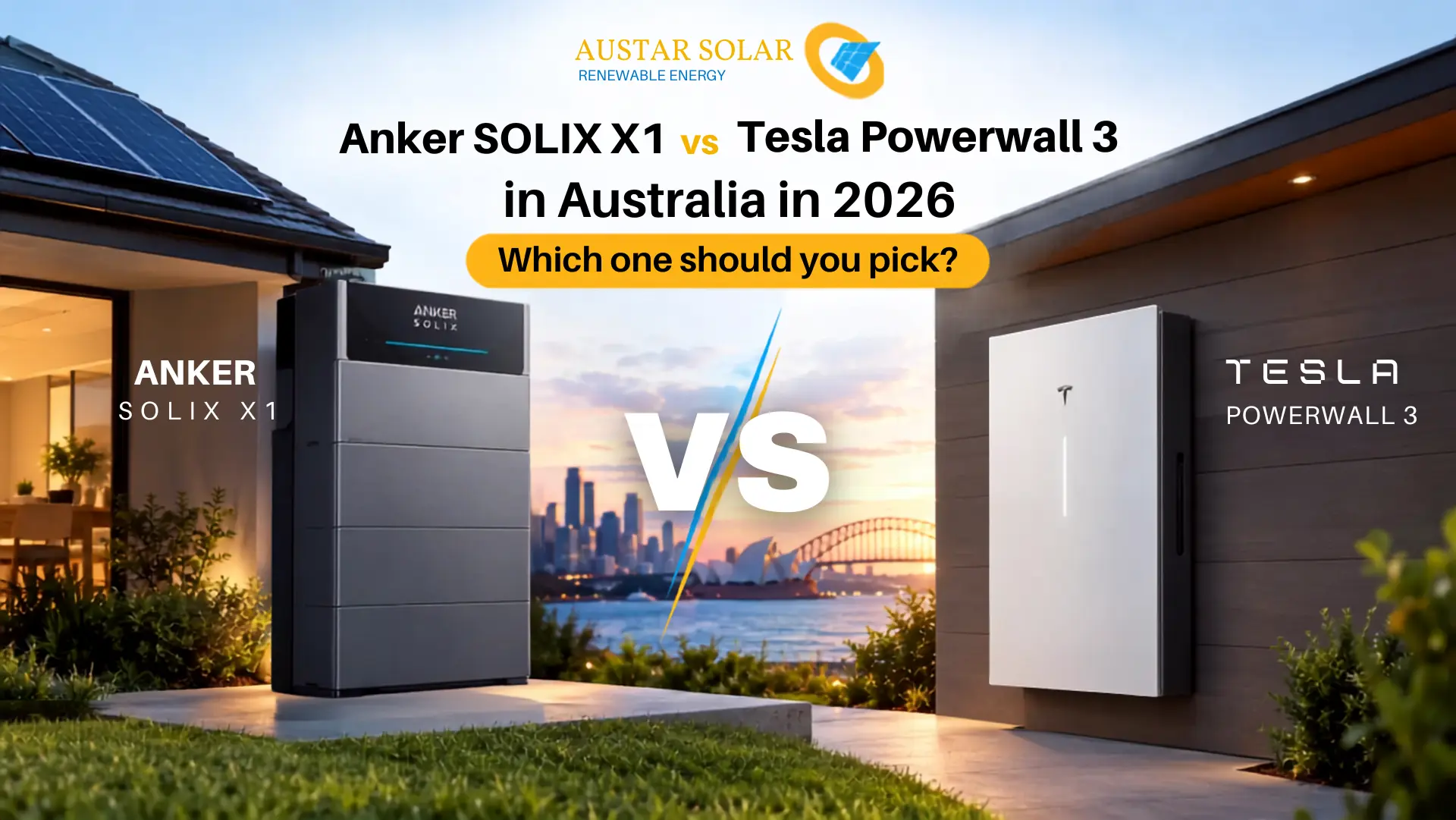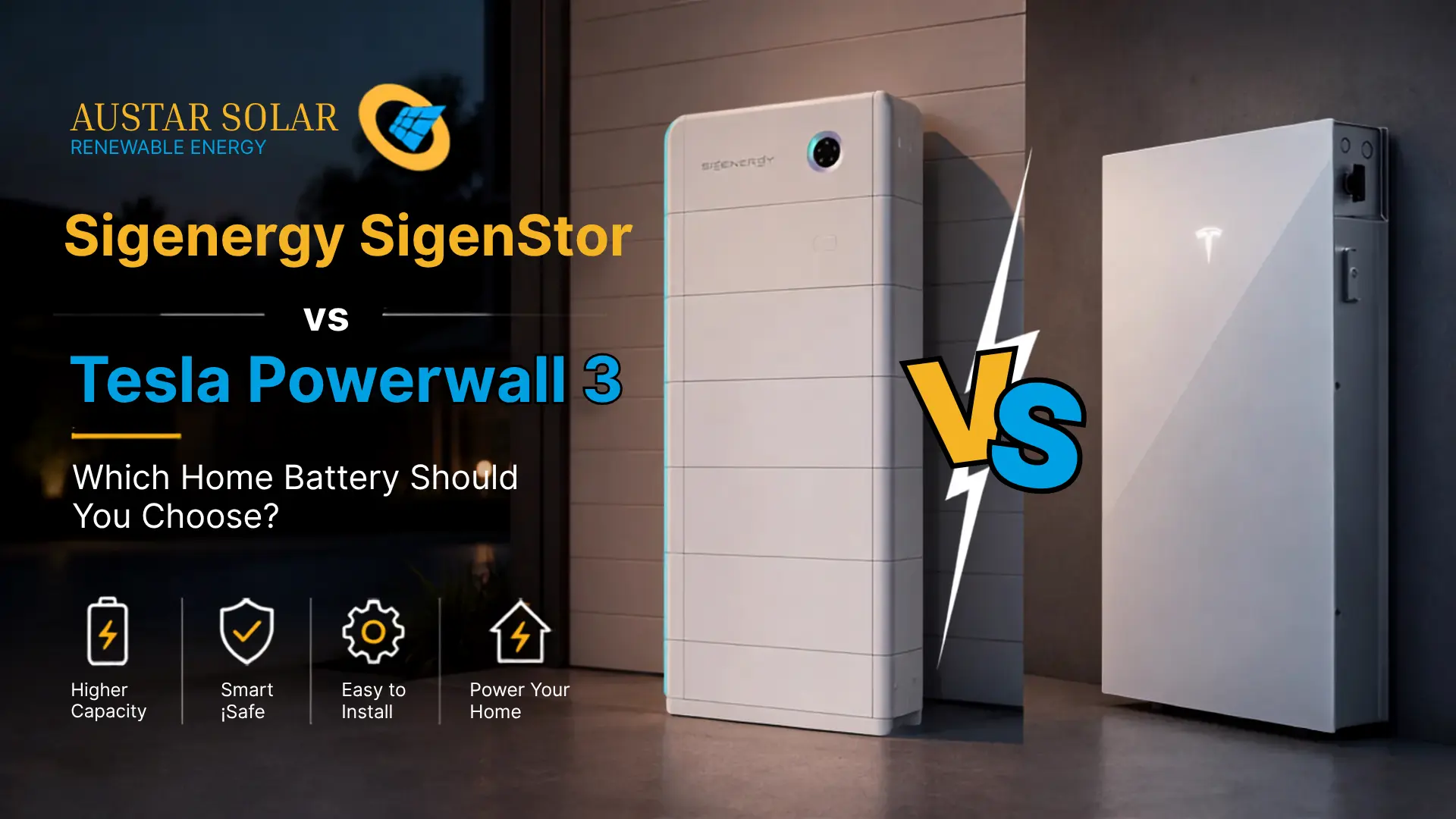
For Australian homes, Sigenergy SigenStor vs Tesla Powerwall 3 comes down to flexibility versus simplicity. SigenStor offers more modular options, while Powerwall 3 focuses on an integrated system with 13.5 kWh usable capacity and 97.5% solar-to-grid efficiency.
This comparison covers battery capacity, efficiency, solar integration, backup power, expansion, and smart energy management. Sigenergy SigenStor is better suited to homeowners who want flexible system sizing and stronger integration with solar and EV energy management. Tesla Powerwall 3 is a strong choice for homeowners who want a simple, integrated battery system with high usable capacity and whole-home backup.
Overview of Sigenergy SigenStor Battery Storage in Australia
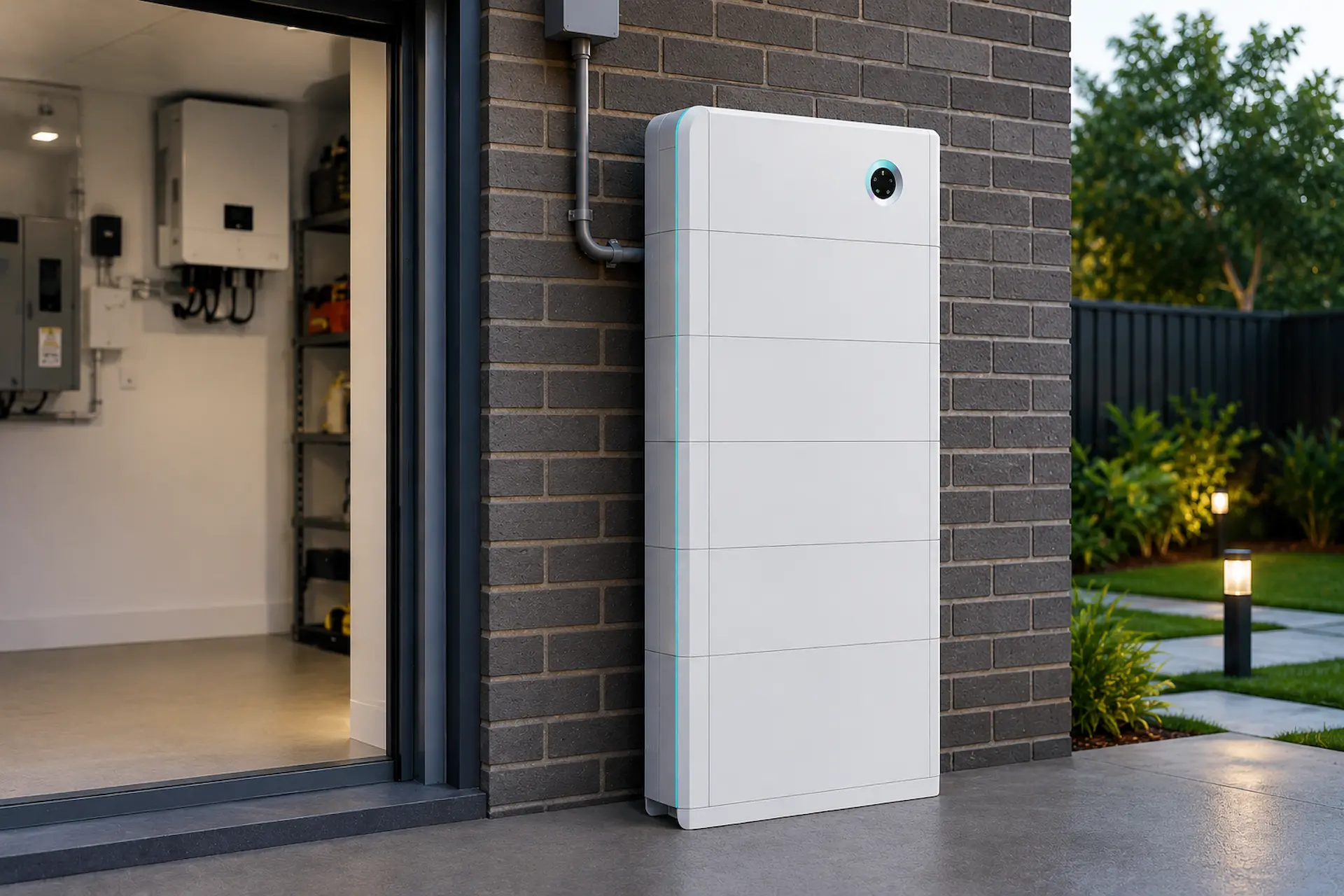
Sigenergy SigenStor is an AI-optimised 5-in-1 home energy storage system that combines battery storage, solar energy conversion, energy management, EV charging, and backup power in one integrated platform. Sigenergy positions it as a system designed to improve energy independence, efficiency, and flexibility.
Key Features
- 5-in-1 design: Combines the Sigen Battery, Energy Controller, Gateway, EV DC charging, and energy management functions into one ecosystem.
- Modular battery: Australian SigenStor BAT 5.0 provides 5.38 kWh total and 5.2 kWh usable capacity, while BAT 8.0 provides 8.06 kWh total and 7.8 kWh usable capacity. Up to six battery modules can connect to each controller.
- LFP chemistry: The batteries use LiFePO4 cells and support up to 100% depth of discharge.
- Long cycle life: Sigenergy specifies up to 10,000 cycles under stated test conditions.
- Outdoor protection: The battery system has an IP66 rating and uses natural convection cooling.
- EV integration: The Sigen EV DC module supports up to 25 kW bidirectional charging, enabling compatible V2H and V2G applications.
Available Sigenergy SigenStor Types
| Model | Energy Capacity | Best Use |
| SigenStor BAT 5.0 | 5.38 kWh | Smaller homes and lower energy use |
| SigenStor BAT 6.0 | 6.02 kWh | Medium-sized homes |
| SigenStor BAT 8.0 | 8.06 kWh | Homes with higher evening usage |
| SigenStor BAT 10.0 | 9.04 kWh | Larger homes and higher energy demand |
To know more details, you can read the full Sigenergy Battery Storage Review
Overview of Tesla Powerwall 3 Battery Storage in Australia
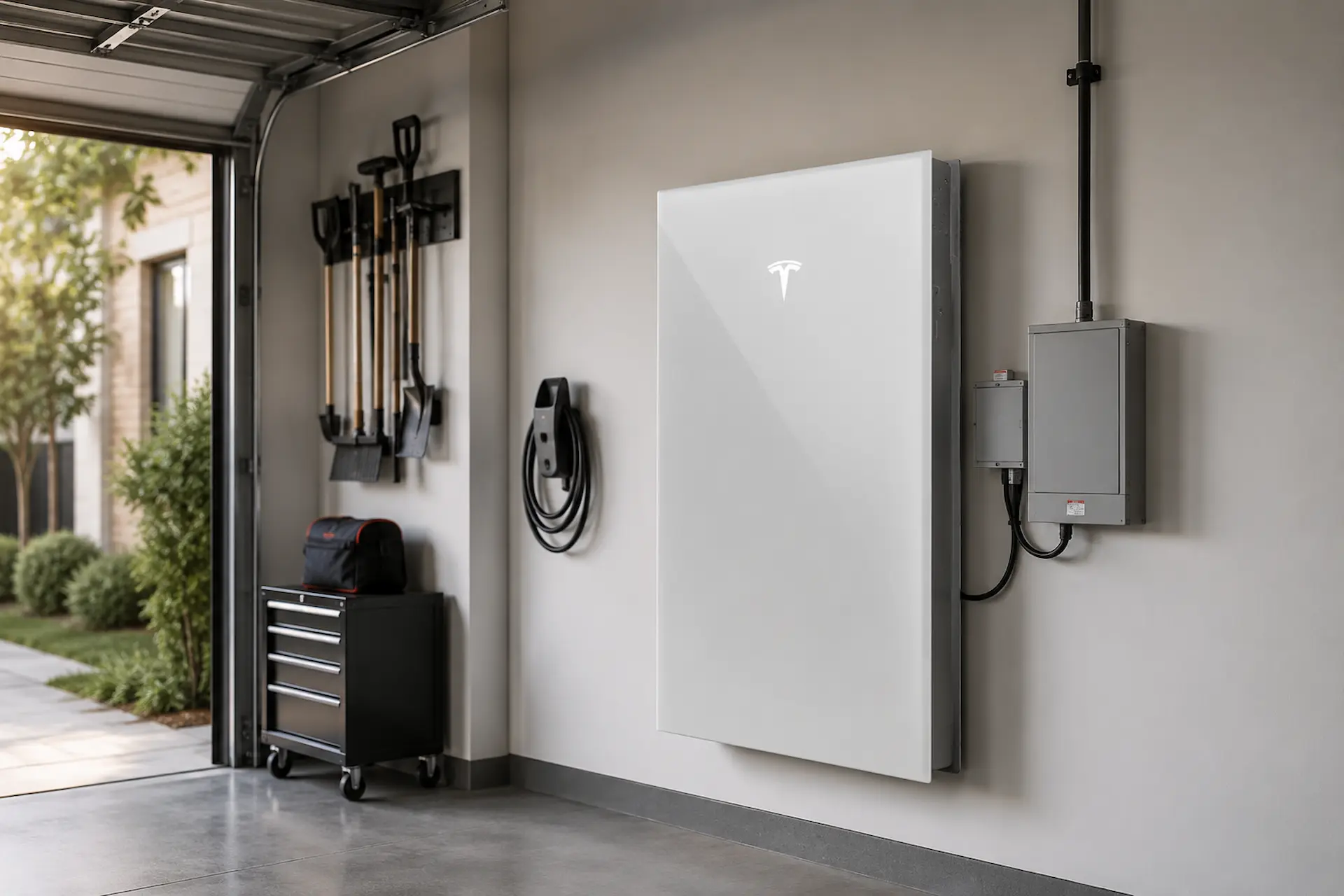
Tesla Powerwall 3 is a fully integrated home battery and solar inverter system designed to store excess solar energy and provide backup power. In Australia, it offers 13.5 kWh of usable battery energy, up to 10 kW of on-grid power depending on local conditions, and 97.5% solar-to-grid efficiency. You can install it indoors or outdoors and expand it as household energy needs increase.
Key Features
- 13.5 kWh usable capacity for storing solar energy for later use.
- Integrated solar inverter and system controller, reducing the need for separate components.
- 97.5% solar-to-grid efficiency and three solar inputs with Maximum Power Point Trackers.
- Up to 10 kW on-grid and backup power in the Australian market, subject to local conditions.
- Expandable system: Up to four Powerwall 3 units can be supported, with additional Powerwall 3 Expansion units available.
- 10-year warranty covering the Powerwall system.
- Smart energy management: The Tesla app monitors energy production, consumption, and battery status.
- Storm Watch: The system can automatically prepare for severe weather by charging the battery to maximum capacity.
Available Tesla Powerwall 3 Types
| Model | Capacity | Main Use |
| Tesla Powerwall 3 | 13.5 kWh usable | Complete home solar storage and backup |
| Powerwall 3 Expansion | 13.5 kWh additional | Extending storage capacity and backup duration |
To know more details, you can read the full Tesla Powerwall 3 Review
Sigenergy SigenStor vs Tesla Powerwall 3: Technical Comparison
Sigenergy SigenStor and Tesla Powerwall 3 solar battery are both premium home battery systems for Australian homes. SigenStor stands out for its modular design and broader energy-system integration, while Powerwall 3 offers a simpler, all-in-one battery-and-inverter setup with 13.5 kWh of usable capacity. The exact SigenStor specifications depend on the battery and inverter combination selected.
| Technical Feature | Sigenergy SigenStor | Tesla Powerwall 3 |
| Battery chemistry | LiFePO4 | Lithium-ion |
| Usable capacity | From 5.8 kWh, expandable with modules | 13.5 kWh |
| Modular design | 1–6 battery modules per controller | Up to 4 Powerwall 3 units |
| Integrated inverter | Yes, through Sigen Energy Controller/Hybrid Inverter | Yes |
| Solar input | Up to 24 kW PV, depending on inverter model | Integrated solar inverter |
| MPPT trackers | Up to 2, depending on inverter | 3 solar inputs with MPPTs in Australian specification |
| Maximum inverter output | Up to 12 kW in listed Australian models | Up to 11.04 kW configurable in the Australian datasheet |
| Depth of discharge | Up to 100% for battery module testing | 13.5 kWh usable from 14 kWh AC total |
| Efficiency | Up to 98%, depending on system model | 97.5% solar-to-home/grid |
| Backup | Yes, with Sigen Energy Gateway | Yes, with Backup Gateway 2 |
| Backup transition | Up to 0 ms under specified conditions | Quick/seamless backup transition |
| Battery cycle life | Up to 10,000 cycles under specified conditions | Not specified as a cycle-life figure in the Australian datasheet |
| Ingress protection | IP66 | Flood and dust-resistant |
Want to see these solar battery systems in action? Watch our video below for a closer look and a practical comparison.
Solar Panel Performance Comparison in Australia:
Sigenergy and Tesla Powerwall 3 are battery storage systems, not solar panels, so the comparison focuses on how well each system stores and manages solar energy. Sigenergy offers a modular system with different inverter sizes, while Powerwall 3 combines a battery with an integrated inverter.
Which System Performs Better With Solar?
| Feature | Sigenergy SigenStor | Tesla Powerwall 3 |
| Solar integration | Hybrid inverter system | Integrated solar inverter |
| Inverter efficiency | Up to 98% | Up to 97.5% solar-to-grid |
| System flexibility | Highly modular | Simpler configuration |
| Battery expansion | Multiple battery modules | Expansion options available |
| Solar management | Detailed monitoring through app | Tesla app monitoring |
| Best advantage | Flexible sizing and energy management | Simple solar + battery integration |
Real-Life Example
One Australian Sigenergy owner reported that a 10.6 kW solar system with a 24 kWh SigenStor battery generated enough energy to cover household use and charge the battery early in the day. The owner also reported no electricity bill beyond fixed charges during the first two months.
A Tesla Powerwall 3 customer reported that a 27 kWh setup could recharge by around 10 am on many days after powering a four-bedroom home overnight with air conditioning.
Customer Feedback
- Sigenergy: Customers often praise its app, modular design, and solar management, but some recent reviews raise concerns about support and reliability.
- Tesla: Customers commonly praise the app and battery performance, although some users report limitations with system control or multiple-unit reliability.
Sigenergy is stronger for flexibility and advanced energy management, while Powerwall 3 is a simpler choice for integrated solar storage and backup.
Which Is More Efficient in Australia: Sigenergy SigenStor vs Tesla Powerwall 3?
Sigenergy SigenStor and Tesla Powerwall 3 are home battery systems, not solar panels. For solar energy conversion, Sigenergy has a higher published maximum inverter efficiency on some Australian Sigen Hybrid Inverter models, while Powerwall 3 has a 97.5% solar-to-grid efficiency. Sigenergy is the stronger choice for flexibility and maximum inverter efficiency, while Tesla is better for simple, integrated solar battery storage.
Efficiency at a Glance
- Sigenergy SigenStor: Up to 99.0% maximum inverter efficiency, depending on the selected Sigen Hybrid Inverter.
- Tesla Powerwall 3: 97.5% solar-to-grid efficiency.
- Sigenergy advantage: More flexibility because the battery and inverter capacity can be configured to suit the home.
- Tesla advantage: A simpler integrated system with 13.5 kWh usable capacity.
What Affects Real Performance?
- Solar panel size and quality
- Roof orientation and shading
- Household electricity consumption
- Battery capacity and charging patterns
- Inverter loading
- Installation quality
- Local Australian weather conditions
Which Should You Choose?
- Choose Sigenergy SigenStor if you want higher potential inverter efficiency, modular battery sizing, and a flexible energy system.
- Choose Tesla Powerwall 3 if you want a straightforward system with integrated solar conversion, 13.5 kWh usable storage, and strong backup capability.
FAQs on Tesla Powerwall 3 vs Sigenergy SigenStor
Is Sigenergy more expensive than Tesla?
Sigenergy vs Tesla Powerwall 3 pricing depends on battery size, installation, and system features. Sigenergy is often competitively priced, while Tesla offers strong value through its established system and rebates.
Can Sigenergy batteries work with V2H?
Yes, Sigenergy supports EV integration and bidirectional energy solutions. However, actual V2H availability depends on the compatible Sigenergy system, EV, charger, software, and local Australian requirements.
Do both batteries qualify for rebates?
Yes. Eligible Sigenergy and Tesla batteries can qualify for Australia’s Cheaper Home Batteries Program when they meet current requirements. Eligibility depends on the model, installation, capacity, and installer.
Which is better for ROI?
For Sigenergy vs Tesla Powerwall 3, ROI depends on electricity usage, solar generation, battery size, installation cost, and incentives. Sigenergy can suit flexible systems, while Tesla offers strong energy management and backup.
Which battery is better for future upgrades?
Sigenergy may have an advantage for future system changes because of its modular approach. Tesla can also be expanded by installing additional Powerwall units when suitable.
Conclusion
Sigenergy vs Tesla Powerwall 3 comes down to system flexibility, power needs, and long-term value. Sigenergy is a strong choice for homeowners who want a modular energy system with battery storage, solar integration, EV charging, and smart energy management. Tesla Powerwall 3 suits homeowners looking for a simpler, proven home battery with strong backup performance and easy energy monitoring.
Both can help increase solar self-consumption and reduce reliance on grid electricity. Rebates and installation costs can also affect the final price and ROI. Before choosing, compare usable capacity, output power, warranty, backup capability, and total installed cost.
Austar Solar can help Australian homeowners compare these factors and select the battery system that best matches their energy needs, solar setup, and budget.