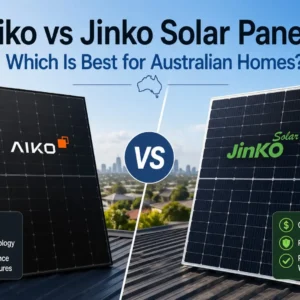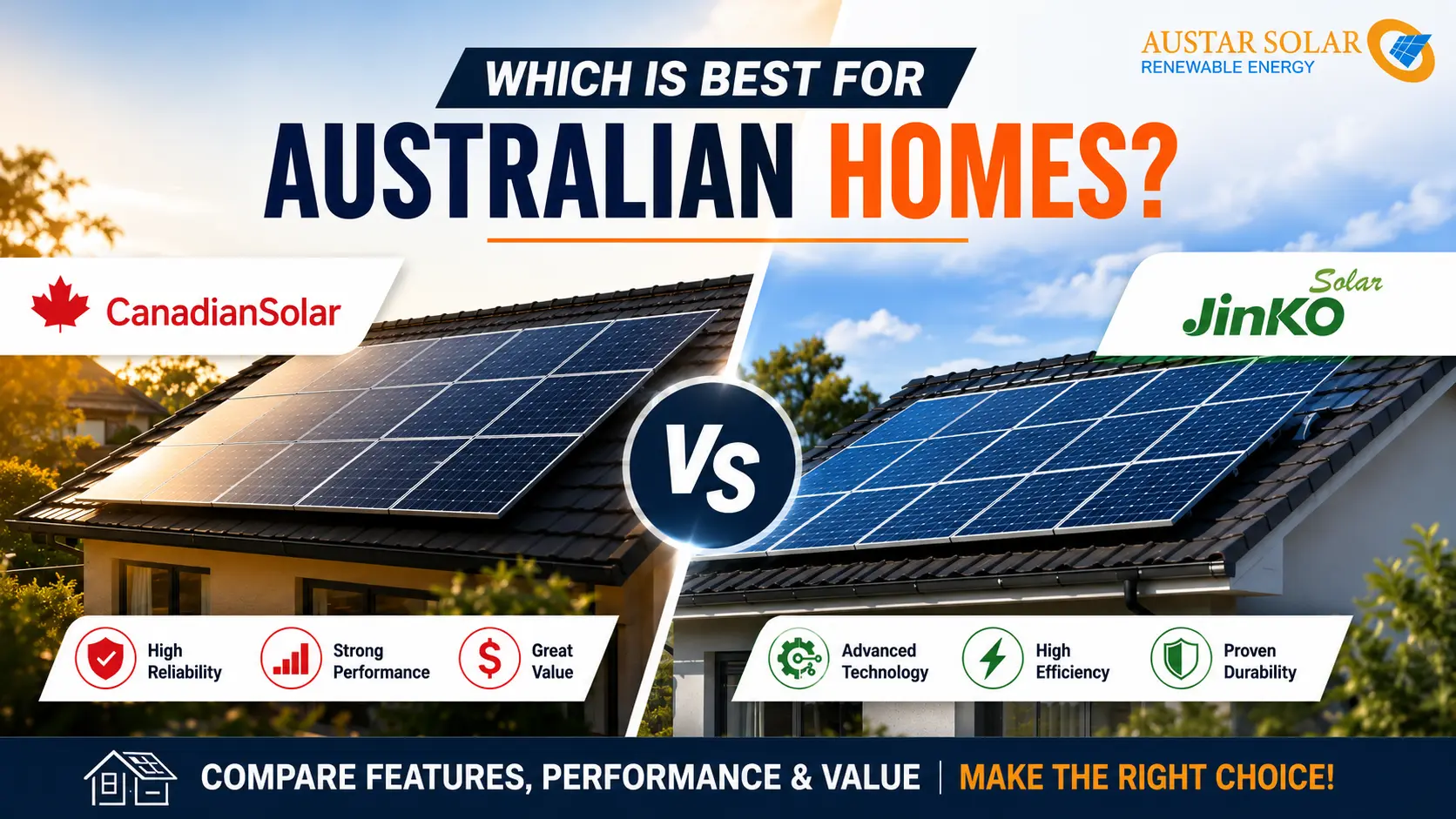
Canadian Solar panels and Jinko Solar panels are two of the most popular tier-1 brands installed across Australia, and picking between them affects your efficiency, warranty, and long-term savings.
In the Canadian Solar vs Jinko Solar Panels debate, Jinko wins on peak efficiency (up to 24.8% with Tiger Neo 3.0). At the same time, Canadian Solar leads in hail and salt-mist durability testing (35mm hail, strong wind ratings). Both offer 25-year warranties and CEC approval, so neither is the wrong choice; the right pick depends on your roof, climate, and budget.
This comparison walks through real specs, panel types, pricing, and performance data for both brands. If you’re weighing Canadian solar panels against Jinko solar panels for your home or business, you’ll get a straight, data-backed answer here no sales pitch, just the numbers that actually matter for your decision.
Overview of Canadian Solar panels
Canadian Solar is a global solar panel brand founded in Canada in 2001. Most Canadian Solar panels sold in Australia are actually manufactured in advanced production facilities across Asia. The company set up its Australian operations in Sydney in 2011 and is now a trusted tier-1 brand used in homes, businesses, and large solar farms nationwide.
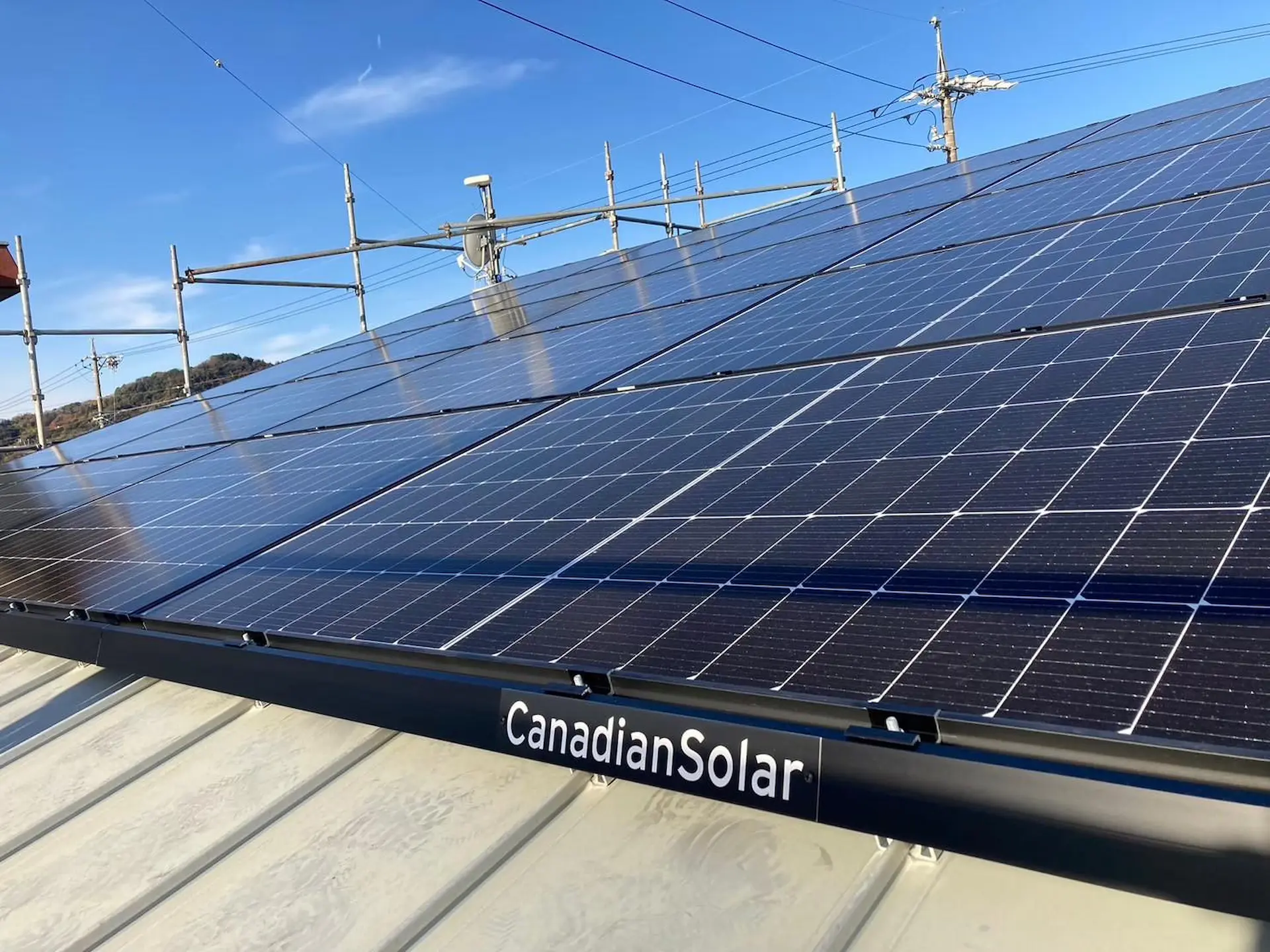
How It Works
Solar panels are built from many small solar cells that absorb sunlight and convert it into electricity (DC power). An inverter then changes this into usable electricity (AC power) for your home or business, or sends extra power back to the grid.
Types of Canadian Solar Panels
| Model | Max Power | Cell Type |
| TOPBiHiKu7 | Up to 725W | N-type TOPCon |
| TOPBiHiKu6 | Up to 600W | N-type TOPCon |
| BiHiKu7 | Up to 665W | Monocrystalline PERC |
| HiKu7 | Up to 670W | Monocrystalline PERC |
| TOPHiKu6 (All-Black) | Up to 470W | N-type TOPCon |
| New N-type High Power 182 Pro | Up to 660W | N-type TOPCon |
| Low Carbon Module (HJT) | Up to 660W | N-type HJT |
Pros
- Tested to withstand 35mm hail, strong winds, and salt mist
- Strong performance in Australia’s heat
- Long warranties, often up to 25 years
- Approved by the Clean Energy Council for use in Australia
- Good value compared to other tier-1 brands
Cons
- Not manufactured in Canada itself, despite the name
- Some newer brands offer slightly higher efficiency on small roofs
- Older P-type panels are being phased out for newer N-type tech
Best Use For
- Homeowners wanting reliable, budget-friendly panels
- Coastal or storm-prone regions, due to weather resistance
- Businesses and large solar farms needing bulk supply
Overview of Jinko solar panel
Jinko Solar is a Chinese company founded in 2006 that produces tier-1 solar panels, and it’s one of the largest solar manufacturers in the world. Jinko has offices in Sydney, Melbourne, Brisbane, Adelaide, and Perth, giving Australian customers strong local support. They ranked second in the 2026 SolarQuotes Installers’ Choice Awards, making them a popular, budget-friendly choice for homes and businesses.
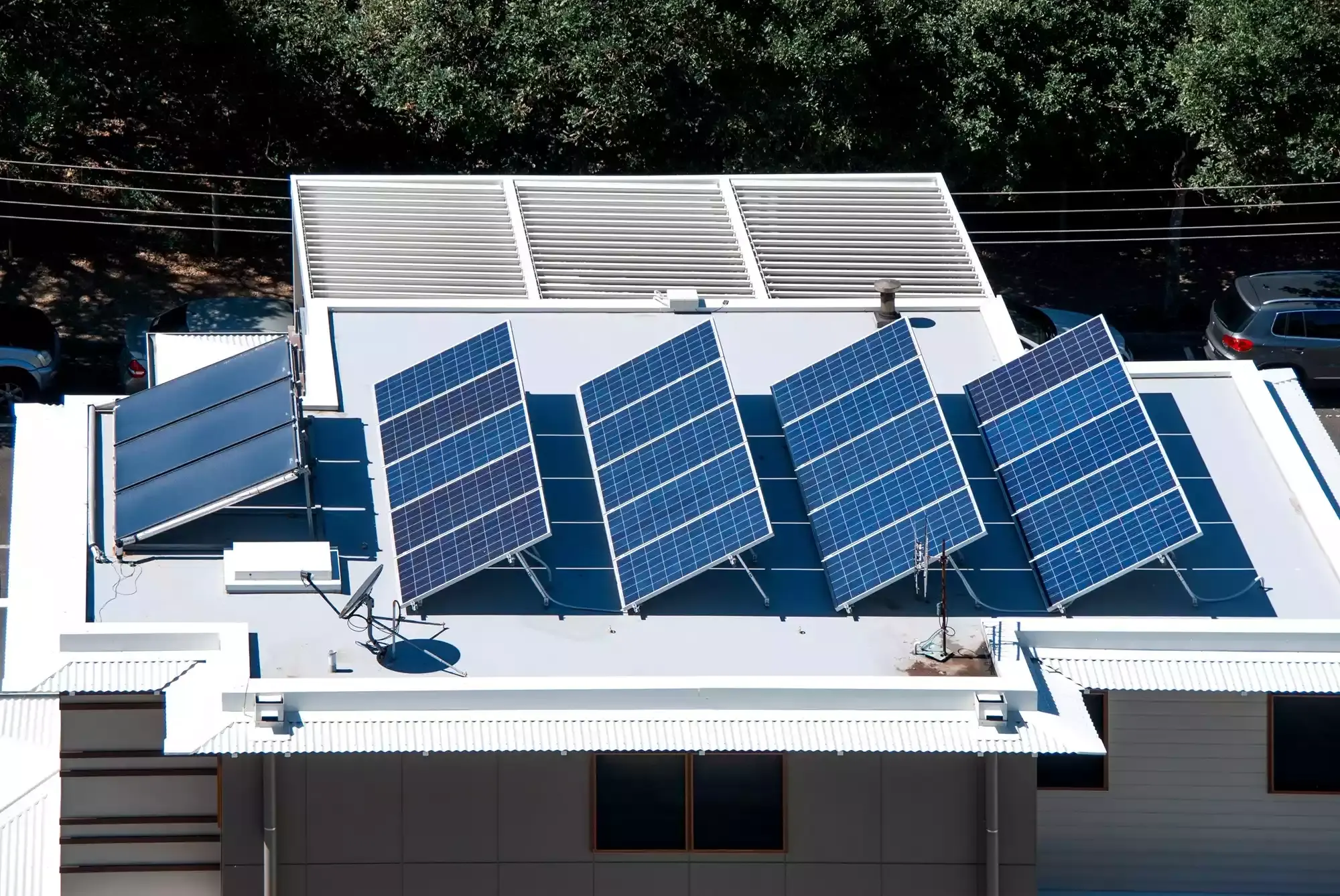
How It Works
Solar panels contain solar cells that absorb sunlight and turn it into DC electricity. An inverter then converts this into AC power your home can use, or sends surplus power back into the grid.
Types of Jinko Solar Panels
| Series | Power Range | Cell Type | Best For |
| Tiger Neo | 430W – 495W | N-type TOPCon | Residential rooftops |
| Tiger Pro | 540W – 610W | P-type PERC | Commercial & industrial |
| Tiger Neo Utility | 650W – 720W | N-type TOPCon (bifacial) | Utility-scale projects |
Pros
- Some of the most affordable tier-1 panels on the market
- Strong local Australian support network
- Good warranties: at least 10 years product, 25 years performance
- Built to withstand heavy winds and snow loads
- Newer Tiger Neo range uses advanced, efficient N-type cells
Cons
- Older/entry models average only around 16.5% efficiency, lower than premium brands
- Wide product range means model and warranty details always need checking
- Being low-cost, panels are sometimes sold by less reliable retailers
Best Use For
- Homeowners wanting reliable panels at a lower price
- Large residential and commercial rooftops
- Utility-scale solar farms needing bulk supply
Jinko vs Canadian Solar Panels: Technical Comparison
| Feature | Canadian Solar | Jinko Solar |
| Founded | 2001, Canada | 2006, China |
| Manufacturing | Mostly Asia, despite Canadian HQ | China |
| Australian presence | Facilities in Queensland, Melbourne, Perth, Sydney | Offices in Sydney, Melbourne, Brisbane, Adelaide, Perth |
| Tier rating | Tier 1 | Tier 1 |
| Top residential model | TOPBiHiKu7 (725W, N-Type TOPCon) | Tiger Neo (up to 495W, N-Type TOPCon) |
| Top efficiency | Up to 23.8% | Up to 24.8% (Tiger Neo 3.0) |
| Commercial/industrial model | BiHiKu7 / HiKu7 (PERC) | Tiger Pro (540–610W, PERC) |
| Utility-scale model | TOPBiHiKu7, Low Carbon HJT | Tiger Neo Utility (650–720W, bifacial TOPCon) |
| Entry-level cell type | Monocrystalline PERC | P-type PERC (Tiger Pro) |
| Premium cell type | N-Type TOPCon / HJT | N-Type TOPCon 3.0 |
| Wind/hail resistance | 35mm hail, 2,400Pa wind load | Up to 5,400Pa (Tiger Pro) |
| Coastal/salt rating | Tested for salt mist and ammonia resistance | Coastal-rated, varies by model |
| Product warranty | Up to 25 years | Up to 25 years (Tiger Neo) |
| Performance warranty | Up to 25–30 years | 30 years, 87.4% output retained (Tiger Neo) |
| Panel weight (large models) | ~30–35kg (utility range) | 32–38kg (Tiger Neo Utility) |
| CEC approval | Yes | Yes |
| Pricing position | Competitive, premium-mid range | Generally more affordable, wide range |
| 2026 installer ranking | Strong, established brand | 2nd place, SolarQuotes Installers’ Choice Awards |
Quick take: Both brands now offer flagship N-type TOPCon panels with very similar top efficiency (23.8% vs 24.8%) and near-identical warranty terms. Canadian Solar has a slight edge in tested hail/salt-mist durability data, while Jinko’s Tiger Neo 3.0 pushes marginally higher efficiency and wind-load resistance. For most homes, the real difference comes down to specific model, installer pricing, and local warranty support rather than brand alone; worth confirming current datasheets with your installer.
Solar Panel Performance Comparison in Australia: Canadian Solar vs Jinko Solar Panels
For most Australian homes, Canadian Solar and Jinko Solar perform very similarly; both offer flagship N-type TOPCon panels with 23–25% efficiency, 25-year warranties, and strong heat resistance. Jinko’s Tiger Neo 3.0 edges slightly ahead on peak efficiency, while Canadian Solar has stronger tested hail and salt-mist durability data. The better choice usually depends on your installer, roof size, and budget rather than the brand alone.
Performance Comparison Table
| Metric | Canadian Solar | Jinko Solar |
| Top efficiency | Up to 23.8% | Up to 24.8% (Tiger Neo 3.0) |
| Max residential power | Up to 725W (TOPBiHiKu7) | Up to 495W (Tiger Neo) |
| Heat performance | Strong, tested for Australian climate | Strong, low degradation in heat |
| Hail resistance | Tested to 35mm hail | Rated for standard AU conditions |
| Wind load rating | 2,400Pa | Up to 5,400Pa (Tiger Pro) |
| Product warranty | Up to 25 years | Up to 25 years |
| Performance warranty | 25–30 years | 30 years, 87.4% output retained |
| Budget-friendliness | Mid-premium pricing | Generally more affordable |
Key Takeaways
- Durability: Canadian Solar has more published hail and coastal-weather testing data.
- Warranty: Nearly identical between both brands’ flagship ranges.
- Price: Jinko tends to be more budget-friendly across its wider model range.
- Best pick: Choose Canadian Solar for coastal or storm-prone homes; choose Jinko for maximum efficiency at a competitive price.
Which Solar Panel Brand Is More Efficient in Australia?
Jinko Solar is currently the more efficient brand. Its Tiger Neo 3.0 range reaches up to 24.8% efficiency, compared to Canadian Solar’s top rating of around 23.8%. Both are considered high-efficiency, tier-1 panels, and the real-world difference in energy output is small.
Efficiency at a Glance
- Jinko Tiger Neo 3.0 – up to 24.8% efficiency, N-type TOPCon
- Canadian Solar TOPBiHiKu7 – up to 23.8% efficiency, N-type TOPCon
- Both brands use similar next-generation N-type cell technology
- A 1% efficiency gap rarely changes your power bill significantly
What Affects Real Performance
- Roof direction and shading
- Local climate and temperature
- Installation quality
- Inverter and system design
Which Should You Choose?
- Choose Jinko for slightly higher lab-tested efficiency and competitive pricing
- Choose Canadian Solar if you want stronger published hail and coastal-durability testing
- For most homes, installer quality and system design matter more than the small efficiency gap
- Both are safe, reliable, CEC-approved choices for Australian conditions
Conclusion
Both Canadian solar panels and Jinko solar panels are reliable, tier-1 choices for Australian homes and businesses. In the Canadian solar panels vs Jinko solar panels comparison, Jinko slightly edges ahead on efficiency and pricing, while Canadian Solar stands out for tested hail and coastal durability. Neither brand is the wrong choice; both carry strong warranties and CEC approval.
If you want maximum efficiency at a competitive price, Jinko solar panels are the smarter pick. If you live in a storm-prone or coastal area and want proven weather resistance, Canadian solar panels are worth the slight premium. Ultimately, your roof size, budget, and installer quality will matter more than brand alone, so compare quotes before deciding.
FAQs on Canadian Solar vs Jinko Solar Panels
Are Canadian solar panels actually made in Canada?
No. Canadian Solar is founded in Canada, but most panels sold in Australia are manufactured in facilities across Asia, similar to most other global solar brands.
Is Jinko Solar a good brand in Australia?
Yes, Jinko is a trusted tier-1 manufacturer with local Australian offices, strong warranties, and consistently high rankings in installer awards, including second place in 2026.
Which panel is better for coastal areas?
Canadian Solar is a strong choice for coastal homes, with published testing for salt mist and ammonia resistance, helping panels withstand harsh, salty coastal environments longer.
Are Jinko panels approved by the Clean Energy Council?
Yes, Jinko Solar panels are Clean Energy Council approved, meaning they meet Australian safety and quality standards and qualify for government solar rebates.
Are Canadian Solar panels CEC approved?
Yes, Canadian Solar panels are also Clean Energy Council approved, making them eligible for Australian solar rebates and suitable for standard residential and commercial installations.