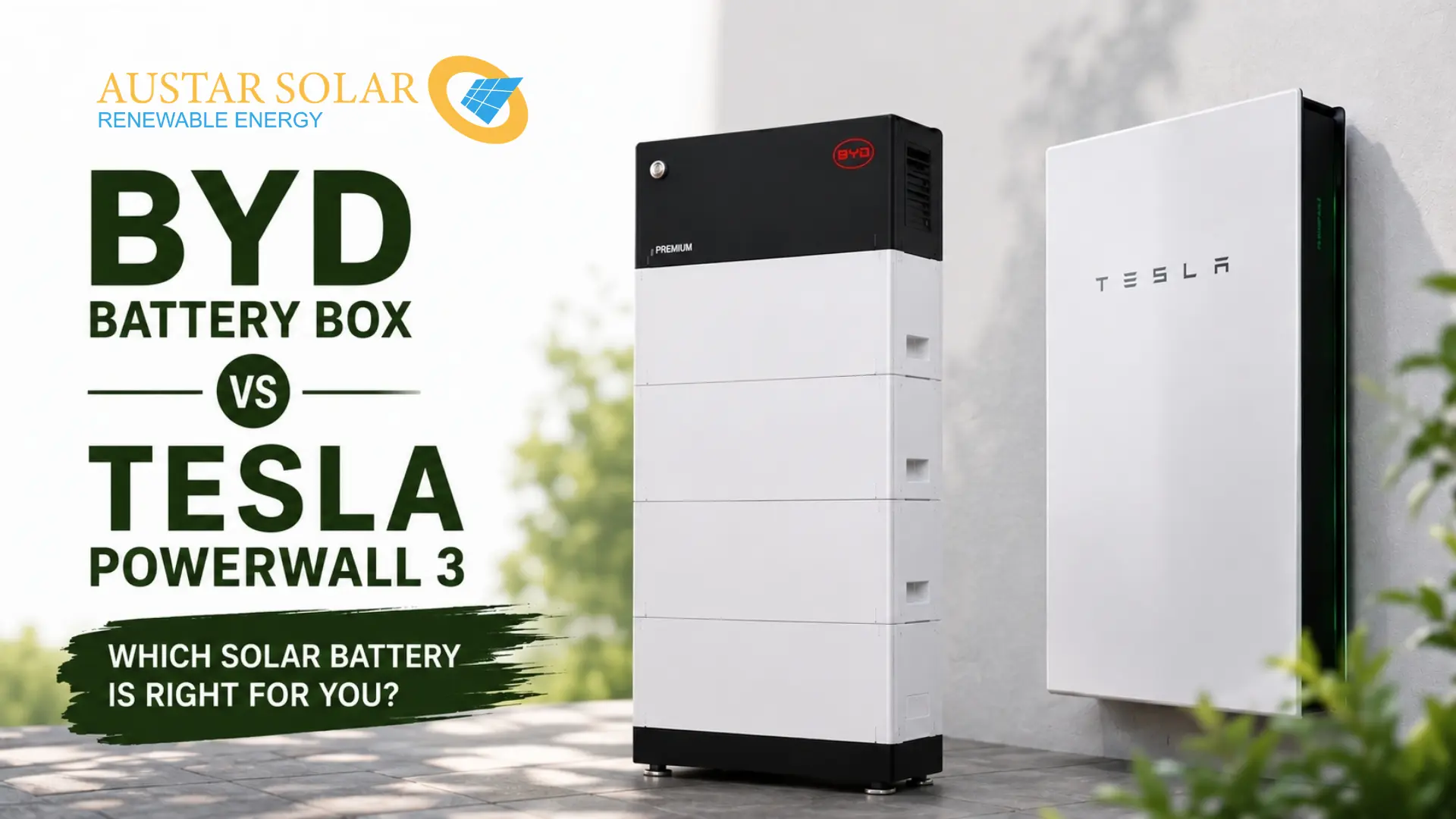
BYD Battery Box vs Tesla Powerwall 3 battery storage is a common comparison for Australian homes with rooftop solar. Tesla Powerwall 3 is an integrated battery system with 13.5 kWh usable capacity, a built-in inverter, and up to 11.5 kW continuous power.
BYD Battery-Box uses modular LFP battery technology and works with compatible third-party inverters. Tesla is better suited to homeowners who want a simple, integrated system with strong power output.
BYD is a better option for those who want flexible battery sizing and more inverter choices. Both can store excess solar energy for use at night and can support backup power when the complete system is correctly configured. The right choice depends on energy use, solar size, backup needs, inverter compatibility, and installation costs.
Overview of Tesla Powerwall 3 Battery Storage in Australia
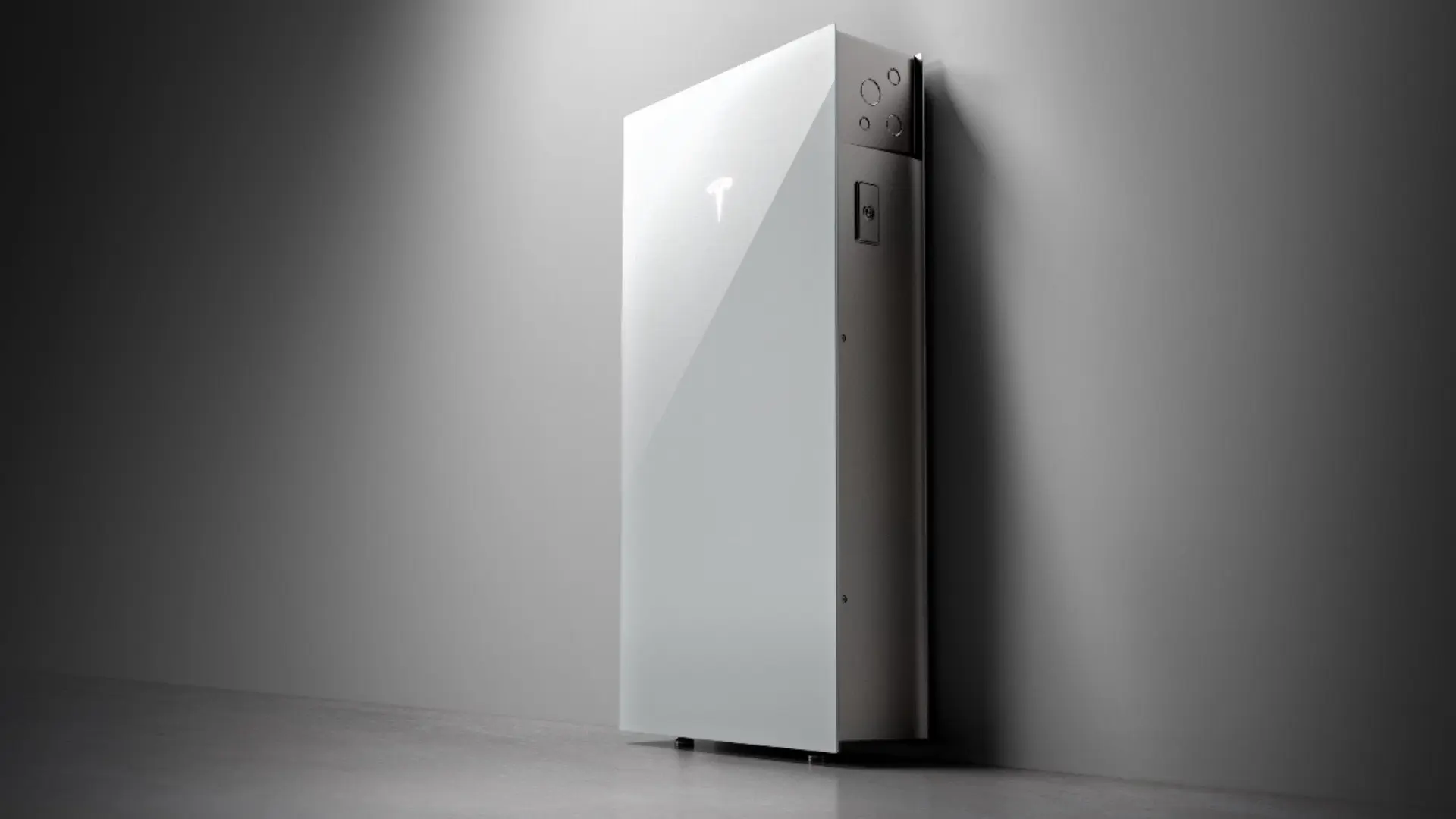
Tesla battery storage is designed to store electricity from solar panels and use it when solar production is low. In Australia, the Tesla Powerwall 3 is the main home battery option. It has 13.5 kWh of usable energy capacity and can provide up to 11.5 kW of continuous power. It also includes an integrated solar inverter, which can simplify installation.
Key Features
- 13.5 kWh usable capacity for daily home energy storage.
- 11.5 kW continuous power for running multiple household appliances.
- Integrated solar inverter reduces the need for a separate solar inverter in compatible systems.
- Backup power can keep selected or whole-home loads running when configured with the required backup equipment.
- Tesla mobile app lets homeowners monitor energy production, battery use, and home consumption.
- Indoor or outdoor installation provides flexible placement options.
- Multiple Powerwalls can be installed when more storage is required.
How Does Tesla Battery Storage Work?
- Solar panels generate electricity during daylight hours.
- The home uses solar power first.
- Extra solar electricity charges the Powerwall.
- When solar production falls, the battery supplies stored electricity to the home.
- At night, stored energy can reduce the need to buy electricity from the grid.
- During a grid outage, the system can provide backup power when properly configured.
Pros
- High power output
- Integrated inverter
- Strong backup capability
- Easy energy monitoring through the Tesla app
- Suitable for solar-powered Australian homes
- Can increase the use of self-generated solar energy
Cons
- Higher upfront cost than some competing batteries
- Installation costs vary between homes
- 13.5 kWh may not be enough for very high-energy households
- Backup operation requires appropriate installation and equipment
- Savings depend on electricity prices, solar generation, and household usage
Best For
Tesla Powerwall 3 is best for Australian homes with rooftop solar, high evening electricity use, and households that want battery storage plus backup power. It is particularly useful for homeowners who want a simple system with app-based energy monitoring and strong power output.
Interested in Tesla Powerwall 3? Read our detailed Tesla Powerwall 3 Review Australia 2026 to explore its price, specifications, performance, pros and cons, and whether it’s worth considering for your home. Read the full Tesla Powerwall 3 Review
Overview of BYD Battery-Box Storage in Australia
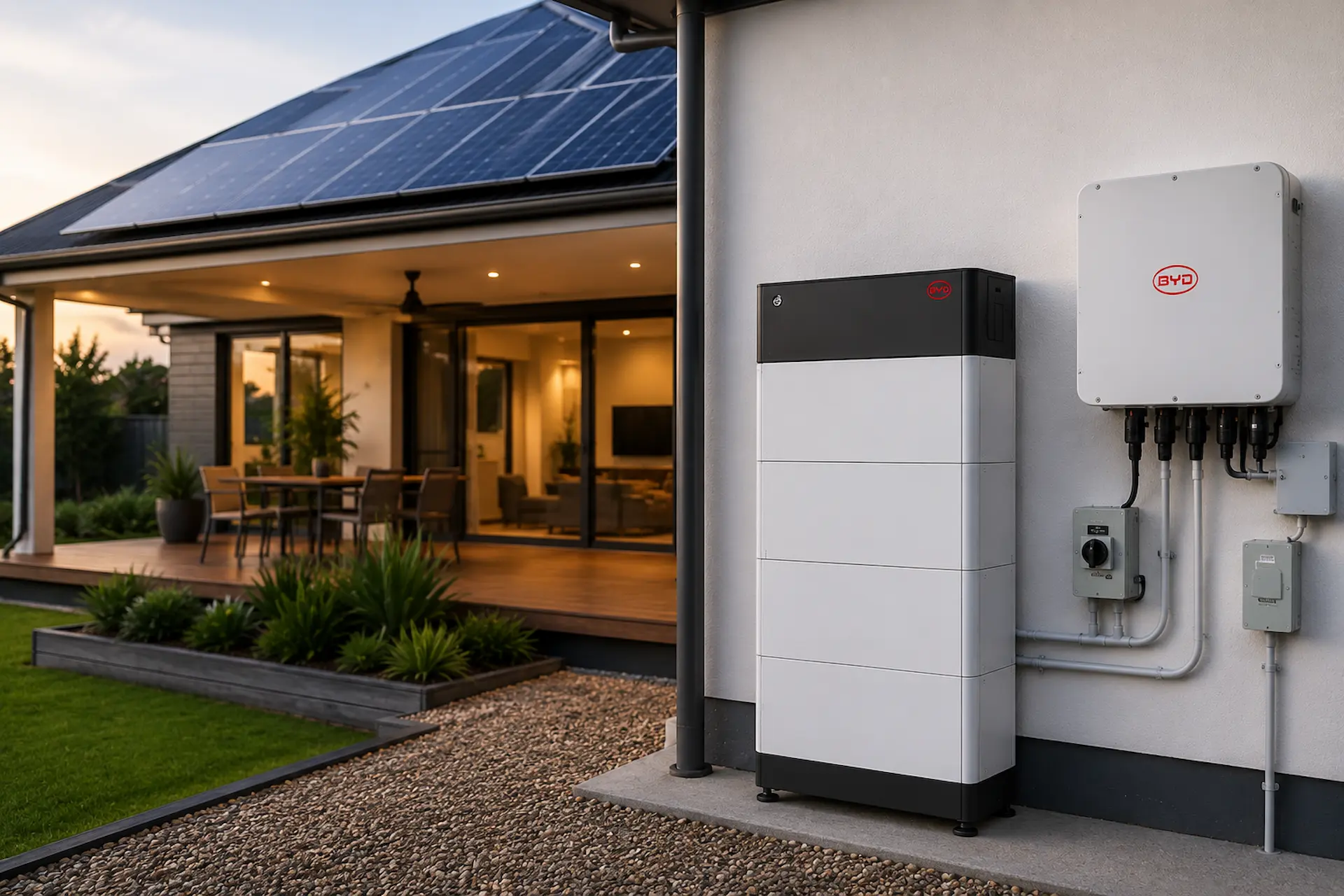
BYD battery box storage is a modular home energy storage solution used with solar systems in Australia. BYD offers battery systems, such as the Battery-Box Premium HVS and HVM, that use lithium iron phosphate (LFP) chemistry. Their modular design allows homeowners to choose a storage size based on their energy needs.
BYD batteries store excess solar power during the day and make it available when solar production drops. This can help households use more of their own solar energy and reduce electricity purchases from the grid.
Key Features
- LFP battery chemistry for improved safety and long service life.
- Modular design allows different battery capacities to be configured.
- High usable energy helps maximise the amount of solar power that can be stored.
- Scalable storage can support changing household energy needs.
- Compatible with selected third-party inverters, depending on the battery model and system configuration.
- Backup power support is possible when paired with a suitable inverter and backup setup.
- Designed for residential solar and energy storage applications.
How Does BYD Battery Storage Work?
- Solar panels generate electricity during the day.
- The home uses solar power first.
- Excess electricity charges the BYD battery.
- The battery stores this energy for later use.
- At night or during periods of low solar production, stored electricity powers household loads.
- If configured for backup, the battery can supply power during a grid outage.
Pros
- LFP chemistry offers good safety characteristics.
- Modular capacity makes system sizing flexible.
- Can increase solar self-consumption.
- Compatible with various inverter platforms.
- Suitable for new and existing solar systems, depending on compatibility.
Cons
- Requires a compatible inverter.
- Installation costs vary by system and location.
- Actual backup capability depends on the complete system design.
- Larger storage requirements increase the overall system cost.
- Model availability and installer support can vary across Australia.
Best For
BYD battery storage is best for Australian homes with rooftop solar that want flexible battery capacity, higher solar self-consumption, and reliable energy storage. It is also a good option for homeowners seeking a modular LFP battery system compatible with a compatible inverter.
Considering BYD Battery Storage? Read our detailed BYD Battery Storage Review Australia 2026 to explore its features, pricing, performance, pros and cons, and whether it’s the right choice for your home. Read the full BYD Battery Storage Review
Technical Comparison of Tesla vs BYD Battery Storage
For Australian homes, Tesla Powerwall 3 is an integrated battery system with a built-in inverter, while BYD Battery-Box Premium HVS/HVM is a modular high-voltage battery that normally works with a compatible third-party inverter. Tesla offers a simpler all-in-one setup, while BYD provides more flexibility in battery sizing and inverter selection.
Technical Comparison Table
| Spec | Tesla Powerwall 3 | BYD Battery-Box (HVS/HVM) |
| Battery chemistry | LFP (Lithium Iron Phosphate) | Cobalt-free LFP cells from BYD’s own gigafactories |
| Usable capacity | 13.5 kWh usable capacity | HVS: 5.1–12.8kWh (smaller modular blocks); HVM: 8.3–22.1kWh (larger blocks for whole-home use) |
| Inverter | Integrated hybrid inverter rated at 11.5kW continuous output | Requires a compatible external inverter — works with Fronius, SMA, SolarEdge, GoodWe, Sungrow and most other major brands |
| Round-trip efficiency | ~89% — lower than modular systems partly because the integrated inverter’s conversion losses are counted in the overall figure | Typically higher, since AC-conversion losses are attributed to the separate inverter, not the battery itself |
| Modularity/scalability | Fixed 13.5 kWh units, multiple units can be stacked | Modular — start at 8.3 kWh and add modules up to 22.1 kWh as needs change |
| Backup power | Can power the entire home, including air conditioners and EV chargers, during a blackout | Strong backup capability, but performance depends on the paired external inverter |
| Cost per usable kWh | ~$667/kWh (most expensive of the major brands, though it includes a full solar inverter) | ~$512/kWh — the value leader among major brands |
| Installed cost (typical) | ~$11,500–$13,000 for a 10kWh-class system after rebates | ~$9,800–$11,500 for a comparable HVM 11.0 after rebates |
| Warranty | 10-year warranty | 10-year warranty (model-dependent; per BYD warranty terms, should be checked by exact model and installer documents) |
| Market position (AU) | Most-installed home battery in NSW, launched late 2024 | Holds roughly a third of the residential battery market in Australia |
| Best fit | New solar installs, homes wanting single-brand simplicity and premium finish, strong whole-home backup needs | Retrofits with existing inverters, budget-conscious buyers, households wanting future expansion |
Solar Panel Performance Comparison in Australia: Tesla vs BYD battery storage in Australia
Tesla and BYD are battery storage brands, not solar panel manufacturers. Their batteries do not directly change how much electricity your solar panels generate. Instead, they affect how efficiently you store and use excess solar energy.
For Australian homes, Tesla Powerwall 3 focuses on an integrated system and high power output, while BYD Battery-Box offers modular storage with compatible inverter options.
Tesla vs BYD Battery Performance
| Factor | Tesla Powerwall 3 | BYD Battery Storage |
| Main role | Stores excess solar energy | Stores excess solar energy |
| Usable capacity | 13.5 kWh | Varies by HVS/HVM configuration |
| Battery chemistry | Lithium-ion | LFP |
| Solar inverter | Integrated | Requires compatible inverter |
| Power output | Up to 11.5 kW continuous | Depends on battery and inverter |
| Solar energy use | Strong for daily household loads | Strong with a correctly matched inverter |
| System flexibility | More integrated | Highly modular |
| Backup capability | Available with suitable setup | Available with suitable inverter and setup |
| Monitoring | Tesla app | Usually through the compatible inverter system |
| Best advantage | High power and simple system design | Flexible battery sizing |
Which Performs Better?
Tesla Powerwall 3 is a strong choice for homes that need high power output and a simple integrated system. BYD is better suited to homeowners who want flexible battery sizing and more choice when selecting an inverter.
For both systems, actual solar performance depends on panel size, inverter efficiency, roof conditions, household consumption, battery capacity, and installation quality.
Which Solar Panel Brand Is More Efficient in Australia?
Tesla and BYD do not manufacture solar panels, so neither brand can be called the more efficient solar panel brand. They are battery storage brands. The better choice depends on how efficiently and flexibly you want to store and use your solar energy.
Tesla vs BYD Battery Efficiency
Tesla Powerwall 3 is a strong choice for Australian homes that want an integrated battery system. It has 13.5 kWh usable capacity, an integrated inverter, and up to 11.5 kW continuous power. This makes it suitable for homes with high evening electricity demand.
BYD Battery-Box uses LFP battery chemistry and has a modular design. Its storage capacity can be configured to suit different household requirements. However, BYD batteries require a compatible external inverter, so overall system efficiency depends on the battery, inverter, and installation.
Which Should You Choose?
- Choose Tesla for a simpler all-in-one system and high power output.
- Choose BYD for modular battery capacity and greater inverter choice.
- Tesla can be easier to manage through its integrated system and app.
- BYD can be better for customised solar and battery configurations.
For Australian solar homes, Tesla is generally the simpler battery solution, while BYD offers greater system flexibility. Neither is a solar panel brand, so panel efficiency should be compared separately.
Conclusion
Tesla vs. BYD battery storage comes down to system design, flexibility, and household energy needs. Tesla Powerwall 3 is a strong choice for homeowners who want an integrated battery with a built-in inverter, high power output, and simple energy monitoring.
BYD Battery-Box is better for homeowners who want modular storage and more flexibility when choosing a compatible inverter. Both can store excess solar energy and reduce reliance on grid electricity. Tesla may suit households looking for a straightforward solution, while BYD can work well for customised solar systems.
Before choosing, compare capacity, inverter compatibility, backup needs, installation costs, and expected energy use.
FAQs of BYD Battery Box vs Tesla Powerwall 3
Which Battery is Easier To Install?
Tesla can be simpler because Powerwall 3 integrates the battery and inverter. BYD requires a compatible external inverter, so installation depends more on the selected system components.
Which Battery is More Efficient?
Both can provide efficient energy storage when correctly installed. Tesla offers an integrated system, while BYD’s overall performance depends on the battery, compatible inverter, installation, and energy-management system.
What Battery Chemistry Does BYD Use?
BYD Battery-Box Premium HVS and HVM systems use lithium iron phosphate (LFP) chemistry. This technology provides good safety, durability, and stable performance for home energy storage.
Does BYD Battery Storage Need An Inverter?
Yes. BYD Battery-Box systems require a compatible external inverter. The inverter converts electricity between the battery and household electrical system and manages energy flow during operation.
Does Tesla Powerwall 3 Have A Built-In Inverter?
Yes. Tesla Powerwall 3 includes an integrated solar inverter, which can simplify system design and reduce the need for a separate solar inverter in compatible installations.
Which Battery Has More Storage Capacity?
BYD offers several modular configurations, allowing storage capacity to be increased according to system requirements. Tesla Powerwall 3 provides 13.5 kWh usable capacity per battery unit.
Can Tesla and BYD Batteries Provide Backup Power?
Yes. Both can support backup power when installed with the required equipment and suitable system configuration. Backup capacity depends on household loads, inverter design, and installation requirements.