BYD is one of the most widely installed solar battery brands in Australia, built on Lithium Iron Phosphate (LFP) chemistry and a modular design. Homeowners can start with a small battery and add modules later as energy needs grow.
This BYD battery storage review covers what matters for buyers:
BYD’s performance in Australian heat, pricing across the Commercial, HVS, HVM, LVS, and LVL series, how it compares to Tesla Powerwall 3 and Sungrow, and real customer feedback from installed systems.
It also covers warranty terms, specifications, and whether the investment pays off long-term. Use this as a reference for choosing the right battery series and capacity for your home.
Overview of BYD battery storage in Australia
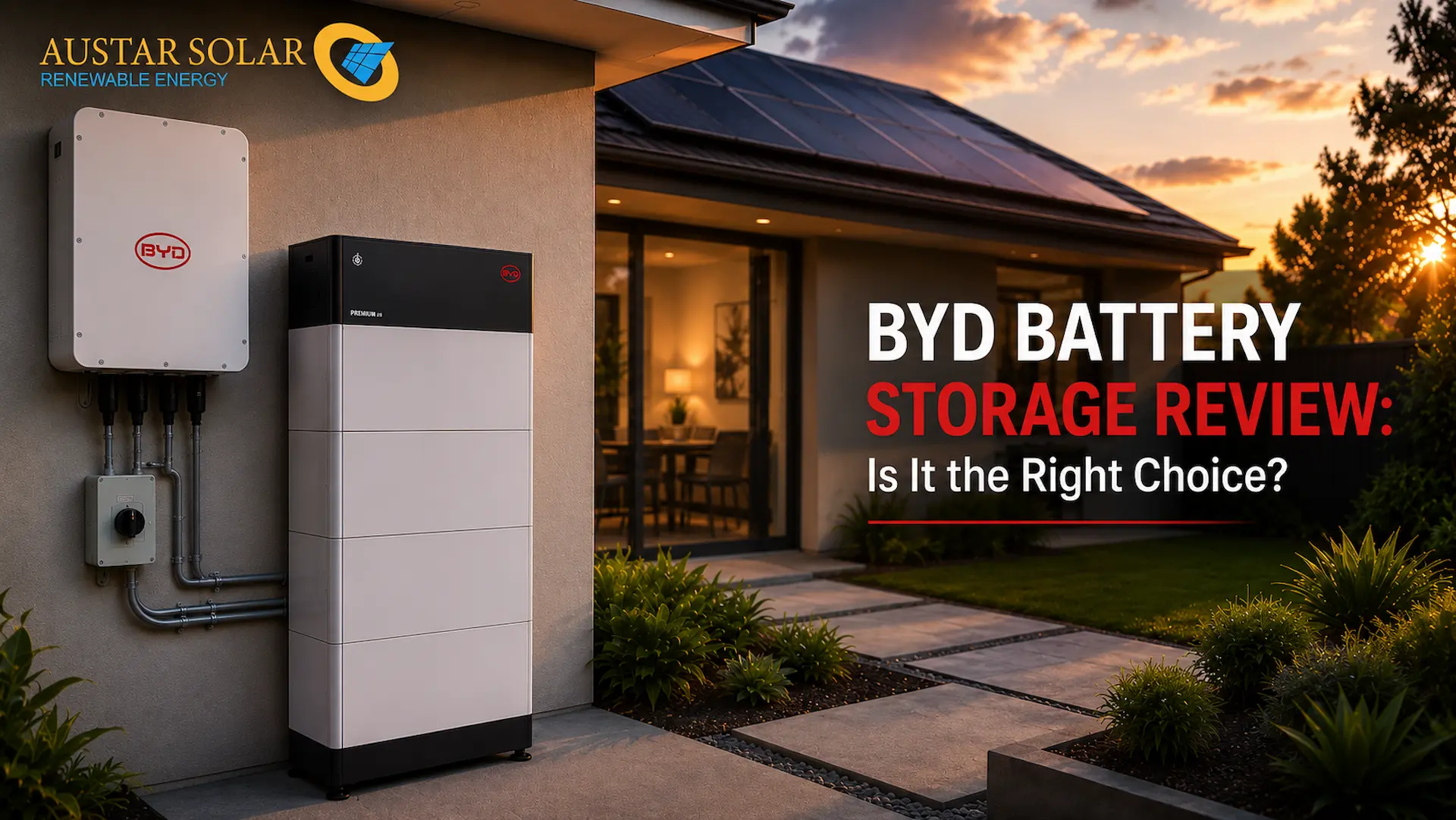
BYD is a Chinese manufacturer selling home and commercial battery storage in Australia under the Battery Box Premium range. It uses LFP (Lithium Iron Phosphate) chemistry, is modular (stackable), and works with solar systems to store excess power for later use.
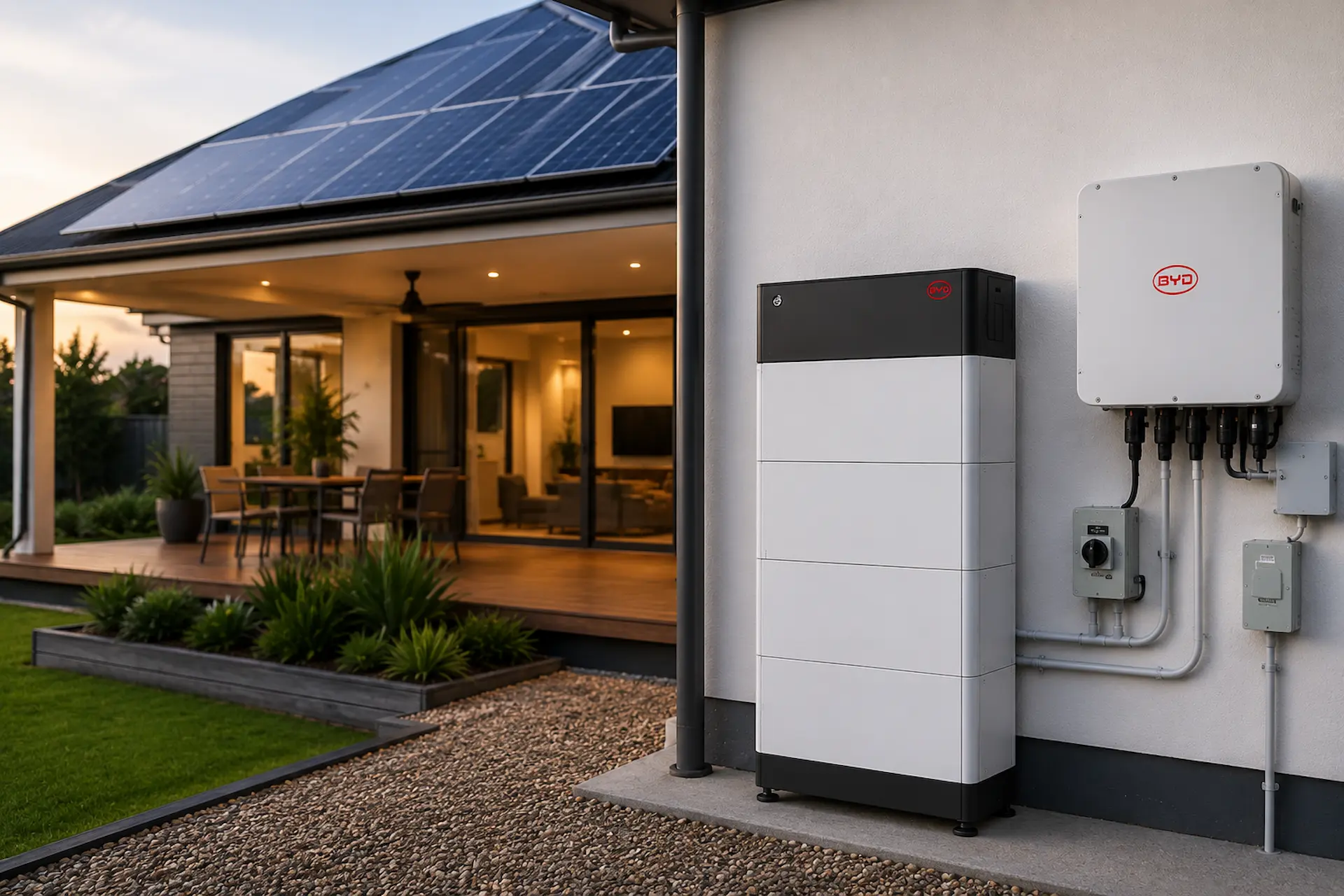
How It Works
- Solar panels generate power during the day; excess (unused) energy charges the BYD battery instead of being exported to the grid
- Stored energy is used at night or during peak price hours, cutting grid reliance
- Modules stack together (like Lego) to increase capacity as needed
- Works with existing inverters like Fronius and SMA, so no inverter swap is usually required
Specifications
| Spec | Details |
| Chemistry | LFP (Lithium Iron Phosphate) |
| Module size | 2.56 kWh / 2.76 kWh / 4 kWh (depends on series) |
| Home capacity range | 5.1 kWh – 22.1 kWh (stackable) |
| Commercial capacity | Large rack systems available, MWh-scale for utility projects |
| Cycle life | 6,000 cycles at 80% depth of discharge |
| Throughput | ~3 MWh per kWh capacity (~1 full cycle/day over 8 years) |
| Product warranty | 10 years (material/workmanship defects) |
| Performance warranty | ≥60% usable capacity guaranteed at 10-year mark |
| Inverter compatibility | Fronius, SMA, and most major solar inverters |
| Voltage types | Low-voltage (LVS, LVL) and high-voltage (HVS, HVM) models |
| Price (approx.) | A$8,260 (12 kWh) – A$29,022 (50 kWh) |
| Series available in Australia | 5 series (LVS, LVL, HVS, HVM, and commercial range) |
Pros
- Safer chemistry, lower fire risk
- Scalable — start small, add capacity later
- Broad inverter compatibility
- Long warranty and cycle life
- Strong local dealer/installer network
Cons
- Higher upfront cost than basic systems
- Extra modules needed as needs grow, adding cost over time
- Performance depends heavily on correct inverter pairing
- Chinese manufacturer — some buyers prefer local/Western brands for support
Best Use
- Homes with solar wanting to cut grid electricity costs
- Households planning to expand storage later (growing family, future EV)
- Areas prone to blackouts, for backup power
- Businesses needing larger-scale commercial storage
Key Features of the BYD battery storage
BYD Battery Storage is one of the most used home and commercial energy storage systems in Australia, built on modular LFP battery technology. Below are its core features.
Modular Design
BYD home batteries stack like building blocks. Start with a small unit and add modules later as power needs grow.
Safe LFP Chemistry
Uses Lithium Iron Phosphate cells, more heat-stable than older battery types, lowering fire risk in hot Australian conditions.
Wide Inverter Compatibility
Works with major inverters like Fronius and SMA, so most homeowners can add a battery without replacing their inverter.
Long Warranty and Lifespan
10-year product warranty, plus a guarantee of at least 60% usable capacity after 10 years. Rated for 6,000 cycles at 80% depth of discharge.
Scalable for Homes and Businesses
Ranges from 5.1 kWh home units to large commercial rack systems used in mining and industrial projects.
Backup Power During Outages
Stores solar energy to power homes during blackouts, cutting grid dependence.
Local Support Network
Established Australian dealer and installer network gives easier access to service and parts compared to smaller brands.
Available BYD battery storage Series for Australia
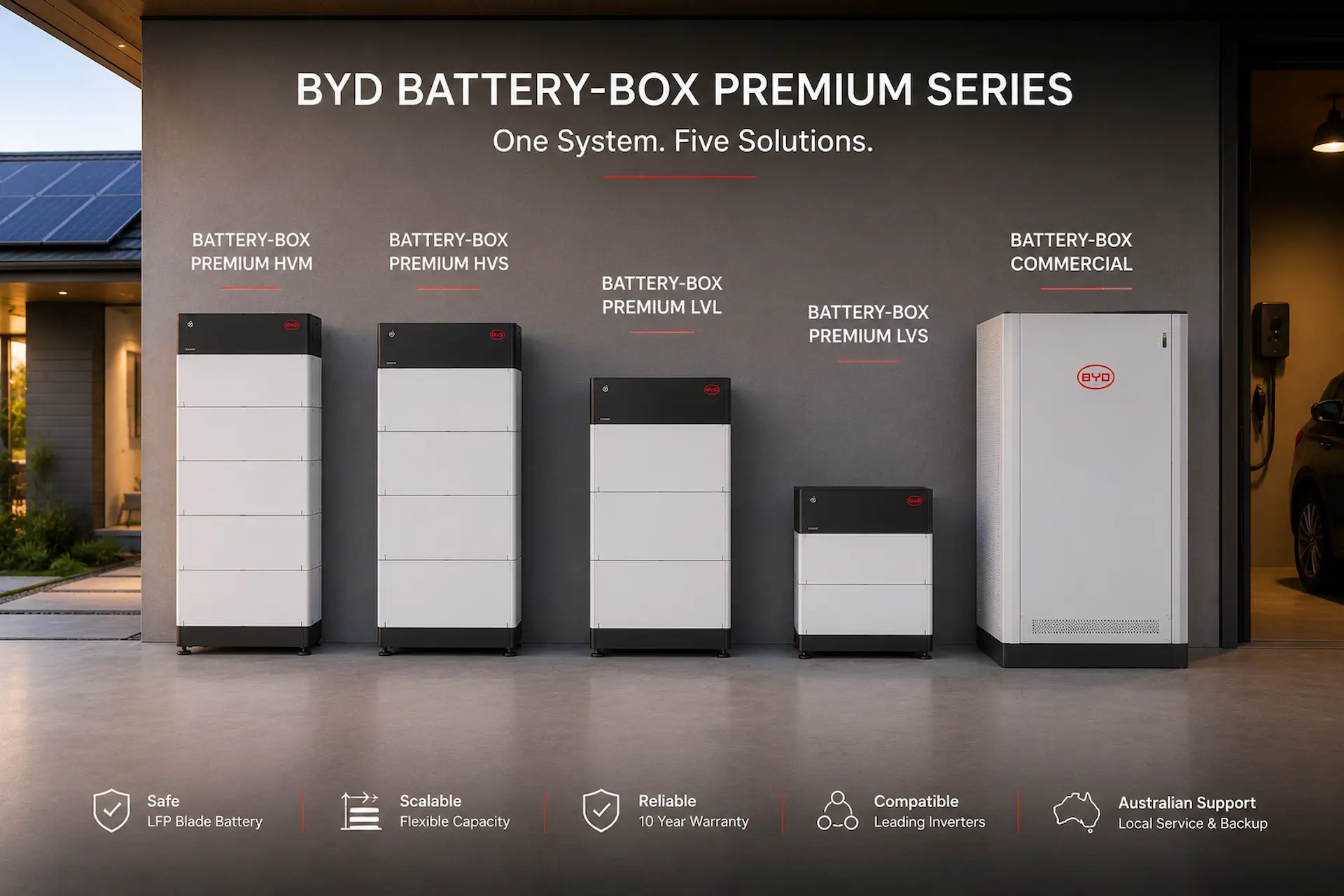
BYD company battery sells five main Battery-Box Premium series in Australia, split by voltage type and use case. Details below.
| Series | Voltage Type | Module Size | Capacity Range | Best For | Datasheet |
| Battery-Box Premium HVM | High-voltage | 2.76 kWh | 20 kWh – 50 kWh | Homes wanting high efficiency and scalable capacity | HVM Datasheet |
| Battery-Box Premium HVS | High-voltage | 2.56 kWh | 5.1 kWh – 12.8 kWh | Smaller homes needing compact high-voltage storage | HVS Datasheet |
| Battery-Box Premium LVL | Low-voltage | Fixed pack | 15.4 kWh | Homes needing large capacity without high-voltage setup | LVL Datasheet |
| Battery-Box Premium LVS | Low-voltage | 4 kWh | 12 kWh – 20 kWh | Homes wanting flexible low-voltage stacking | LVS Datasheet |
| Battery-Box Commercial | High-voltage/Rack | Large rack modules | MWh-scale | Businesses, mining, and industrial projects | Battery-Box Commercial Datasheet |
BYD Battery Storage Performance in Australian Conditions
BYD batteries are built to handle Australia’s tough climate, from hot inland summers to humid coastal air. Real installer and customer feedback backs this up.
Heat and Climate Performance
BYD’s LFP chemistry gives higher thermal stability, longer cycle life, and better performance at high temperatures than older NMC batteries. In practice, the Battery Box can sit in a garage in full summer sun or a hot roof cavity and still work within spec. Its IP55 rating and thermal management suit both inland heat and coastal humidity.
Reliability and Warranty Experience
Installers report BYD’s warranty claim process is one of the most streamlined in Australia, backed by a strong local support network. Long-term reliability has been high, with very few BMS or cell-level failures compared to newer competing brands. However, experience still depends heavily on choosing a proven, accredited installer.
Customer Feedback
Genuine buyer reviews describe it as “very satisfied with the battery”, praising the app for monitoring charge and discharge. Buyers also note it’s easy to install, and the modular setup makes sizing simple. One customer chose BYD because it was the only battery compatible with their existing Fronius inverter.
Compliance
BYD complies with AS/NZS 5139, the Australian installation standard, and is listed on the Clean Energy Council’s approved products register.
BYD Home Battery Price in Australia 2026
BYD Battery Box pricing in Australia 2026 varies by series and capacity. Approximate costs below.
| Series | Capacity | Price (Approx.) |
| Battery-Box Premium LVL | 15.4 kWh | A$5,700+ |
| Battery-Box Premium LVS | 12 kWh | A$8,260 |
| Battery-Box Premium LVS | 20 kWh | A$12,640 – A$15,040 |
| Battery-Box Premium HVM | 20 kWh | A$11,232 |
| Battery-Box Premium HVM | 30 kWh | A$15,829 |
| Battery-Box Premium HVM | 40 kWh | A$23,425 |
| Battery-Box Premium HVM | 50 kWh | A$29,022 |
| Battery-Box Premium HVS | 5.1 kWh – 12.8 kWh | Priced per tower, varies by installer |
| Battery-Box Commercial | MWh-scale | Custom quote only |
NOTE*:Final price depends on location, installer, inverter compatibility, and installation complexity. Federal battery rebates (up to A$16,800 in 2026) can reduce upfront cost.
BYD battery storage Vs. Others
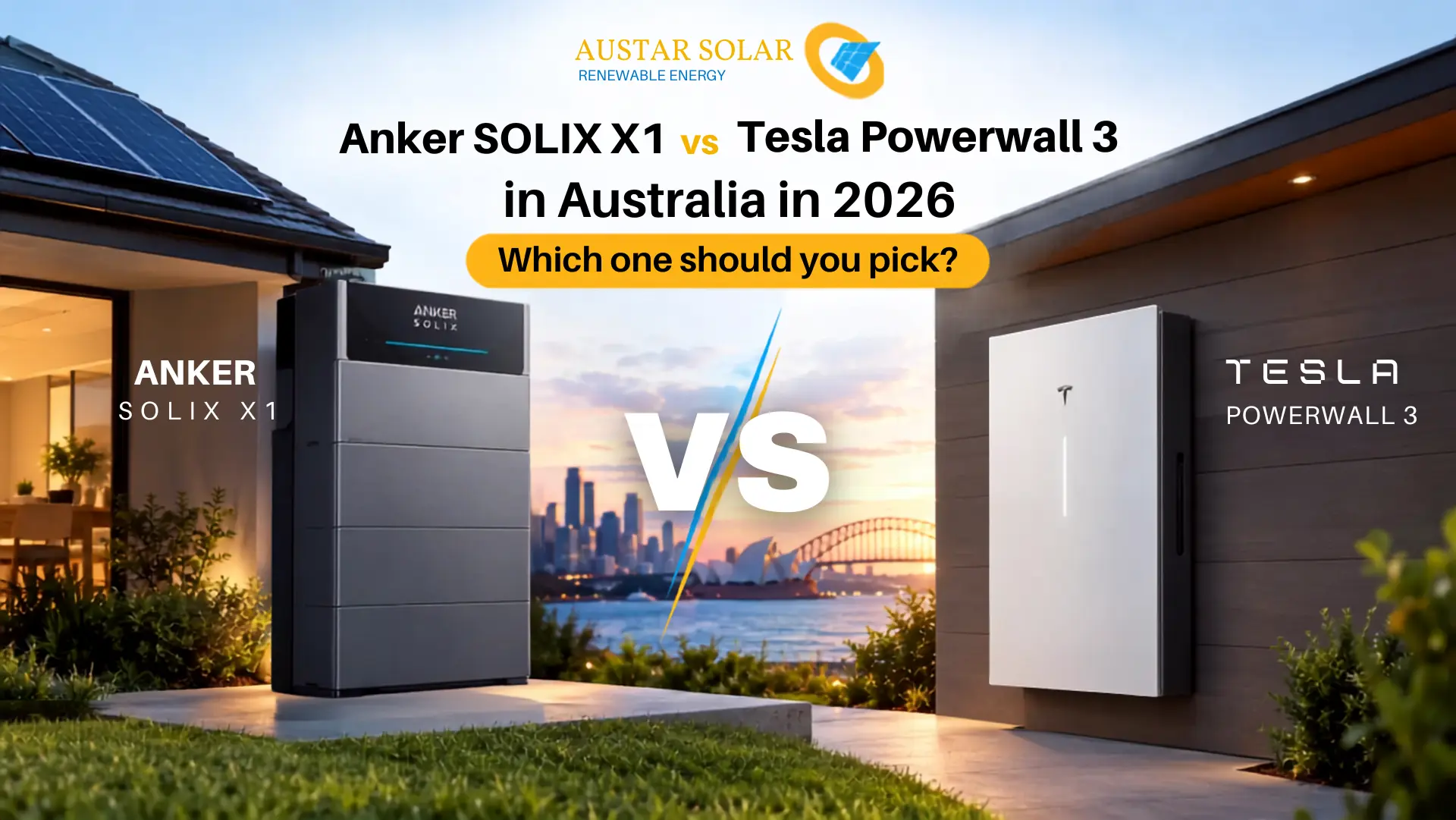
BYD home battery Australia is mainly against Tesla Powerwall 3 and Sungrow in the Australian battery market. Here’s how they stack up.
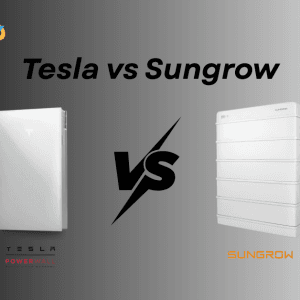
BYD vs Tesla Powerwall 3
- BYD’s 6,000-cycle life is designed to last over 15 years of daily use, outperforming the Tesla Powerwall 3 in longevity
- Tesla: all-in-one design with built-in inverter, simpler setup
- BYD: requires separate hybrid inverter, but offers more flexibility to mix brands
- BYD is modular (add capacity later); Powerwall 3 has a fixed 13.5 kWh size
BYD vs Sungrow
- Both use LFP chemistry and work with popular hybrid inverters, giving similar safety and reliability.
- Sungrow integrates tightly with its own inverters.
- BYD offers wider third-party inverter compatibility, useful for existing solar setups.
See the BYD Battery-Box in action—our detailed video review covers performance, efficiency, modular expansion, and real-world value for Australian homeowners.
Is the BYD Battery Worth It in Australia?
Yes, the BYD solar battery is worth it for most Australian homes, especially if you want a scalable, safe battery at a fair price.
Why It’s Worth It
- Average installed price is around $1,002 per usable kWh before rebates, placing it in the lower price category compared to premium brands like Tesla
- Eligible for federal and state rebates, including WA, NT, and the national $372/kWh rebate
- LFP chemistry means low fire risk and strong heat tolerance for Australian summers
- Modular design lets you expand storage later instead of buying a whole new system
- Low failure rate and a streamlined warranty process reported by installers
Where It Falls Short
- No built-in inverter. You need a compatible hybrid inverter
- No dedicated BYD app; monitoring depends on your inverter brand
Conclusion
BYD battery storage remains a strong choice for Australian homes in 2026. Its LFP chemistry handles local heat well, its modular design allows capacity to grow with household needs, and its 10-year warranty backed by a local support network reduces long-term risk.
Pricing is competitive against Tesla Powerwall 3 and Sungrow, especially for households planning future expansion. Real customer feedback shows reliable daily cycling and strong solar self-consumption, though upfront costs remain a consideration.
For homeowners wanting a scalable, safe, and well-supported battery system, BYD is a solid option. As always, confirm inverter compatibility and get quotes from CEC-accredited installers before purchasing.
FAQs of BYD battery storage review
Is BYD safe from fire risk?
Very safe. LFP chemistry has much higher thermal runaway resistance than older NMC batteries, reducing fire risk significantly.
How long does a BYD battery last?
A BYD battery typically lasts more than 6,000 charge cycles. With normal household use, many systems can provide reliable energy storage for over 15 years.
Do BYD batteries work with existing solar panels?
Yes. BYD batteries can work with existing solar systems when paired with a compatible hybrid inverter or battery-ready inverter approved by the installer.
Can BYD batteries provide backup power?
Yes. BYD batteries can provide backup power during outages when installed with a compatible hybrid inverter and backup interface designed for emergency power operation.
How much maintenance does a BYD battery require?
BYD batteries require very little maintenance. Regular system monitoring and occasional inspections by a qualified installer help maintain reliable performance over many years.
Does a BYD battery reduce electricity bills?
Yes. A BYD battery stores excess solar power instead of exporting it. Using stored energy during peak periods can significantly reduce electricity bills over time.