AIKO Newest Models in Australia: A Complete Premium Solar Insight
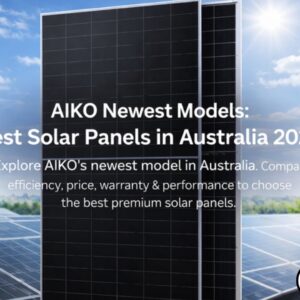
In Australia’s harsh sun, high temperatures, and coastal saltwater environments, choosing a reliable solar solution is crucial, as these factors directly affect energy production and long-term performance. AIKO’s latest model ensures high efficiency, low heat loss, and stable output through advanced ABC technology, which is considered an effective and future-proof solution for modern residential and premium installations.
AIKO Newest Models Review – Key Insights
AIKO panels deliver maximum output, reduced heat loss, and long-term reliability.
- Maximum 25.2% efficiency increases power generation
- Maintains stable output in extreme temperatures
- Provides long-term durability in coastal areas
| Features | AIKO Panel | Normal Panel |
| Efficiency | 23.8–25.2% | 20–21% |
| Heat Loss | Less | More |
| Lifetime Output | 88.85% in 30 years | About 84% |
Company Overview
AIKO Energy entered the Australian market in 2023 by setting up an office in Melbourne and quickly became known for its high efficiency due to its advanced ABC cell technology.
Compared to conventional panels, this brand focuses on power generation in real environments, where not only lab-based performance is maintained, but also long-term stable output is ensured by taking into account the effects of heat, light, and weather, which is very suitable for the harsh Australian climate.
AIKO Latest Models Specifications & Performance
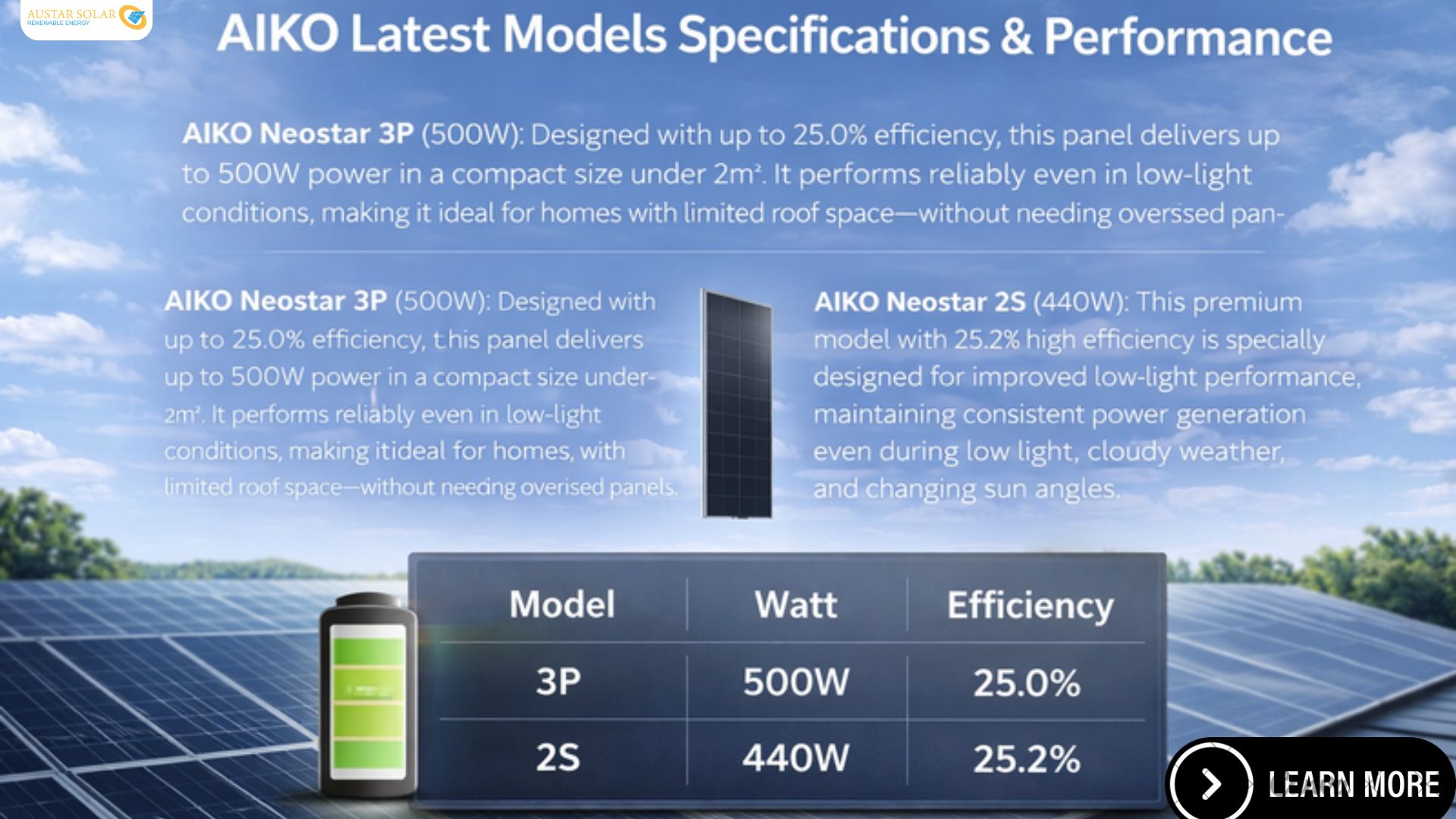
- AIKO Neostar 3P (500W): Designed with up to 25.0% efficiency, this panel delivers up to 500W power in a compact size under 2m². It performs reliably even in low-light conditions, making it ideal for homes with limited roof space—without needing oversized panels.
- AIKO Neostar 2S (440W): This premium model with 25.2% high efficiency is specially designed for improved low-light performance, maintaining consistent power generation even during low light, cloudy weather, and changing sun angles.
| Model | Watt | Efficiency |
| 3P | 500W | 25.0% |
| 2S | 440W | 25.2% |
Price Overview (Australia 2026)
AIKO Energy’s Neostar series is positioned in the premium category in Australia, where its price is relatively high due to its improved efficiency and long-term performance.
- Neostar 3P (500W): This model is typically priced between $195 and $220, with an average of around $208, providing effective and balanced performance for limited roofs.
- Neostar 2S (440W): This premium unit is priced in the $228 to $240 range, with an average price of around $234, which is more suitable for improved low-light efficiency and high output.
Using AIKO on a full 6.6kW solar system can cost around $700–$900 more than typical brands, mainly due to the added benefits of higher efficiency, heat tolerance, and long-term power generation.
Warranty Information
The warranty coverage provided by AIKO Energy is designed to ensure stable performance over the long term, with product warranties typically covering 25 years and performance warranties guaranteeing 88.85% output retention for up to 30 years.
Important: Labour costs associated with installation or replacement are typically not covered by this warranty, which can cost around $450–$680 more, and the replacement process can take around 6–8 weeks to complete in regional Australia.
Advantages & Disadvantages
Pros
- High efficiency (up to 25.2%): Improved cell design yields higher power output, providing more power in the same space and enabling an effective system even on limited roofs.
- Better heat performance in the Australian climate: Stable performance is maintained even in hot weather due to low output drop at high temperatures and good production in the summer season.
- Strong UV & salt resistance: Able to withstand the effects of salty air and strong UV rays in coastal regions, thus keeping the frame and cells safe for a long time.
- More output during peak tariff hours: Produces more power during low light in the morning and afternoon and during peak hours, which is beneficial for both grid return and self-use.
Cons
- Higher upfront cost: Installation costs are higher than those of normal brands, as premium technology and high efficiency require additional investment.
- New brand in Australia (since 2023): Limited long-term local track record, as relatively new in Australia, which may be a concern for some buyers.
- Warranty claim process slower than older brands: Warranty claim process may take longer to complete, especially due to replacement and logistics.
Energy Output Advantage Graph (Concept)
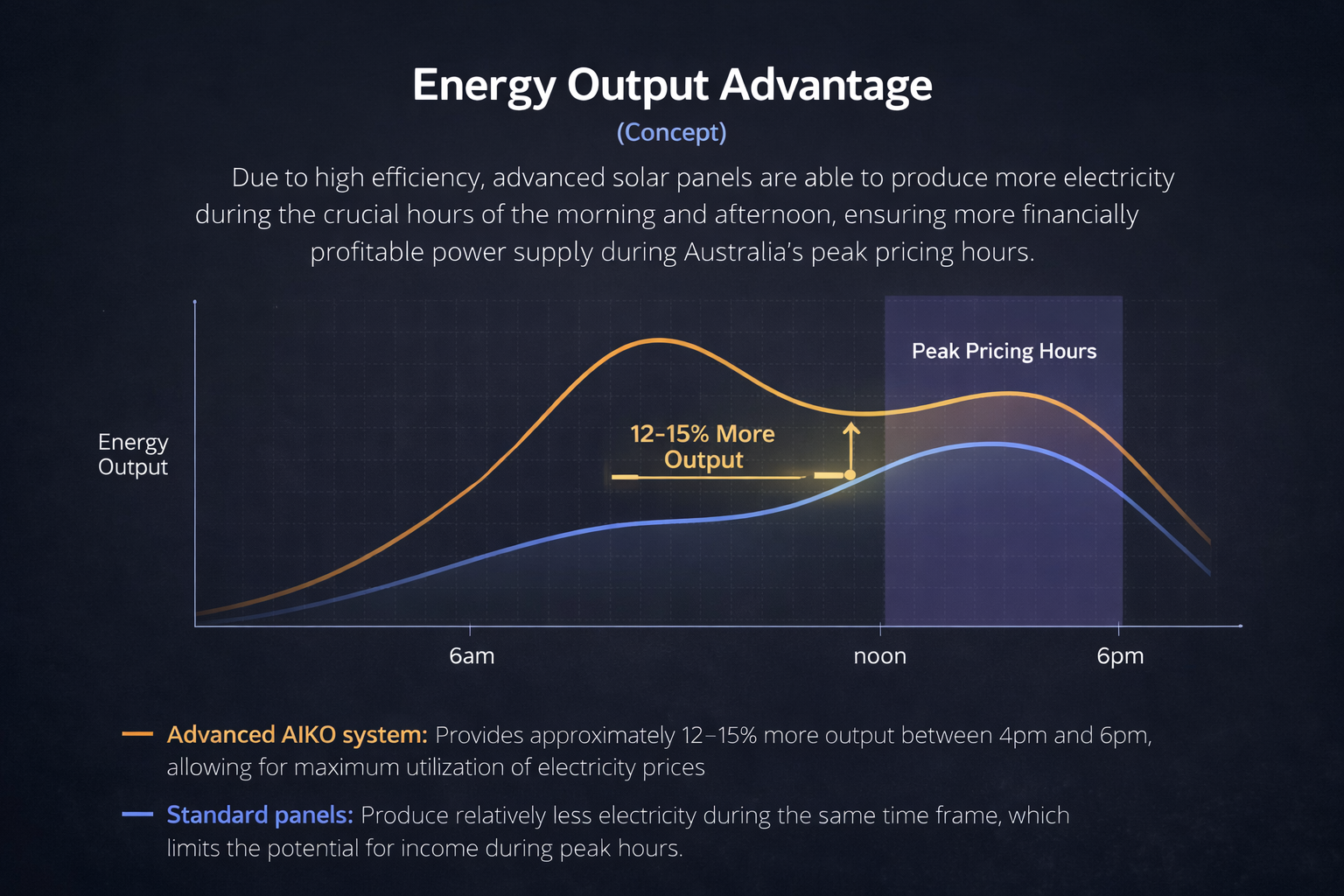
Due to high efficiency, advanced solar panels are able to produce more electricity during the crucial hours of the morning and afternoon, ensuring a more financially profitable power supply during Australia’s peak pricing hours.
- AIKO system: Provides approximately 12–15% more output between 4 pm and 6 pm, allowing for maximum utilization of electricity prices during peak tariff hours.
- Standard panels: Produce relatively less electricity during the same time frame, which limits the potential for income during peak hours.
Why AIKO Works Best in Australia
- Handles extreme UV exposure: Advanced cell technology has been designed to operate for long periods in intense sunlight, maintaining performance even under excessive UV exposure and slowing degradation.
- Performs better in 70°C rooftop heat: Energy production loss is reduced even at high temperatures, so output remains stable even when the roof temperature rises to 70°C in hot weather.
- Ideal for coastal homes (salt resistance): Able to withstand the damaging effects of salt air and humidity in coastal areas, resulting in long-term durability of the frame and components.
- Maximizes value under export limits (SA, QLD, WA): Helps maximize financial benefits by increasing morning and afternoon output even under certain electricity export restrictions.
FAQs
Are AIKO solar panels worth it in Australia?
Yes, these panels offer more effective performance in the long term due to Australia’s hot climate, intense sunlight, and high temperatures, where the power generation remains stable due to improved efficiency and low heat loss, and the return on investment gradually becomes more profitable.
Which AIKO model is best?
The Neostar 2s offers the highest efficiency, which is suitable for premium installations, while the 2p model is more effective for limited spaces, as it provides good output in less space and acts as a balanced solution for general residential use.
Do AIKO panels qualify for rebates?
Yes, these panels are approved under Australia’s STC (small-scale technology certificates) scheme, which provides a certain amount of financial rebate at the time of installation, which helps reduce the total cost and makes solar system adoption easier and more affordable.
How long do AIKO panels last?
These panels typically provide sustained performance for up to 30 years, with a long-term warranty of around 88.85% output, so even if the power output decreases over time, it remains within acceptable limits, and reliability is maintained.
Are AIKO panels better than Trina?
Compared to Trina Solar, AIKO panels offer more efficiency and advanced technology, but Trina is relatively affordable and has a strong position in terms of reliability due to its long-term experience in Australia, so the choice depends entirely on the need and budget.
AIKO Latest Models in Australia: Final Verdict for Smart Solar Investment
Overall analysis shows that AIKO’s latest model provides a superior and reliable solar solution with improved efficiency, durability, and stable power generation in Australia’s harsh weather, high temperatures, and coastal environments. This ensures maximum utility in situations such as limited roofs, export restrictions, and high electricity prices. However, the decision should be made considering budget and brand experience.