Future Solar Australia: Clean Energy Revolution Begins
Australia is moving fast toward clean energy, and future solar Australia is playing a key role in the country’s economic and environmental development. People are increasing their use of solar energy to reduce electricity bills and reduce pollution. The government is providing incentives for renewable energy and developing new technology industries. Experts believe that solar energy will be one of Australia’s main energy sources in the future and will strengthen the country’s energy security. Solar energy is laying the foundation for sustainable development.
Future Solar Australia Market Overview 2026-2030
Australia is rapidly moving towards solar power, and Future Solar Australia is playing a key role in the country’s economy, environment, and energy security. People are now relying more on solar power for lower electricity bills and cleaner air. The government is making new policies, and major companies are increasing their investment in solar projects. The solar energy market is growing every day and will only get stronger in the future.
The growth of this market depends on energy demand, technological developments, and government support. New technologies are increasing the efficiency of solar panels and reducing costs. As a result, ordinary people are able to easily use solar energy. The solar industry will create new jobs and accelerate economic development in the coming decades.
Australia solar capacity forecast
The Australia solar capacity forecast indicates that the country’s solar energy production capacity is increasing every year. Research says that as energy demand increases, solar power production capacity will also increase rapidly. Experts expect Australia to become one of the world’s largest solar power producers by 2030. New solar technology and battery storage systems will accelerate this growth.
| Year | Installed Capacity (GW) | Growth Rate |
| 2024 | 35 GW | 12% |
| 2026 | 45 GW | 14% |
| 2030 | 70+ GW | 18% |
This increase in solar power generation will help reduce environmental pollution. At the same time, it will bring stability to the electricity sector. In the future, with the use of more advanced solar technology, this growth will increase even faster and Australia’s energy security will be strengthened.
Solar Industry Trends in Australia
Solar Industry Trends in Australia are changing rapidly, and solar energy technology, market demand, and investment are increasing every day. The price of solar panels is falling, making solar energy more accessible to the general public. At the same time, the efficiency of electricity generation is also increasing rapidly. Researchers believe that solar energy will play an important role in the Australian energy market in the next few years.
Also, solar market growth, renewable energy forecast, and solar investment in Australia are increasing investment in this sector. Governments and companies are showing more interest in long-term solar projects. In the future, solar energy will be widely used not only in homes, but also in business and industry.
Solar technology trends
Solar technology trends are making the solar energy industry more modern and efficient. New technologies are improving energy storage, production, and distribution systems. Below are the important technological developments
- Artificial Intelligence Power Management: New AI systems manage power distribution automatically and reduce energy waste efficiently.
- Smart Grid Development: Smart grids improve electricity supply stability and help control power demand in real time.
- Advanced Inverter Technology: Advanced inverters increase solar panel performance and improve energy conversion efficiency.
These technological developments are strengthening the future of the Australian solar industry. People are now turning to smarter and more environmentally friendly energy sources. This shift in solar technology will help reduce electricity costs in the future and play a significant role in protecting the environment.
Renewable Energy Forecast and National Vision
Australia is now rapidly moving towards a sustainable and clean energy future. The renewable energy forecast shows that the country is gradually reducing its use of fossil fuels and increasing the use of solar, wind, and other renewable energy. In particular, Future Solar Australia is playing a key role in this change. The government is working to ensure environmental protection and economic development through long-term planning.
In addition, solar market growth, solar technology trends, and solar battery adoption are accelerating this energy revolution. International investment is increasing, and this sector will help create new jobs and reduce carbon emissions.
Renewable energy capacity prediction 2030
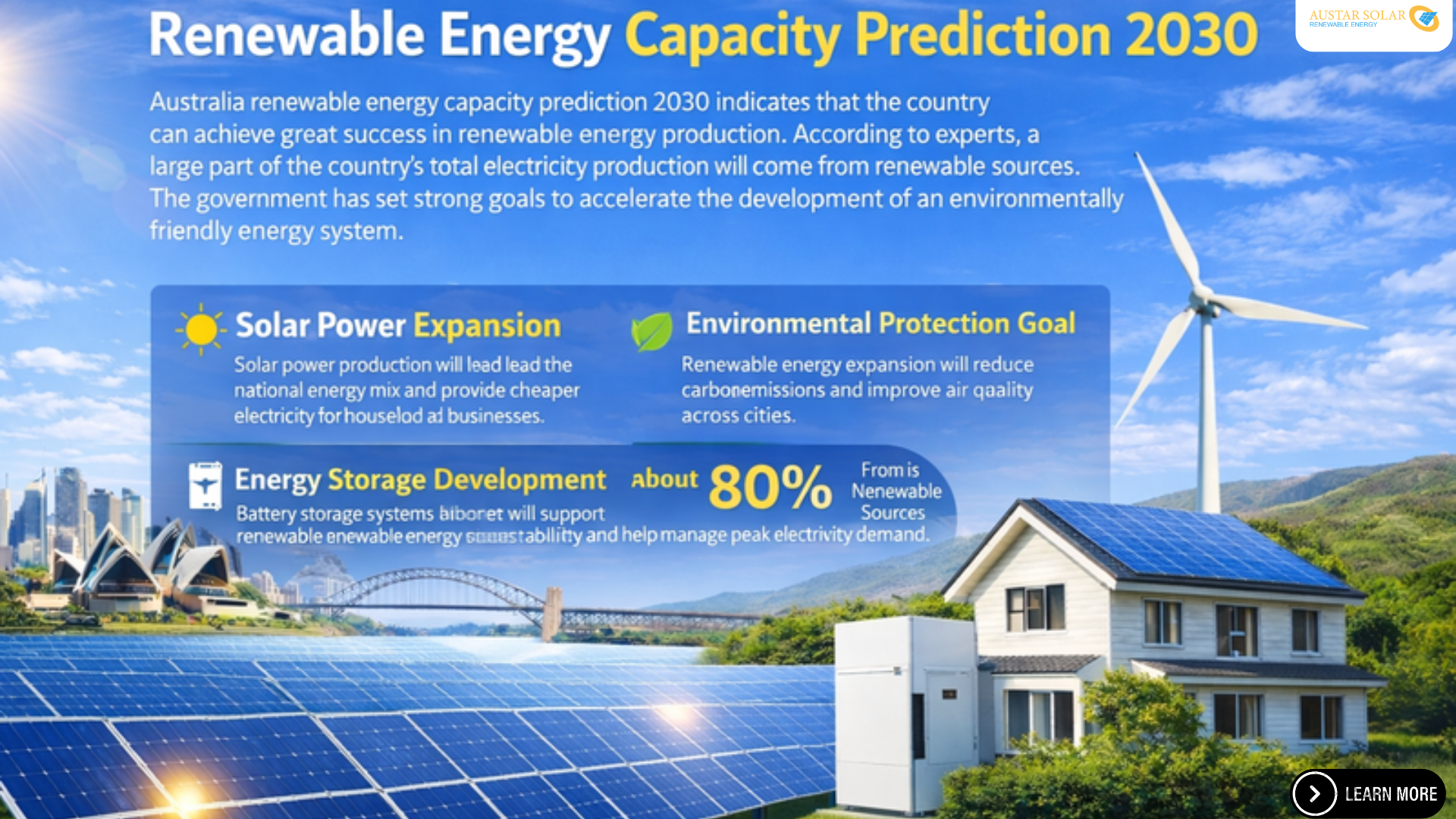
Australia’s renewable energy capacity prediction for 2030 indicates that the country can achieve great success in renewable energy production. According to experts, a large part of the country’s total electricity production will come from renewable sources. The government has set strong goals to accelerate the development of an environmentally friendly energy system.
- Solar Power Expansion: Solar power production will lead the national energy mix and provide cheaper electricity for households and businesses.
- Environmental Protection Goal: Renewable energy expansion will reduce carbon emissions and improve air quality across cities.
- Energy Storage Development: Battery storage systems will support renewable energy stability and help manage peak electricity demand.
Experts expect that by 2030, about 80% of Australia’s electricity will come from renewable sources. This change will make the country’s energy market more stable and sustainable. Technological developments in the future will play an important role in achieving this goal.
Solar Incentives Future Policy Support
Government policies are playing an important role in the use of solar energy in Australia. Solar incentives for the future indicate that the government will provide more financial benefits and rebates in the coming years, so that the common man can easily use solar energy. These incentives are helping to reduce electricity bills, and people are more inclined towards environmentally friendly energy. Solar energy ensures economic savings as well as environmental protection.
Also, solar investment in Australia’s future, solar market growth, and renewable energy forecasts are increasing investment in this sector. Both companies and the common man are realizing the long-term benefits of solar energy. Experts believe that these incentives will increase the use of solar energy even faster.
| Program | Benefit | Target Group |
| Small-scale Technology Certificates | Cost Reduction | Homeowners |
| State Rebates | Cash Support | Families |
| Business Solar Grants | Tax Benefits | Business |
These programs are helping to reduce the financial burden of using solar energy. People can now easily install solar panels. In the future, new technologies and government policies will accelerate the expansion of solar energy.
Solar Market Growth and Investment
Solar energy is now becoming an important investment sector in Australia. Solar market growth and solar investment in Australia are growing rapidly as people and businesses are reaping the long-term financial benefits. The government is providing green energy policies and tax incentives, which are boosting investment. In addition, solar technology trends, solar battery adoption in Australia, and renewable energy forecasts are playing an important role in the development of this market. Solar energy will make a major contribution to Australia’s economy and energy sector in the future.
Commercial solar power expansion in Australia
Commercial solar power expansion in Australia is growing rapidly as businesses look to reduce their operating costs. Large factories and commercial buildings are now using solar panels to generate electricity. This change is helping to increase business profits and reduce environmental pollution.
- Factory Solar Installation: Factories install large solar power systems to reduce electricity expenses and improve operational efficiency.
- Business Energy Saving: Businesses reduce energy costs significantly by using commercial solar systems.
- Green Corporate Responsibility: Companies adopt renewable energy to improve environmental sustainability and corporate image.
Experts say that the use of solar power in the commercial sector will grow even faster in the future. New technologies and improved battery storage systems will further fuel this growth. Australia’s energy will rely heavily on solar energy in the future.
Future of rooftop solar systems in Australia
The future of rooftop solar systems in Australia is changing rapidly with more advanced technology and integration with smart home technology, making the energy system more efficient. The new generation of solar panels is capable of generating more electricity and delivering more energy in less space.
- Smart Home Integration: Smart homes integrate solar panels and battery systems to manage electricity automatically and reduce waste.
- Battery Storage Support: Advanced batteries store extra power during the day and supply electricity at night efficiently.
- Digital Monitoring Systems: Homeowners monitor energy production and usage through mobile apps in real time.
These changes are making Australia’s energy system more modern and environmentally friendly. In the future, rooftop solar power will become one of the country’s main sources of electricity.
Solar Battery Adoption Australia
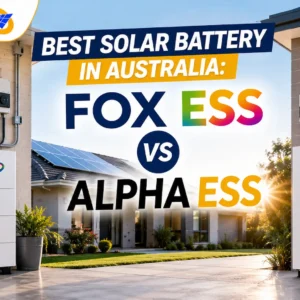
The use of batteries along with solar power is growing rapidly in Australia, and solar battery adoption in Australia is making the energy system more stable and reliable. The excess electricity that solar panels produce during the day is stored in batteries and supplied at night or when electricity demand is higher. This system reduces the electricity dependency of households and businesses and reduces pressure on the grid.
More and more people are installing battery-connected solar systems every year because they are getting uninterrupted power and long-term savings. Advanced battery technology can now store electricity for longer periods and charge faster. Experts say that in the future, it will be difficult to imagine solar systems without batteries.
| Year | Adoption Rate |
| 2024 | 18% |
| 2026 | 25% |
| 2030 | 40% |
The data above shows that the rate of battery adoption will increase significantly by 2030. This growth will further strengthen Australia’s energy system and further expand the use of environmentally friendly energy.
Commercial Solar Trends Australia
Commercial solar trends in Australia are growing rapidly in the commercial sector, with large companies now increasing their use of solar energy to reduce costs and protect the environment. Future Solar Australia Businesses are using solar panels, advanced battery storage, and smart energy systems to meet their goals. This trend is accelerating solar market growth, solar investment in Australia, and solar technology trends. In the future, solar energy will play a significant role in Australia’s economy and environmental protection.
Challenges and Solutions in Solar Expansion
The rapid expansion of solar power in Australia has also presented some challenges. Large solar projects require a lot of land, so the protection of agricultural land and the natural environment is becoming important. The government is now approving projects in planned areas and making environmental impact assessments mandatory.
Another major problem is maintaining the stability of the electricity grid, as solar power depends on sunlight and production varies over time. Advanced battery storage, smart grid technology, and modern energy management systems are being used to solve this problem. Technological developments will solve these problems more effectively in the future.
2030 Vision of Future Solar Australia
Australia is now firmly on the path to a fully clean energy system, and Future Solar Australia will serve as the cornerstone for ensuring the country’s economic strength and environmental security. Government, business, and the public are working together to increase the use of solar energy to reduce reliance on fossil fuels and ensure long-term sustainable development. The goal for 2030 is not just to increase electricity generation, but to build a stable, affordable, and environmentally friendly energy structure.
- High Renewable Share: Implement the national target of generating the majority of electricity from renewable sources by 2030.
- Economic Growth Boost: Accelerate economic growth by creating new jobs in the solar industry.
- Carbon Emission Reduction: Ensure the environment and public health are protected by significantly reducing carbon emissions.
- Advanced Battery Integration: Ensure an uninterrupted power supply through advanced battery storage systems.
- Commercial Solar Leadership: Ensuring widespread use of solar energy in the industrial and commercial sectors.
- Nationwide Rooftop Expansion: Expanding rooftop solar systems in both urban and rural areas.
If this vision is implemented, Australia will become a global example of clean energy and ensure a safe and sustainable environment for future generations.
FAQs
Will Australia go all-solar by 2030?
Australia will not rely entirely on solar energy by 2030, but a large proportion of its electricity generation will come from solar and other renewable sources. The government is gradually reducing fossil fuels and rapidly increasing the use of clean energy.
Why are solar batteries important?
Solar batteries store excess electricity generated during the day and provide that energy at night or when electricity demand is high. This reduces electricity bills, reduces pressure on the grid, and plays an important role in ensuring uninterrupted power.
Does the government still provide rebates?
Yes, rebates and financial assistance are still offered in various states of Australia for the installation of solar panels and batteries. These incentives encourage ordinary households and businesses to use solar energy and help reduce the initial installation costs.
Is solar energy profitable for businesses?
Yes, solar energy is very profitable for businesses because it significantly reduces electricity costs in the long term. Large factories and office buildings can reduce operating costs by using solar systems and, at the same time, build an environmentally friendly corporate image.
How many years do solar panels last?
Typically, quality solar panels can effectively produce electricity for about 25 to 30 years. Although the efficiency decreases slightly over time, the panel does not completely stop working. Proper maintenance provides long-lasting performance, and the investment is safe.
Do solar panels work on cloudy days?
Yes, solar panels can also produce electricity on cloudy days, but the output is slightly lower than on sunny days. Modern technology panels can also collect energy in low light. The impact of cloudy days is further reduced if the battery is connected.
How long does it take to install a solar system?
It usually takes one to three days to install a home solar system, but the approval and grid connection process can take additional time. Once the process is completed, the system starts generating electricity quickly and ensures immediate savings.
Does solar energy increase property value?
Yes, the market value of homes with solar panels installed usually increases because buyers prefer lower electricity bills and environmentally friendly benefits. Solar systems ensure long-term savings, so they increase both the attractiveness and value of the property.
Is solar energy really beneficial for the environment?
Yes, solar energy reduces carbon emissions and air pollution. It protects the environment by reducing the use of fossil fuels and helps reduce the impact of climate change. In the long run, it is a sustainable and safe energy solution.
Future Solar Australia: Sustainable Energy Future
Australia’s energy future is changing rapidly, and Future Solar Australia is a powerful solution for the country’s economy, environment, and energy security. Increasing the use of solar energy will reduce electricity costs and carbon emissions. Governments, businesses, and the public are all working together to accelerate this change. If the 2030 target is achieved, Australia will become a global example of clean energy and ensure a safe and sustainable environment for future generations.