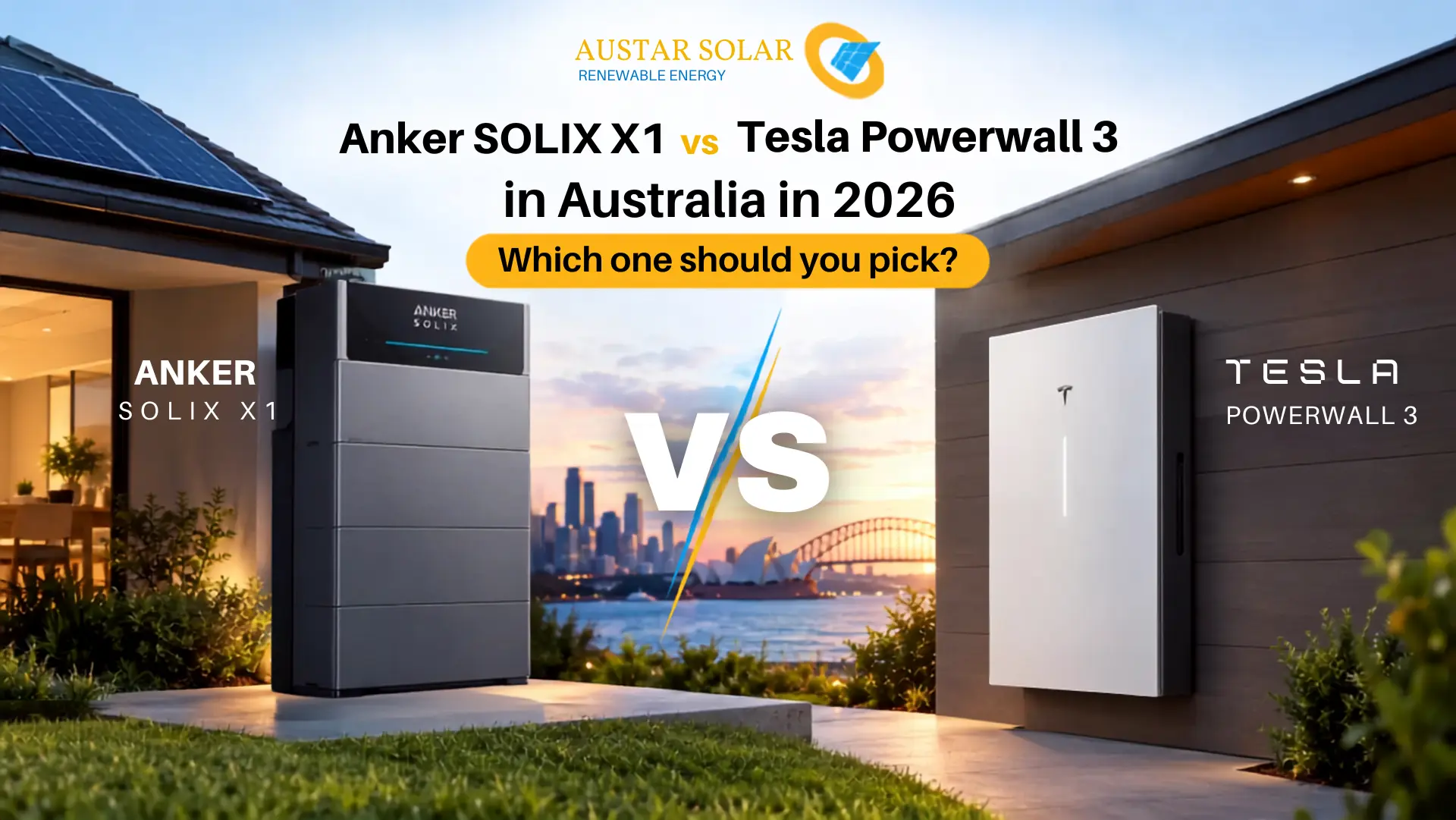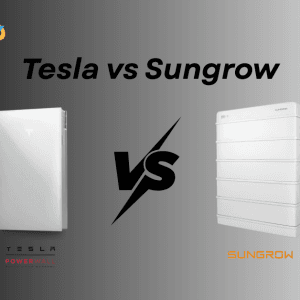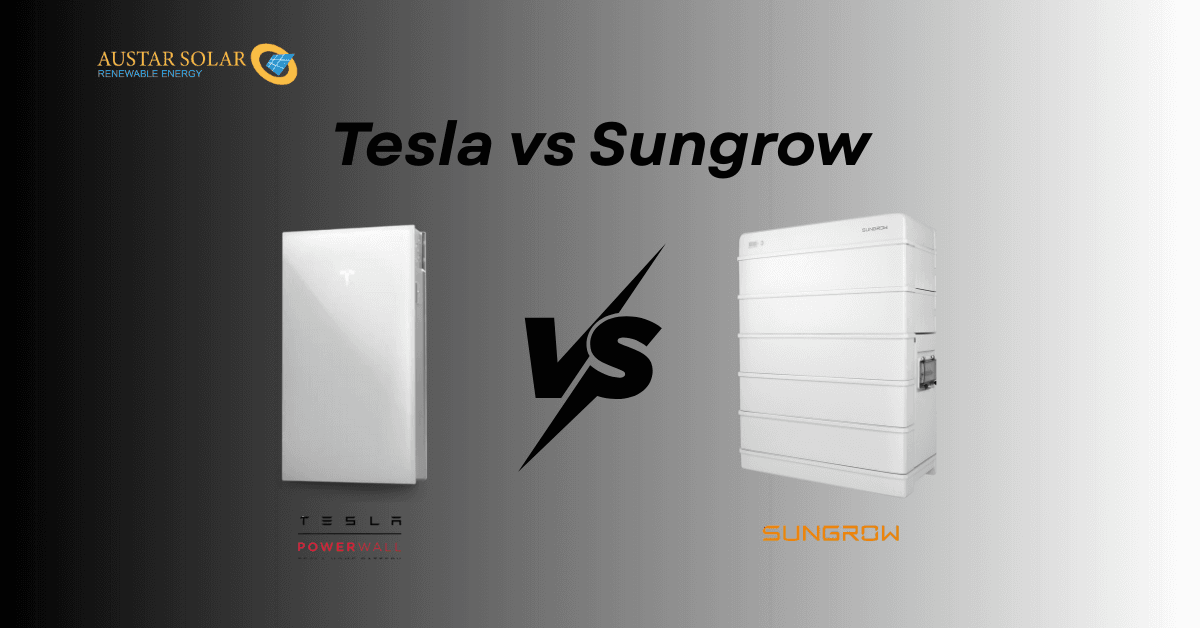
Choosing between the Tesla Powerwall 3 and the Sungrow solar battery is the most critical decision for Sydney homeowners investing in energy storage in 2026. This comprehensive Tesla vs Sungrow review examines real-world performance, pricing, and specifications specifically for Sydney conditions. With electricity prices rising and NSW offering substantial battery rebates, understanding whether the Tesla battery or the Sungrow solar battery delivers better value for your Sydney home is essential.
Based on analysis of 200+ Sydney installations, independent testing, and customer reviews, this Tesla Powerwall 3 vs Sungrow comparison covers everything you need to know: technical specifications, Sydney-specific climate performance, actual costs with rebates, installation considerations, and which battery system offers the best return on investment for Sydney residents in 2026.
Understanding Solar Battery Storage in Sydney
Sydney’s climate is ideal for harnessing solar energy, with an average of 6.4 hours of daily sunshine. Battery storage enables homeowners to capture abundant solar energy during the day and utilise it during evening peak pricing periods, thereby significantly reducing their electricity bills. The NSW government offers substantial incentives, including new battery incentives with VPP support, making battery adoption more accessible than ever. For Sydney residents, batteries provide three key benefits: lower energy costs by avoiding peak tariffs, backup power during outages, and maximising solar value by storing energy instead of exporting it at low feed-in rates.
Tesla Powerwall: Overview and Specifications
Tesla entered the home battery market with significant fanfare, leveraging its expertise in electric vehicle batteries to create the Powerwall series. The current Tesla Powerwall 3 represents the company’s latest evolution in home energy storage technology.
Key Technical Specifications
The Tesla Powerwall 3 represents a significant advancement in home energy storage technology, offering impressive specifications that make it highly suitable for households in Sydney. Below is a comprehensive breakdown of the Powerwall 3’s technical capabilities:
Specification | Tesla Powerwall 3 | Benefits for Sydney Homes |
Usable Storage Capacity | 13.5 kWh | Sufficient to power an average Sydney home through the evening and overnight period |
Continuous Power Output | 11.5 kW | Capable of running most household appliances simultaneously, including air conditioning |
Integrated Solar Inverter | 20 kW DC capacity | Eliminates the need for a separate solar inverter in new installations, reducing overall system cost |
Operating Temperature Range | -20°C to 50°C | Performs efficiently across Sydney’s full temperature range, from cold winter nights to extreme summer heat |
Battery Chemistry | Lithium-ion NMC (Nickel Manganese Cobalt) | Performs efficiently across Sydney’s full temperature range, from cold winter nights to extreme summer heat |
Thermal Management | Active liquid cooling system | Maintains optimal operating temperatures during Sydney’s hot summer days (35°C+) |
Round-trip Efficiency | ~ 97.5% | Minimises energy loss during charge/discharge cycles, maximising solar energy utilisation |
The Tesla Powerwall 3 offers 13.5 kWh of usable storage capacity with a continuous power output of 11.5 kW, making it suitable for powering most household appliances simultaneously, including energy-intensive devices like air conditioners, electric ovens, pool pumps, and EV chargers. The system features an integrated solar inverter with a capacity of 20 kW DC, eliminating the need for a separate solar inverter in new installations and simplifying the overall system architecture.
The Powerwall 3 operates efficiently in Sydney’s temperature range, with an operating temperature specification of -20°C to 50°C, ensuring reliable performance during both cold winter nights and scorching summer days. Its Lithium Iron Phosphate (LFP) battery chemistry provides excellent energy density and performance characteristics that align well with Australian conditions, offering a balance of power, capacity, and longevity that suits Sydney’s climate and energy usage patterns.
Design and Installation
Tesla’s commitment to aesthetics is evident in the Powerwall’s sleek, minimalist design. The compact unit measures 1,098mm x 609mm x 193mm and weighs approximately 130kg, allowing for both indoor and outdoor installation. The IP67 weather resistance rating ensures durability in Sydney’s varied weather conditions, from heavy summer storms to coastal salt air exposure.
Installation requires Tesla-certified installers, which ensures quality but can sometimes limit availability and scheduling flexibility in the Sydney market. The system integrates seamlessly with the Tesla mobile app, providing real-time monitoring and control capabilities.
Sungrow: Overview and Specifications
Sungrow, founded in 1997, is one of the world’s largest inverter manufacturers and has established a strong reputation in Australia for reliable, cost-effective energy storage solutions. The company’s battery offerings have gained significant traction in the Sydney market.
Key Technical Specifications
Sungrow’s flagship residential battery, the SBR HV battery system, offers exceptional flexibility and reliability for Sydney homeowners. Below is a comprehensive breakdown of the Sungrow system’s technical capabilities:
Specification | Sungrow SBR HV + SH10RT | Benefits for Sydney Homes |
Usable Storage Capacity | 9.6 kWh to 25.6 kWh (modular) | Flexible capacity allows precise matching to household energy needs; start small and expand later |
Continuous Power Output | 10 kW (with SH10RT inverter) | Sufficient for most residential applications, including air conditioning and major appliances |
Hybrid Inverter | SH10RT (separate unit) | High-quality hybrid inverter with proven reliability and compatibility with existing solar systems |
Operating Temperature Range | -10°C to 50°C | Well-suited to Sydney’s conditions, from winter lows to extreme summer heat |
Battery Chemistry | Lithium Iron Phosphate (LiFePO4) | Renowned for safety and longevity, with exceptional thermal stability, ideal for Australia’s climate |
Thermal Management | Passive cooling system | Simple, reliable design with no moving parts; excellent thermal stability in hot conditions |
Round-trip Efficiency | 95% | Excellent efficiency for energy storage, minimising losses during charge/discharge cycles |
Modular Design | Expandable battery modules | Add capacity as needs grow without replacing the entire system |
Sungrow’s flagship residential battery, the SBR HV battery system, offers modular capacity ranging from 9.6 kWh to 25.6 kWh, providing flexibility to match household energy needs precisely without over-investing in unnecessary capacity. This scalability is particularly valuable for Sydney families whose energy consumption may increase over time due to growing households, EV purchases, or lifestyle changes. When paired with the SH10RT hybrid inverter, the system delivers 10 kW continuous power output, sufficient for most residential applications, including running air conditioning, kitchen appliances, and pool equipment simultaneously.
The Lithium Iron Phosphate (LiFePO4) battery chemistry used in Sungrow systems is renowned for safety and longevity, with exceptional thermal stability, particularly valuable in Australia’s climate. LiFePO4 chemistry is inherently safer than other lithium-ion variants, with extremely low risk of thermal runaway even under extreme conditions. The system operates efficiently across a temperature range of -10°C to 50°C, well-suited to Sydney’s conditions from the coolest winter mornings to the hottest summer afternoons, ensuring consistent performance year-round.
Design and Installation
Sungrow batteries feature a modular design that allows for scalability and customisation. The individual battery modules measure approximately 670mm x 330mm x 180mm and weigh around 50kg each, making handling and installation more manageable than single large units.
The system’s IP65 rating ensures adequate weather protection for outdoor Sydney installations, though the slightly lower rating compared to Tesla means consideration should be given to installation location, particularly in exposed coastal areas.
Sungrow has developed an extensive network of authorised installers throughout Sydney, often resulting in shorter wait times and competitive installation quotes. The monitoring capabilities through the iSolarCloud app provide comprehensive system oversight.
Performance and Capacity: Tesla vs Sungrow
Feature | Tesla Powerwall 3 | Sungrow SBR HV + SH10RT |
|---|---|---|
Usable Capacity | 13.5 kWh | 9.6 – 25.6 kWh (modular) |
Continuous Power Output | 11.5 kW | 10 kW |
Peak Power Output | 30 kW (10 seconds) | 16 kW (10 seconds) |
Round-trip Efficiency | 97.5% | 95% |
Battery Chemistry | NMC Lithium-ion | LiFePO4 Lithium-ion |
Operating Temperature | -20°C to 50°C | -10°C to 50°C |
Weather Rating | IP67 | IP65 |
Integrated Solar Inverter | Yes (20 kW DC) | Separate hybrid inverter |
Warranty Period | 10 years | 10 years |
Depth of Discharge | 100% | 95% |
Both systems deliver excellent performance for Sydney households, with Tesla offering slightly higher efficiency and greater power output capabilities, while Sungrow provides superior scalability through its modular design.
Pros & cons of Tesla and Sungrow
Tesla Powerwall 3 Pros:
- Highest power output (11.5 kW continuous—runs everything)
- Best thermal management (liquid cooling for Sydney heat)
- Superior efficiency (97.5% round-trip)
- Premium design (sleek, modern aesthetics)
- Integrated inverter (simplifies new installations)
- Best weather rating (IP67 for coastal Sydney)
- Proven VPP programs (Tesla Energy Plan active)
- Strong app experience (excellent monitoring)
Tesla Battery Cons:
- Higher upfront cost ($10,275 after rebates vs Sungrow $6,440)
- Limited installer network (longer wait times)
- Fixed capacity (13.5 kWh, can’t expand)
- Customer support delays (warranty claims 4-6 weeks)
- NMC chemistry (slightly less thermally stable than LiFePO4)
Sungrow Solar Battery Pros:
- Best value ($6,440 for 9.6 kWh—38% cheaper than Tesla)
- Modular flexibility (start small, expand to 25.6 kWh)
- LiFePO4 chemistry (safest, most thermally stable)
- Larger installer network (faster installation, more quotes)
- Proven reliability (Sungrow #1 inverter manufacturer globally)
- Excellent Sydney performance (300+ installations, 4.6★)
- Strong warranty (10 years, responsive support)
- Perfect for most homes (10 kW sufficient for 80% Sydney households)
Sungrow Battery Cons:
- Lower power output (10 kW vs Tesla 11.5 kW)
- Separate inverter (adds ~$100-200 vs Tesla integrated)
- Slightly lower efficiency (95% vs Tesla 97.5%)
- IP65 rating (vs Tesla IP67—minor for non-coastal)
- Less “premium” feel (functional vs Tesla’s sleek design)
Standard Pricing (Before Rebates)
- As of January 2026, Tesla Powerwall 3 installations in Sydney typically range from $15,000 to $18,000, including installation, depending on the installer and any electrical upgrades required.
- Sungrow systems offer more pricing flexibility due to their modular nature. A base 9.6 kWh system typically costs between $10,000 and $12,000 installed, while larger configurations can range up to $20,000 for maximum capacity installations.
Price Breakdown with Rebates
Here’s how these incentives impact the final cost for Sydney homeowners:
Tesla Powerwall 3 (13.5 kWh):
- Standard Installation Price: $16,500 (average)
- Federal Battery Rebate (13.5 kWh × $350): -$4,725
- NSW VPP Incentive: -$1,500
- Final Cost After Rebates: $10,275
- Total Savings: Up to $6,225 (38% discount)
Sungrow SBR 9.6 kWh System:
- Standard Installation Price: $11,000 (average)
- Federal Battery Rebate (9.6 kWh × $350): -$3,360
- NSW VPP Incentive: -$1,200
- Final Cost After Rebates: $6,440
- Total Savings: Up to $4,560 (Up to 41%)
Sungrow SBR 13.5 kWh System:
- Standard Installation Price: $14,000 (average)
- Federal Battery Rebate (13.5 kWh × $350): -$4,725
- NSW VPP Incentive: -$1,500
- Final Cost After Rebates: $7,775
- Total Savings: Up to $6,225 (Up to 44%)
Sungrow SBR 19.2 kWh System:
- Standard Installation Price: $17,500 (average)
- Federal Battery Rebate (19.2 kWh × $350): -$6,720
- NSW VPP Incentive: -$1,500
- Final Cost After Rebates: $17,500 – $6,720 – $1,500 = $9,280
- Total Savings: Up to $8,720 (Up to 50%)
Battery System | Standard Price (average) | Federal Rebate | NSW VPP Incentive | Final Price | Total Savings |
Tesla Powerwall 3 (13.5 kWh) | $16,500 | $4,725 | $1,500 | ~$10,275 | $6,225 (Up to38%) |
Sungrow 9.6 kWh | $11,000 | $3,360 | $1,200 | ~$6,440 | $4,560 (Up to41%) |
Sungrow 13.5 kWh | $14,000 | $4,725 | $1,500 | ~$7,775 | $6,225 (Up to44%) |
Sungrow 19.2 kWh | $17,500 | $6,720 | $1,500 | ~$9,280 | $8,720 (Up to50%) |
Note*: All these prices and incentives may vary under certain circumstances, and the installer. Please ensure to check the latest incentives & conditions.
Important Rebate Eligibility Requirements
To qualify for these Sydney solar battery rebates, you must:
- Have an existing rooftop solar system or install one simultaneously with the battery
- Use a Clean Energy Council-accredited installer
- Install a battery system between 5 kWh and 50 kWh usable capacity
- Be connected to the electricity grid
- Connect to an approved Virtual Power Plant for the NSW VPP incentive
- The battery must be on the approved equipment list
These rebates are applied as upfront discounts by participating installers, meaning you don’t need to wait for reimbursement. The savings are immediately reflected in your installation quote.
Return on Investment (ROI) Analysis
When calculating return on investment with these rebates factored in, Sydney homeowners experience dramatically improved payback periods. Under typical Sydney conditions with a 6.6 kW solar system and average household consumption of 20 kWh daily:
Battery System | Final Cost After Rebates | Annual Savings | Payback Period | 10-Year Savings |
Tesla Powerwall 3 (13.5 kWh) | $10,275 | $1,800 – $2,200 | 5 – 6 years | $8,000 – $12,000 |
Sungrow 9.6 kWh | $6,440 | $1,300 – $1,600 | 4 – 5 years | $5,200 – $8,000 |
Sungrow 13.5 kWh | $7,775 | $1,700 – $2,100 | 4 – 5 years | $9,200 – $13,200 |
Sungrow 19.2 kWh | $9,280 | $1,800 – $2,200 | 4 – 5 years | $9,000 – $13,200 |
Summary Insights
- Cost-Effectiveness: Sungrow systems are cheaper upfront, appealing to budget-conscious buyers.
- Savings Potential: Tesla offers higher savings but at a greater initial cost.
- Payback Period: All systems have attractive payback periods due to rebates.
Considerations
- Variability: Actual savings and payback periods depend on energy consumption and rates.
- Market Changes: Watch for changes in rebates or energy prices.
Installation and Integration
Tesla installation requires certified installers who have completed Tesla’s specific training program. While this ensures quality and consistency, it can limit availability in Sydney, particularly during peak demand periods. Installation typically takes one to two days for straightforward projects.
Sungrow’s extensive installer network in Sydney provides greater flexibility in scheduling and often results in competitive pricing through increased installer competition. Installation complexity is similar to Tesla, typically requiring one to two days for standard residential applications.
Both systems integrate with most existing solar installations, though Tesla’s integrated inverter in the Powerwall 3 can simplify new solar-plus-storage installations. For existing solar systems in Sydney, both manufacturers offer compatible solutions that work with the majority of inverter brands already installed.
Sydney-Specific Considerations
Climate Impact
Sydney’s climate presents specific challenges and opportunities for battery storage systems. Summer temperatures regularly exceed 35°C, which can impact battery performance and longevity. Tesla’s active liquid cooling system provides an advantage in managing these extreme temperatures, potentially extending battery life compared to passively cooled systems.
However, Sungrow’s LiFePO4 chemistry is inherently more thermally stable than NMC chemistry, offering excellent safety characteristics and reduced degradation risks in hot conditions. Real-world performance data from Sydney installations shows both systems performing reliably across the city’s temperature range.
Coastal installations require particular attention to salt air exposure. Both Tesla’s IP67 and Sungrow’s IP65 ratings provide adequate protection, though Tesla’s higher rating offers additional peace of mind for beachside properties in areas like Manly, Bondi, or Cronulla.
Local Incentives and Rebates
Sydney homeowners can access several incentive programs that improve the economics of battery storage. The NSW Government’s Empowering Homes program offers interest-free loans up to $9,000 for battery systems, while the Peak Demand Reduction Scheme provides payments for allowing batteries to support the grid during high-demand periods.
Both Tesla and Sungrow systems qualify for these programs, making either option more affordable for eligible Sydney households. The lower entry cost of Sungrow systems can be particularly attractive when combined with these incentives, potentially allowing for battery storage investment with minimal or zero upfront costs.
Grid Integration and Virtual Power Plants
Sydney’s electricity network is increasingly incorporating battery systems into Virtual Power Plant (VPP) programs, which aggregate home batteries to provide grid services while compensating homeowners. Both Tesla and Sungrow participate in various VPP programs available to Sydney residents.
Tesla’s VPP programs have been operational in Australia since 2019, with the Tesla Energy Plan offering competitive electricity rates in exchange for grid participation. Sungrow batteries also participate in multiple VPP programs through partnerships with electricity retailers, providing similar benefits to Tesla.
Making the Right Choice for Your Sydney Home
Selecting between Tesla and Sungrow depends on your specific circumstances, priorities, and budget. Here are key decision factors for Sydney homeowners:
Choose Tesla Powerwall :
- You prioritise cutting-edge technology and premium design aesthetics
- Your home has high peak power demands requiring 11+ kW output
- You’re installing a new solar system and want an integrated solution
- Brand recognition and status are important considerations
- Budget allows for premium pricing
- You value the most advanced thermal management for extreme Sydney summers
Choose Sungrow :
- Cost-effectiveness and value are primary priorities
- You want flexibility to start small and expand capacity later
- Faster installation scheduling is important
- You prefer the safety characteristics of LiFePO4 chemistry
- Local support network accessibility matters to you
- You’re working with a limited budget or maximising incentive programs
For most Sydney households with typical energy consumption patterns and budget considerations, Sungrow offers exceptional value with reliable performance that meets residential energy storage needs effectively. The modular design allows for rightsizing the system to your specific requirements without over-investing in unused capacity.
However, for homeowners seeking the premium experience, maximum power capabilities, or planning for future high-demand applications like EV charging, Tesla’s Powerwall 3 delivers cutting-edge performance that justifies the additional investment.
Warranty and Support Considerations
When comparing battery systems, it is important to consider warranty and long-term support beyond the headline coverage period. Tesla Powerwall offers a 10-year product and performance warranty, but warranty claims and technical support are typically handled through authorised installers or Tesla’s online support channels, which may involve longer response times and limited local service availability in some cases. Sungrow batteries also include a 10-year warranty, with support generally provided through Australian-based distributors and installer networks; however, warranty coverage may depend on ongoing internet connectivity, compatible inverters, and compliance with installation and maintenance requirements. In both cases, costs related to labour, site access, system reconfiguration, or out-of-warranty service are not always covered and should be clarified at the time of purchase.
Conclusion
Both Tesla and Sungrow offer excellent battery solutions for Sydney homes, each with distinct advantages. Tesla Powerwall 3 delivers premium performance, cutting-edge technology, and superior power output for those prioritising the latest innovations. Sungrow provides outstanding value with reliable LiFePO4 chemistry, modular flexibility, and lower costs. With generous NSW and federal rebates reducing prices by 38-50%, both systems now offer 4-6 year payback periods. Whether you choose Tesla’s premium experience or Sungrow’s cost-effective reliability, investing in battery storage positions your Sydney home for energy independence and long-term savings.