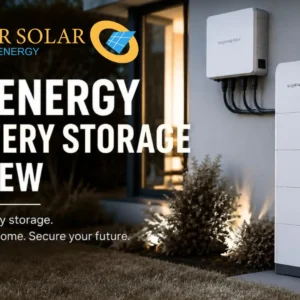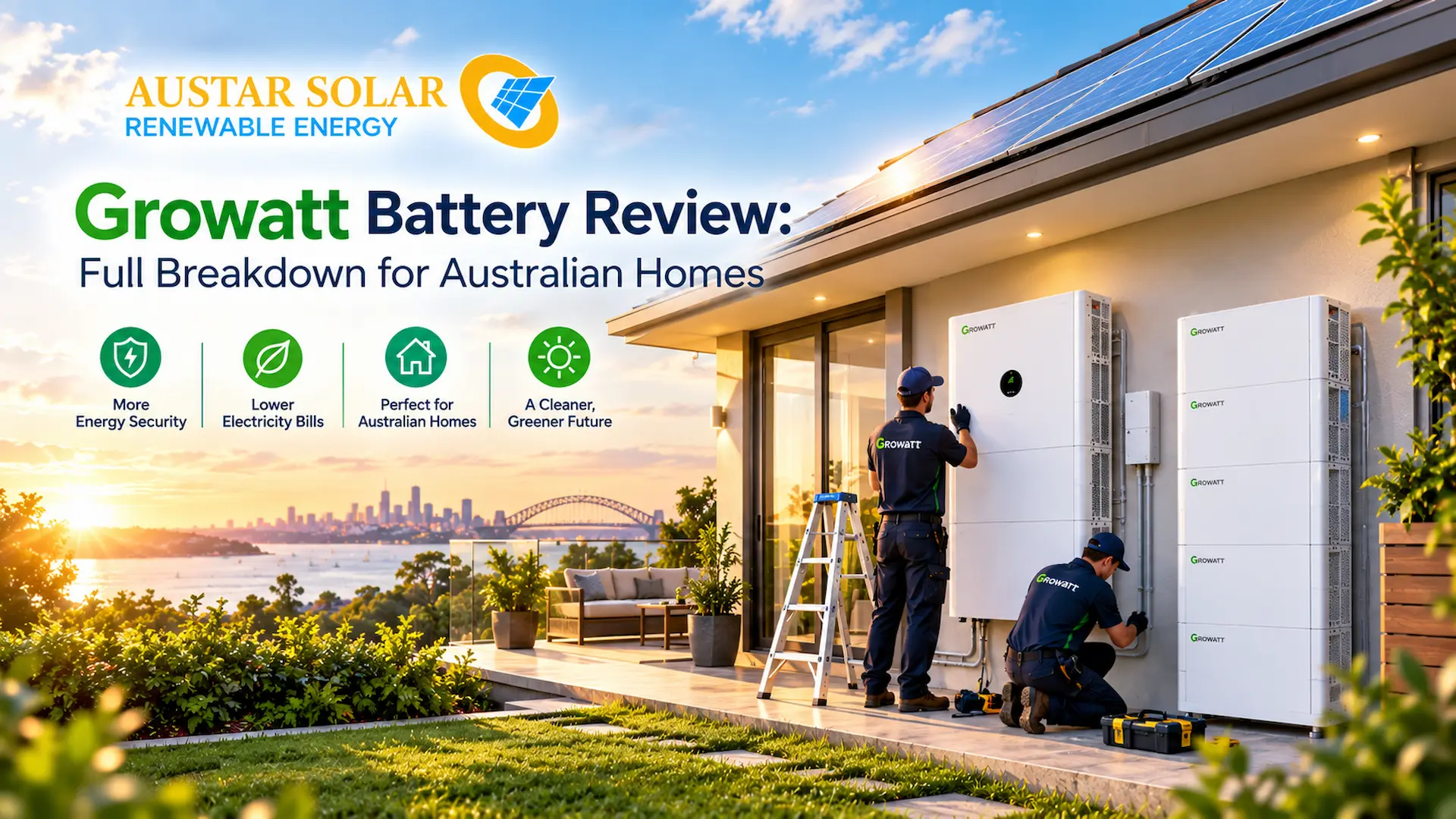
Choosing the right home battery is confusing, with dozens of brands claiming to be the best. This Growatt battery review breaks down what the brand actually offers Australian homeowners, based on real specifications, pricing, and customer feedback rather than marketing claims.
Growatt keeps showing up in solar quotes across Australia because of its low pricing and rebate eligibility, but many buyers still ask if it’s actually reliable long-term. We reviewed Growatt battery storage to give homeowners a clear, honest answer before they spend thousands of dollars on a system.
This Growatt Battery Review covers pricing, performance, real risks, and who should buy one, so you can decide before spending thousands of dollars.
Overview Of Growatt Battery
Growatt battery storage uses safe, cobalt-free LiFePO₄ (lithium iron phosphate) technology, with two main Australian ranges: the APX HV series (5–30 kWh, high-voltage, modular) and the ALP LV series (5–40 kWh, low-voltage).
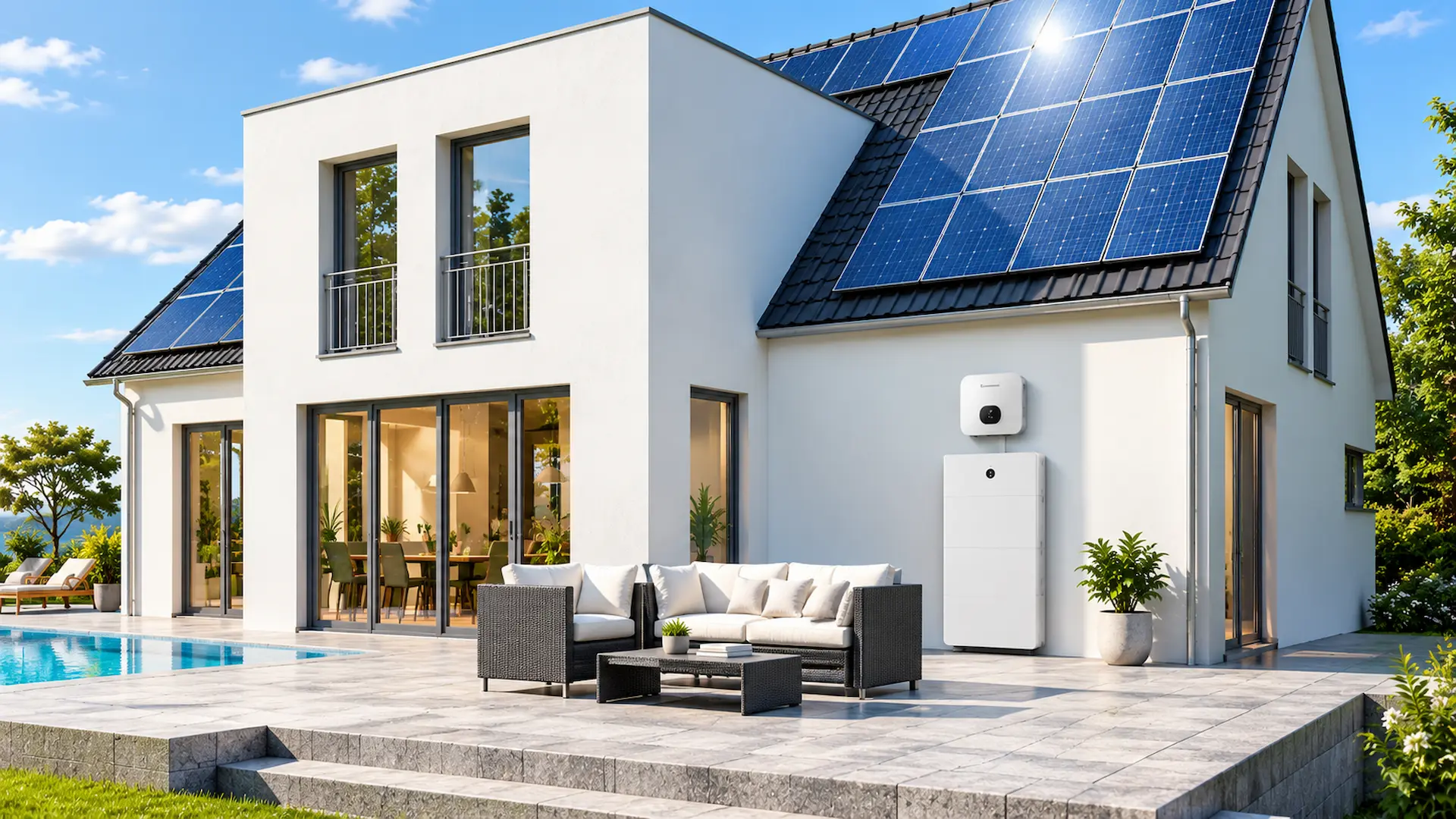
Systems offer up to 100% depth of discharge, 90%+ round-trip efficiency, IP66 weatherproofing, and a 10-year warranty. Module-level optimisation lets you mix old and new battery packs without performance loss.
They’re CEC-approved, rebate-eligible, work with Growatt hybrid inverters, and provide solar storage, backup power during blackouts, and app-based monitoring for Australian homes and businesses.
Quick Verdict
| Score | [7.5/10] |
| Best for | Budget-focused households with a compatible Growatt inverter |
| Price range | About $7,500 to $18,000 installed (APX HV, before rebates) |
| Biggest drawback | Inverter lock-in and mixed feedback on repair turnaround |
Growatt Battery Storage Specs (Official Growatt AU Product Range)
| Battery Model | Series | Capacity | Protection Rating | Phase Compatibility |
| APX HV Battery AU | High-voltage | 5 to 30 kWh [confirm on product page] | IP66 | Single and three-phase inverters |
| ALP LV Battery (ALP 5.0L-E2) | Low-voltage | 5 to 40 kWh [confirm] | IP66 | Single-phase inverters |
| ALP LV Battery (ALP 5.0L-E1) | Low-voltage | 5 to 40 kWh [confirm] | IP66 (LFP chemistry) | Single-phase inverters |
Growatt’s official Australian product page groups its batteries under “Battery System,” separate from its Battery Ready and Hybrid Inverter categories. This separation helps installers plan space by matching the battery to its compatible inverter type first. All listed models share an IP66 rating, so they suit indoor cupboards and sheltered outdoor walls.
Pros and Cons of Growatt Solar Batteries
Growatt batteries offer strong value and safety, though buyers should weigh a few trade-offs before choosing one.
Pros:
- Budget-friendly pricing compared to premium battery brands
- CEC-approved, so eligible for federal and state rebates
- Cobalt-free LiFePO₄ chemistry gives better thermal stability and safety
- 10-year warranty backed by a local Australian office and support hotline
- Module-level optimisation lets old and new battery packs work together without losing performance
- Provides backup power during blackouts when paired with a compatible inverter
Cons:
- Backup power only works with specific compatible Growatt inverters and setups
- APX HV series needs a dedicated Growatt storage inverter, limiting flexibility with other brands
- ALP LV series only supports single-phase systems, not three-phase homes
- Actual capacity and performance depend heavily on correct system design and installation
Available Growatt Battery storage in Australia
| Battery | Type | Works With | Best For |
| APX HV Battery AU | High-voltage | MIN/MOD/MID-XH inverters | Larger homes, single or three-phase setups |
| ALP LV Battery (ALP 5.0L-E2) | Low-voltage | SPH/SPF inverters | Standard single-phase homes |
| ALP LV Battery (ALP 5.0L-E1) | Low-voltage | SPH/SPF inverters | Standard single-phase homes |
Growatt lists three core battery models on its Australian product page:
one APX high-voltage option and two ALP low-voltage variants. Each pairs with a specific inverter family, so the right choice depends on whether a home already has a compatible Growatt inverter.
The APX series suits properties needing higher power output or three-phase support, while the ALP series fits typical single-phase homes. Checking inverter compatibility first avoids mismatched systems.
Real-World Performance of Growatt Battery Storage in Australian Conditions
Growatt batteries hold up well across most Australian climates, but actual owner experiences vary based on setup and support quality.
Performance in Hot Climates
- Cobalt-free LiFePO₄ cells resist heat degradation better than older lithium types
- Operating range of -10°C to 50°C suits outback heat and winter frosts
- IP66 rating allows safe outdoor placement without weather damage
What Australian Owners Report
- A Growatt inverter owner in Adelaide, running the same system since 2011, still reports zero electricity bills today
- SolarQuotes reviewers flagged poor battery warranties before 2023, since improved under updated terms
- A small number of users reported systems failing years after installation, with slow repair turnaround
- Most feedback points to strong value for money when paired with correct sizing and a qualified installer
Daily Energy Behaviour
- Batteries charge from excess solar during the day
- Stored power discharges in the evening, cutting reliance on expensive grid electricity
- Module-mixing technology lets ageing batteries keep pace with newly added ones
Growatt battery storage performs reliably day-to-day in Australian conditions, though warranty support and installer expertise remain the biggest factors separating satisfied owners from frustrated ones.
Growatt Battery Prices in Australia
Day-to-day performance is reliable, but warranty support and installer expertise are the biggest factors separating satisfied owners from frustrated ones.
| Model | Usable Capacity | Approx. Product Price (AUD) | Approx. Installed Cost (AUD)* | Installed Cost per Usable kWh |
| APX HV 10.0 | 9 kWh | $6,500 | $7,500 to $8,500 | $833 to $944 |
| APX HV 15.0 | 13.5 kWh | $8,000 | $9,000 to $10,500 | $667 to $778 |
| APX HV 20.0 | 18 kWh | $9,000 | $10,500 to $12,500 | $583 to $694 |
| APX HV 25.0 | 22.5 kWh | $10,500 | $12,500 to $15,000 | $556 to $667 |
| APX HV 30.0 | 27 kWh | $13,000 | $15,500 to $18,000 | $574 to $667 |
*Installed cost includes labour, switchboard work, and commissioning, and varies with your state, installer, and whether you already own a compatible Growatt inverter.
Notes:
- All prices in the table are before rebates.
- The federal rebate has been reported to cut the upfront price by roughly 30%, but the amount depends on system size and changes over time.
- We left out a widely shared $6,888 installed price for a 40 kWh ALP LV bundle. It came from a limited-time WA installer promotion and is not a reliable national benchmark.
- Always request a written, itemised quote, since battery costs shift with rebate changes and market conditions.
Who Should Buy a Growatt Battery?
Growatt batteries suit homeowners prioritising affordability, scalability, and rebate eligibility, especially when paired with a qualified installer and a matching Growatt inverter.
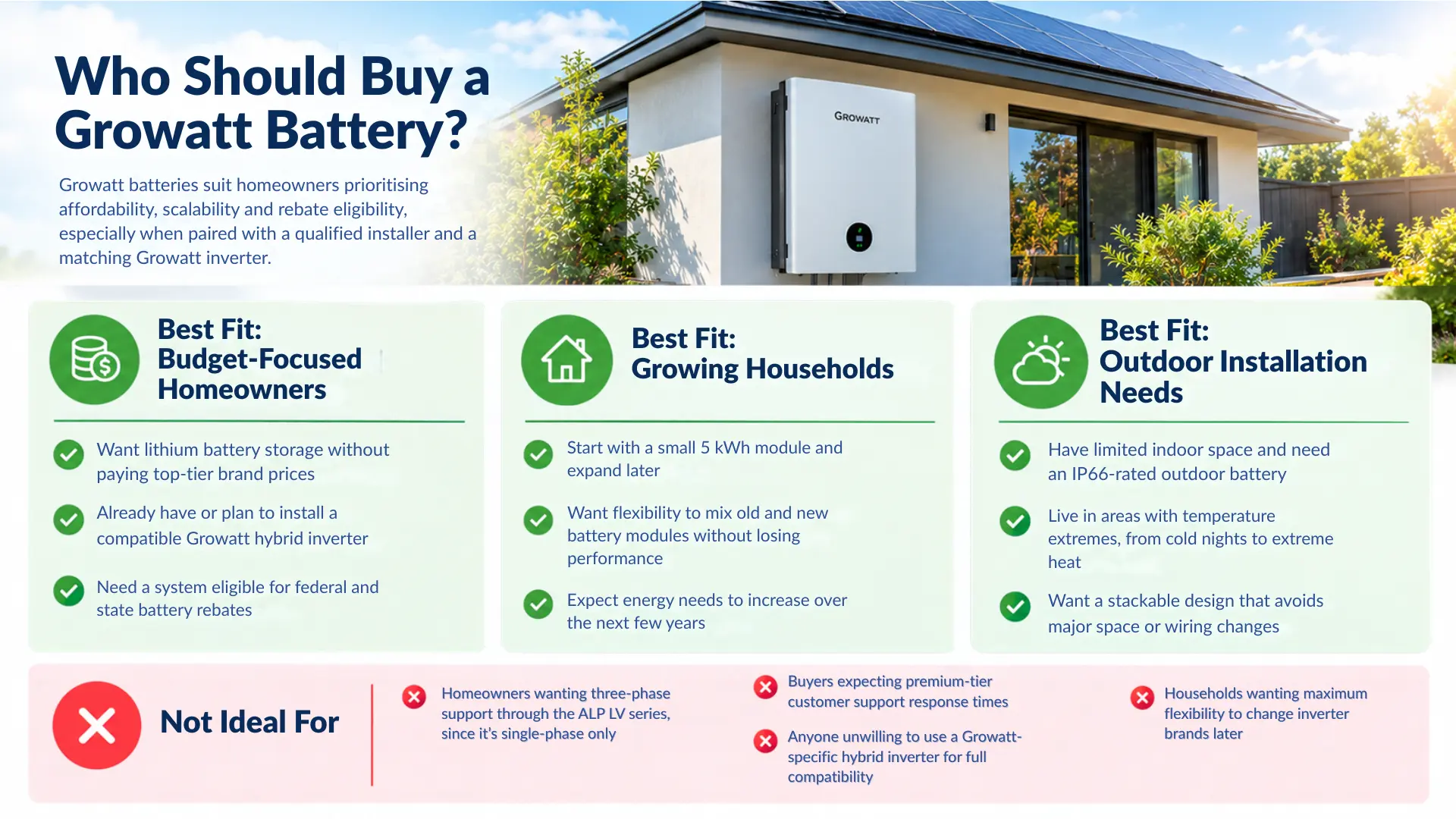
Best Fit: Budget-Focused Homeowners
- Want lithium battery storage without paying top-tier brand prices
- Already have or plan to install a compatible Growatt hybrid inverter
- Need a system eligible for federal and state battery rebates
Best Fit: Growing Households
- Start with a small 5 kWh module and expand later
- Want flexibility to mix old and new battery modules without losing performance
- Expect energy needs to increase over the next few years
Best Fit: Outdoor Installation Needs
- Have limited indoor space and need an IP66-rated outdoor battery
- Live in areas with temperature extremes, from cold nights to extreme heat
- Want a stackable design that avoids major space or wiring changes
Not Ideal For
- Homeowners wanting three-phase support through the ALP LV series, since it’s single-phase only
- Buyers expecting premium-tier customer support response times
- Anyone unwilling to use a Growatt-specific hybrid inverter for full compatibility
- Households wanting maximum flexibility to change inverter brands later
Growatt Battery vs. Leading Competitors
Growatt sits below Tesla on cost and roughly in line with Fox ESS on affordability, while AlphaESS charges slightly more for a broader scalable range. Tesla leads on efficiency and peak power, while Growatt, Fox ESS, and AlphaESS all use LFP chemistry with 10-year warranties. The final choice depends on budget, capacity needs, and installer support in your area.
| Feature | Growatt (APX HV / ALP LV) | Tesla Powerwall 3 | Fox ESS (EQ/EP Series) | AlphaESS (Smile Series) |
| Battery Chemistry | Cobalt-free LiFePO₄ | LFP (Lithium Iron Phosphate) | LiFePO₄ | LFP (Lithium Iron Phosphate) |
| Usable Capacity | 5–30 kWh (HV), 5–40 kWh (LV) | 13.5 kWh, expandable to 40.5 kWh | Modular, EQ4800 series scalable | 3.8–45.6 kWh, stackable to 60.5 kWh |
| Round-Trip Efficiency | 90%+ | 97.5% | 95%+ | 95% |
| Depth of Discharge | Up to 100% (APX) | 100% | High DoD supported | 100% |
| Peak Power Output | Up to 20 kW (system dependent) | 20 kW | Competitive, model dependent | 10 kW |
| Weatherproofing | IP66 | Indoor/outdoor rated | Indoor/outdoor rated | Indoor/outdoor rated |
| Warranty | 10 years | 10 years | 10 years (typical) | 10 years |
| Approx. Price Positioning | Budget to mid-range | Premium tier | Competitive, often below AlphaESS | Mid-range, slightly above Fox ESS |
| Local Support | Australian office and support hotline | Established local network | Growing Australian presence | Adelaide-based manufacturing link |
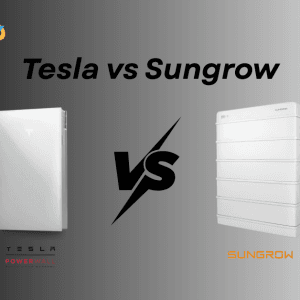
Growatt Battery vs Tesla Powerwall: Growatt suits homeowners prioritising affordable home battery storage and solar battery rebates, while Tesla leads on peak power output and round-trip efficiency, making it the pick for buyers wanting a premium home energy storage system regardless of upfront cost.
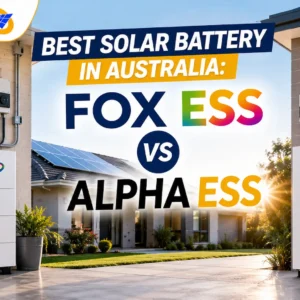
Growatt Battery vs Fox ESS: Both brands offer budget-friendly battery storage and use similar LiFePO4 chemistry, so the choice often comes down to inverter compatibility and local installer support rather than price alone.
Growatt Battery vs AlphaESS Battery: AlphaESS offers a wider range of stackable battery capacities and stronger scalable energy storage options, while Growatt remains the stronger pick for cost-effective solar battery systems and rebate-eligible battery storage in Australia.
Final Words
Growatt battery storage offers Australian homeowners a practical balance of LiFePO₄ technology, a 10-year warranty, rebate eligibility, and competitive pricing, although inverter compatibility and after-sales support should be considered.
At Austar Solar, we review every battery based on real specifications, pricing, warranty, performance, compatibility, and how well it suits Australian climate and energy needs—not just manufacturer claims.
For the best long-term results, choose a qualified installer and ensure the battery and inverter are correctly matched to your home and usage.
FAQs on Growatt Battery Review
Is Growatt a good battery brand?
Growatt is a solid budget option with safe LFP chemistry and rebate eligibility. Its weak points are inverter lock-in and mixed repair experiences, so installer quality matters.
How much does a Growatt battery cost?
Installed prices for the APX HV range run from about $7,500 to $18,000 before rebates, depending on size. See the pricing table above.
What’s The Difference Between APX and ALP Series?
APX HV is a high-voltage series supporting single and three-phase systems, ranging from 5–30 kWh. ALP LV is a low-voltage series for single-phase homes only, ranging from 5–40 kWh.
Can Growatt Batteries Work During A Blackout?
Yes, when paired with a compatible Growatt hybrid inverter, Growatt batteries provide backup power during blackouts. Backup functionality depends entirely on correct inverter selection and system configuration at installation.
Does Growatt Work With Any Solar Inverter?
No, Growatt batteries require a compatible Growatt hybrid or storage inverter for full functionality. Mixing brands can limit performance or void warranty coverage, so installer verification is essential beforehand.