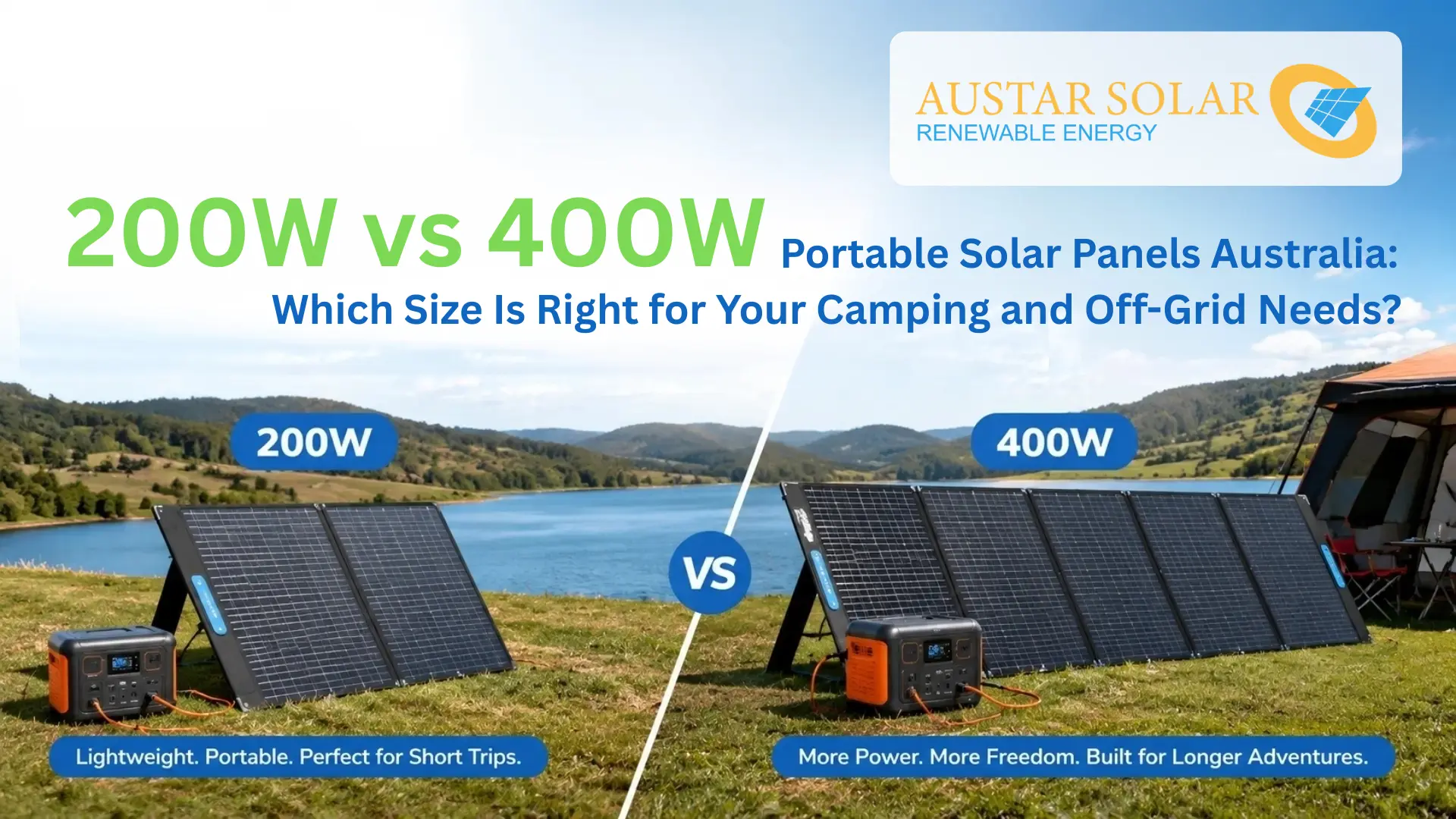
When it comes to outdoor camping, caravanning, or off-grid living in Australia, the question of wattage is significant when comparing 200W and 400W portable solar panels. The 200W panel is suitable for charging small battery systems, lighting, camping fridges, phones and other essential equipment; it’s light, cheap and convenient.
A 400W panel generates about double the amount of power, can accelerate charging of batteries, and can be used for more significant amounts of energy over a protracted period when off-grid.
Both 200W vs 400W Portable Solar Panels choices work well in Australia, but it depends on how much solar power you need, how large your battery is, your budget, and how you travel.
To help you pick the right solar panel for your needs, we compare 200W and 400W portable solar panels across power output, charging specs, compatibility with appliances, portability, cost, and real-world use.
200W Portable Solar Panels in Australia: Features and Benefits
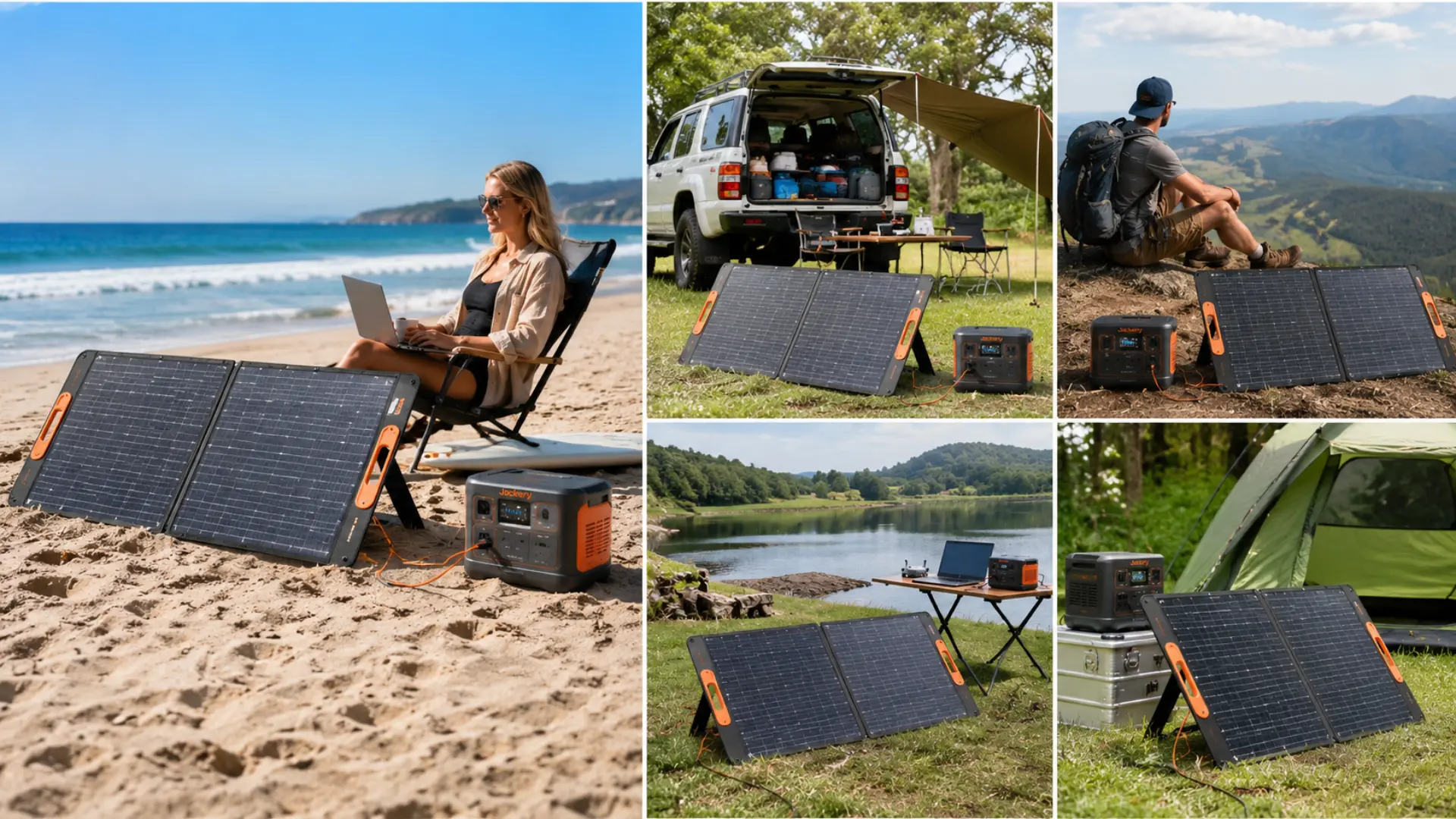
A 200W portable solar panel is one of the most popular choices for Australian campers, caravan owners, and off-grid travellers. It provides enough power to charge batteries, run small appliances, and support essential devices while remaining lightweight and easy to transport.
Key Features of 200W Portable Solar Panels
Most quality 200W portable solar panels in Australia include:
- High-efficiency monocrystalline solar cells
- Foldable design for easy transport and storage
- Lightweight aluminum frame
- Built-in carry handles and kickstands
- Weather-resistant construction for outdoor use
- Anderson, MC4, or USB output connections
- Compatibility with 12V battery systems and solar regulators
Benefits of Using a 200W Portable Solar Panel
A 200W panel typically generates 800–1,000Wh of energy per day under good Australian sunlight conditions.
Benefits include:
- Powers camping fridges, LED lights, fans, and phones
- Reduces dependence on generators and powered campsites
- Provides clean and renewable energy
- Quiet operation with no fuel costs
- Easy setup within minutes
- Suitable for caravans, 4WD trips, boats, and remote locations
Best Uses in Australia
A 200W portable solar panel is ideal for:
- Caravan and RV travel
- Camping and overlanding
- Fishing trips
- Remote work sites
- Emergency backup power
400W Portable Solar Panels in Australia: Features and Benefits
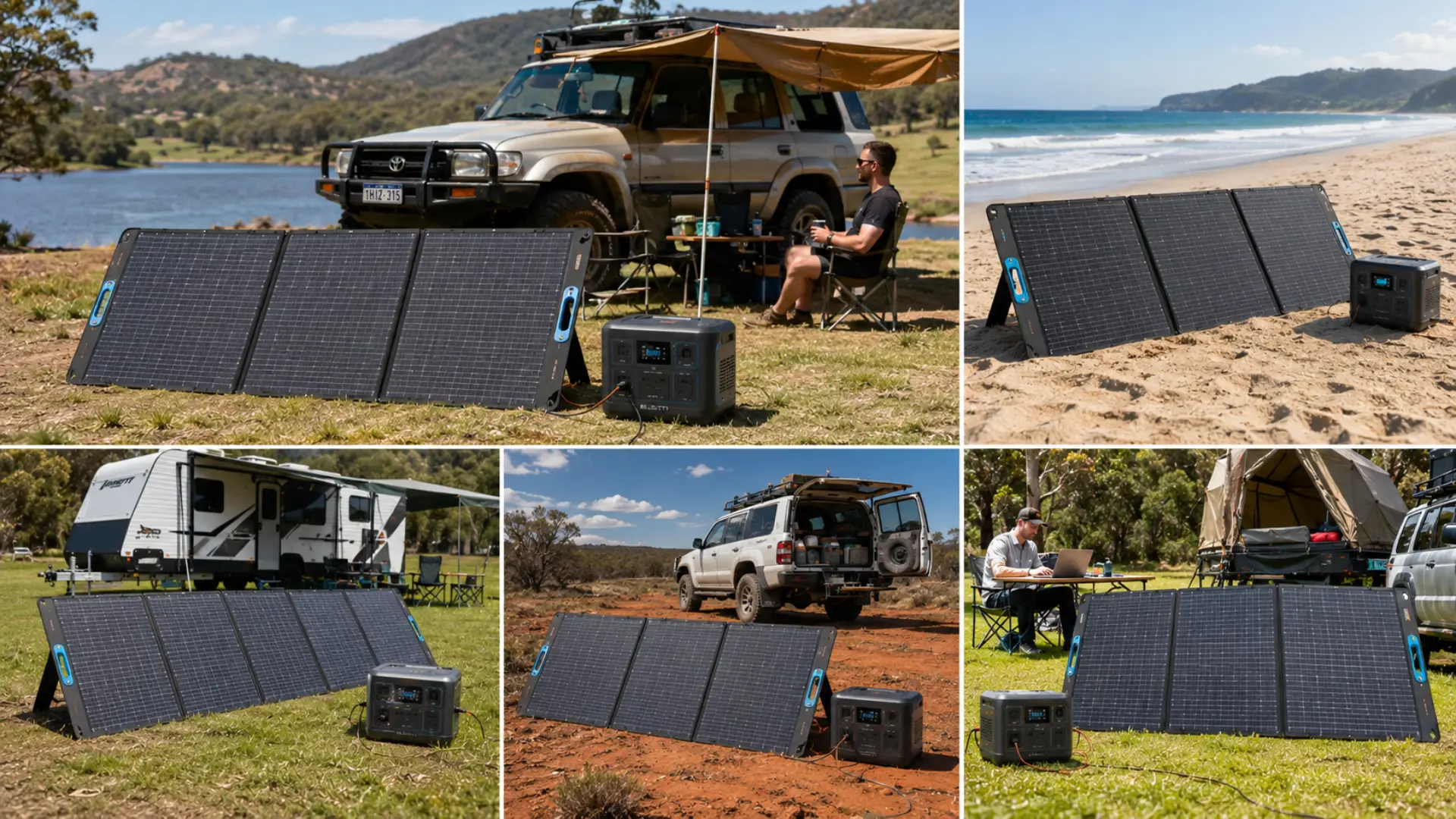
A 400W portable solar panel is a powerful off-grid energy solution for Australian caravans, 4WD adventures, camping trips, and remote worksites. It produces significantly more electricity than smaller portable panels, making it suitable for running multiple appliances and charging larger battery systems.
Key Features of 400W Portable Solar Panels
Most premium 400W portable solar panels offer:
- High-efficiency monocrystalline solar cells
- Foldable or suitcase-style design
- Heavy-duty aluminum frame
- Adjustable kickstands for better sun exposure
- Weather-resistant construction
- Anderson and MC4 connectors
- Compatibility with 12V, 24V, and lithium battery systems
Benefits of Using a 400W Portable Solar Panel
Under good Australian sunlight, a 400W panel can generate approximately 1.6–2.2kWh of energy per day.
Benefits include:
- Supports larger battery banks
- Powers camping fridges, lights, laptops, TVs, and small appliances
- Reduces generator use and fuel costs
- Provides reliable off-grid power for extended trips
- Fast battery charging during daylight hours
- Quiet, clean, and environmentally friendly operation
Best Uses in Australia
A 400W portable solar panel is ideal for:
- Long-term caravan travel
- Off-grid camping
- 4WD touring
- Remote work locations
- Emergency backup power systems
200W vs 400W Portable Solar Panels: Side-by-Side Comparison
A 200W portable solar panel is best for basic camping and weekend trips, while a 400W portable solar panel is better for extended off-grid travel and powering multiple devices. The table below highlights the key differences.
| Feature | 200W Portable Solar Panel | 400W Portable Solar Panel |
| Power Output | 200 watts | 400 watts |
| Daily Energy Production* | 800–1,000Wh | 1,600–2,200Wh |
| Battery Charging Speed | Moderate | Fast |
| Weight | Lighter and easier to carry | Heavier but still portable |
| Size | More compact | Larger footprint |
| Cost | Lower upfront cost | Higher upfront cost |
| Best For | Weekend camping, small setups | Long-term off-grid use |
| Suitable Battery Capacity | Up to 100Ah–150Ah | 200Ah–400Ah+ |
| Can Run Camping Fridge | Yes | Yes |
| Can Power Multiple Appliances | Limited | Easily |
| Ideal Users | Campers, hikers, casual travellers | Caravan owners, 4WD tourers |
| Setup Space Required | Less space | More space |
| Generator Dependence | May need backup in poor weather | Less likely to need backup |
| Portability | Excellent | Good |
| Value for Long Trips | Moderate | Excellent |
*Actual output depends on sunlight, panel quality, temperature, and location.
Which Appliances Can Each Solar Panel Run?
A 200W portable solar panel can power essential camping devices and charge batteries for daily use. A 400W portable solar panel can support more appliances simultaneously and recharge larger battery systems faster. Actual performance depends on sunlight, battery capacity, and inverter size.
Appliances a 200W Portable Solar Panel Can Run
A 200W panel typically produces 800–1,000Wh per day in Australian conditions.
It can support:
- LED lights
- Smartphones and tablets
- Laptops
- Portable fans
- Wi-Fi devices
- Cameras and drones
- 12V camping fridges (with battery support)
- Small CPAP machines
A 200W panel is best for portable solar panels for camping, couples, and weekend campers with basic power needs.
Appliances a 400W Portable Solar Panel Can Run
A 400W panel typically produces 1,600–2,200Wh per day in Australian conditions.
It can support:
- Everything a 200W panel can run
- Larger 12V and 240V camping fridges
- Multiple laptops and devices
- Portable TVs
- Coffee machines (short periods)
- Starlink systems
- Small power tools
- Electric blankets
- Caravan electronics
A 400W panel is better for caravans, 4WD touring, and extended off-grid stays.
Battery Charging Performance Comparison: 200W vs 400W Portable Solar Panels
Battery charging speed is a major factor when choosing between 200W and 400W portable solar panels. In Australian conditions, a 400W panel can produce about twice the energy of a 200W panel, allowing faster charging and better performance during cloudy weather.
200W Portable Solar Panel Charging Performance
A 200W panel typically generates 800–1,000Wh per day.
Key benefits:
- Suitable for 100Ah lithium batteries
- Good for weekend camping
- Supports light daily power consumption
- Lower equipment cost
Real-World Example:
A camper using a 100Ah battery, LED lights, phone charging, and a 40L fridge can usually recover a full day’s power usage during a sunny day.
Customer Feedback:
Many campers report that a 200W panel easily keeps small fridges and electronics running during weekend trips but may struggle after several cloudy days.
400W Portable Solar Panel Charging Performance
A 400W panel typically generates 1,600–2,200Wh per day.
Key benefits:
- Faster battery charging
- Supports 200Ah–400Ah battery banks
- Better for long off-grid trips
- Handles higher power consumption
Real-World Example:
A caravan owner using a 200Ah lithium battery, Starlink, fridge, TV, and laptops can often recharge the battery during the same day while continuing to run appliances.
Customer Feedback:
Frequent caravan travellers often praise 400W systems for maintaining battery levels even when running multiple devices daily.
Cost Comparison in Australia
In Australia, 200W portable solar panels cost less upfront and are suitable for basic camping needs. A 400W portable solar panel costs more but delivers double the power output, making it more cost-effective for extended off-grid travel and larger energy demands.
| Feature / Metric | 200W Portable Solar Panel | 400W Portable Solar Panel |
| Average Australian Price Range | AU$150 to AU$550 | AU$400 to AU$1,300 |
| Premium / Luxury Pricing | Up to AU$850+ | Up to AU$1,200+ |
| Average Value Price (Entry/Mid) | AU$250 to AU$490 | AU$490 to AU$790 |
| Daily Energy Generation | Approx. 0.6 kWh to 0.8 kWh (per sunny day) | Approx. 1.2 kWh to 1.6 kWh (per sunny day) |
| Typical Physical Weight | ~4 kg to 7 kg (highly portable) | ~12 kg to 16 kg (heavy/awkward) |
| Best Suited For | 12V fridges, phones, LED lights, small battery packs | Large power stations, multi-day off-grid setups, caravan dual-batteries |
Important Factors to Consider Before Buying
Consider your daily power requirements, battery capacity, and travel habits before purchasing a portable 200W or 400W solar panel. A suitable panel will provide a dependable supply of power when off-grid and will not incur any unnecessary expenses.
Key factors to consider:
- Daily Energy Usage: Calculate how many watt-hours (Wh) your appliances consume each day.
- Battery Capacity: Ensure that the solar panel output matches the size of the battery bank. Higher wattage panels are a good choice for larger batteries.
- Charging Speed: A 400W panel will charge batteries quicker than a 200W panel.
- Portability: 200W panels will be lighter and easier to move. A 400W panel will need a larger storage area.
- Available Set Up Space: Make sure you have sufficient space for the panel on your campsite, caravan or car.
- Solar Cell Type: Monocrystalline panels typically have a higher efficiency and better performance.
- Weather Conditions: Larger panels are more efficient in generating energy in cloudy weather.
- Higher Efficiency: This will produce more power from the same amount of sunlight.
- Battery/Solar Regulator/Connectivity: Ensure compatibility with your battery and solar regulator/power station.
- Budget: Take into account panel cost as well as any other additional costs for batteries and regulators.
The best one to choose depends on the amount of energy usage, battery system, portability needs and frequency of travel off-grid.
Conclusion
In Australia, a 200W portable solar panel and a 400W portable solar panel both have their merits for off-grid use but are suitable for different purposes. The 200W solar panel is perfect for campers, weekend travellers, and those who have simple power needs. Lightweight, inexpensive, and portable.
For caravans, off-grid longer trips and bigger battery systems that can charge quicker and produce more power, a 400W panel will be more suitable. It is more expensive, but can be more energy independent and power more appliances. It will depend on your needs, how much power you consume daily, how much power your battery can hold, how you use it, how much space you have to store it, and how much money you have to spend.