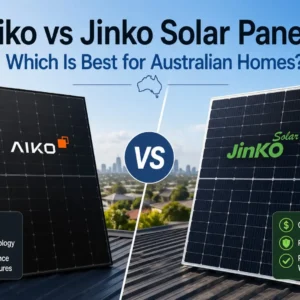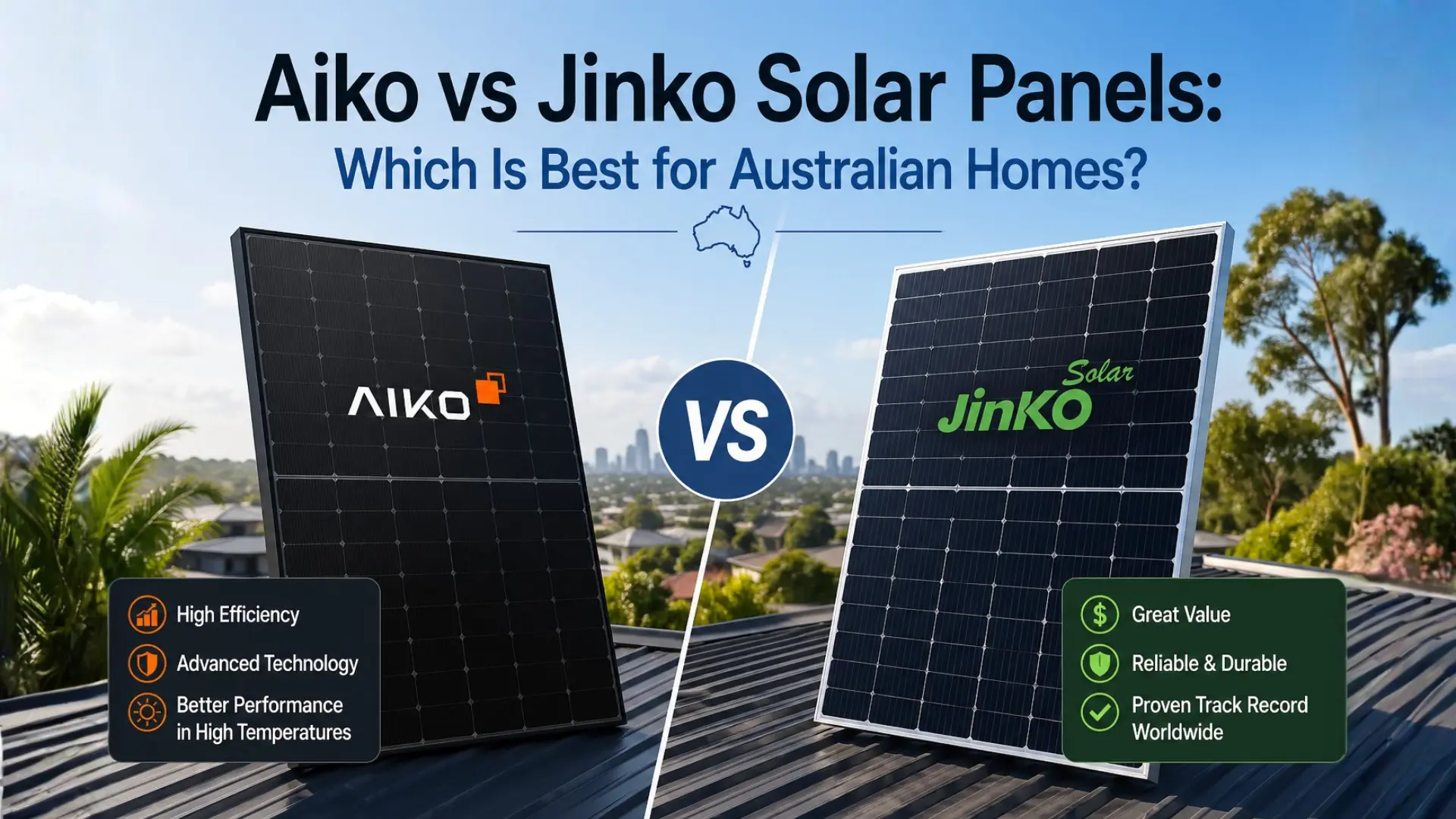
Aiko vs Jinko Solar Panels: Which Is Best for Australian Homes?
Choosing the right solar panel brand in Australia is not just about price – it’s about long-term performance, reliability, and how well your system handles extreme weather conditions. With temperatures frequently exceeding 40°C and rooftops reaching up to 70°C, Australian homeowners need panels that can maintain efficiency under heat stress while delivering consistent energy output over decades.
Two of the most competitive options in today’s market are Aiko Solar and Jinko Solar. Both brands are global leaders, but they differ significantly in technology, efficiency, and overall value proposition. This guide provides a complete comparison to help you choose the best solar panels for your home.
Why Solar Panel Choice Matters in Australia
Australia’s climate presents unique challenges for solar systems. High heat, strong UV exposure, and environmental factors like dust or coastal salt can all affect performance. That’s why selecting the right panel directly impacts how much electricity your system produces, how quickly it pays itself off, and how long it continues to perform efficiently.
A well-chosen solar panel system can significantly increase your return on investment by maintaining higher output levels even in harsh conditions. This is where comparing advanced technologies like Aiko’s ABC and Jinko’s TOPCon becomes crucial.
Overview of Aiko Solar Panels
Aiko Solar has quickly positioned itself as a technology leader in the global solar industry. Its Neostar series is particularly popular in Australia due to its record-breaking efficiency and innovative design.
Aiko panels use ABC (All-Back Contact) technology, which removes all electrical contacts from the front surface of the panel. This results in a completely clean glass front that absorbs more sunlight without obstruction. The outcome is significantly higher efficiency, reaching up to 24%, which is currently among the highest available for mass-produced solar panels.
This design not only improves performance but also enhances aesthetics, making Aiko panels an attractive option for homeowners who want a sleek, all-black look combined with cutting-edge technology. These panels are especially beneficial for homes with limited roof space, as they allow you to generate more power with fewer panels.
Overview of Jinko Solar Panels
Jinko Solar is one of the most established and widely installed solar brands in Australia. Known for its reliability and strong global presence, Jinko has built a reputation as a dependable choice for residential solar systems.
The Tiger Neo series features N-Type TOPCon technology, which offers high efficiency and improved performance compared to older P-type panels. With efficiencies reaching up to 22.6%, Jinko panels deliver excellent energy output while maintaining durability in challenging conditions.
Jinko’s long-standing presence in the Australian market also provides homeowners with added confidence. Its extensive installer network and proven warranty support make it a practical choice for those prioritizing reliability and long-term peace of mind.
Aiko vs Jinko: Technical Specifications Comparison
| Feature | Aiko Solar (Neostar Series) | Jinko Solar (Tiger Neo Series) |
| Maximum Efficiency | 23.6% – 24% | Up to 22.6% |
| Cell Technology | ABC (All-Back Contact) | N-Type TOPCon |
| Power Output Range | 440W – 470W | 440W – 475W |
| Temperature Coefficient | -0.26%/°C | -0.29%/°C |
| Annual Degradation | <0.35% | <0.40% |
| Product Warranty | 15 – 25 Years | 25 Years |
| Performance Warranty | 30 Years | 30 Years |
| Panel Design | Full Black (Premium) | Black / Silver Options |
| Shading Performance | Excellent | Good |
| Price Range (approx) | $195 – $240 | $140 – $180 |
For more info – Aiko Datasheet
For more info – Jinko Datasheet
Performance Comparison in Australian Conditions: Efficiency and Energy Output
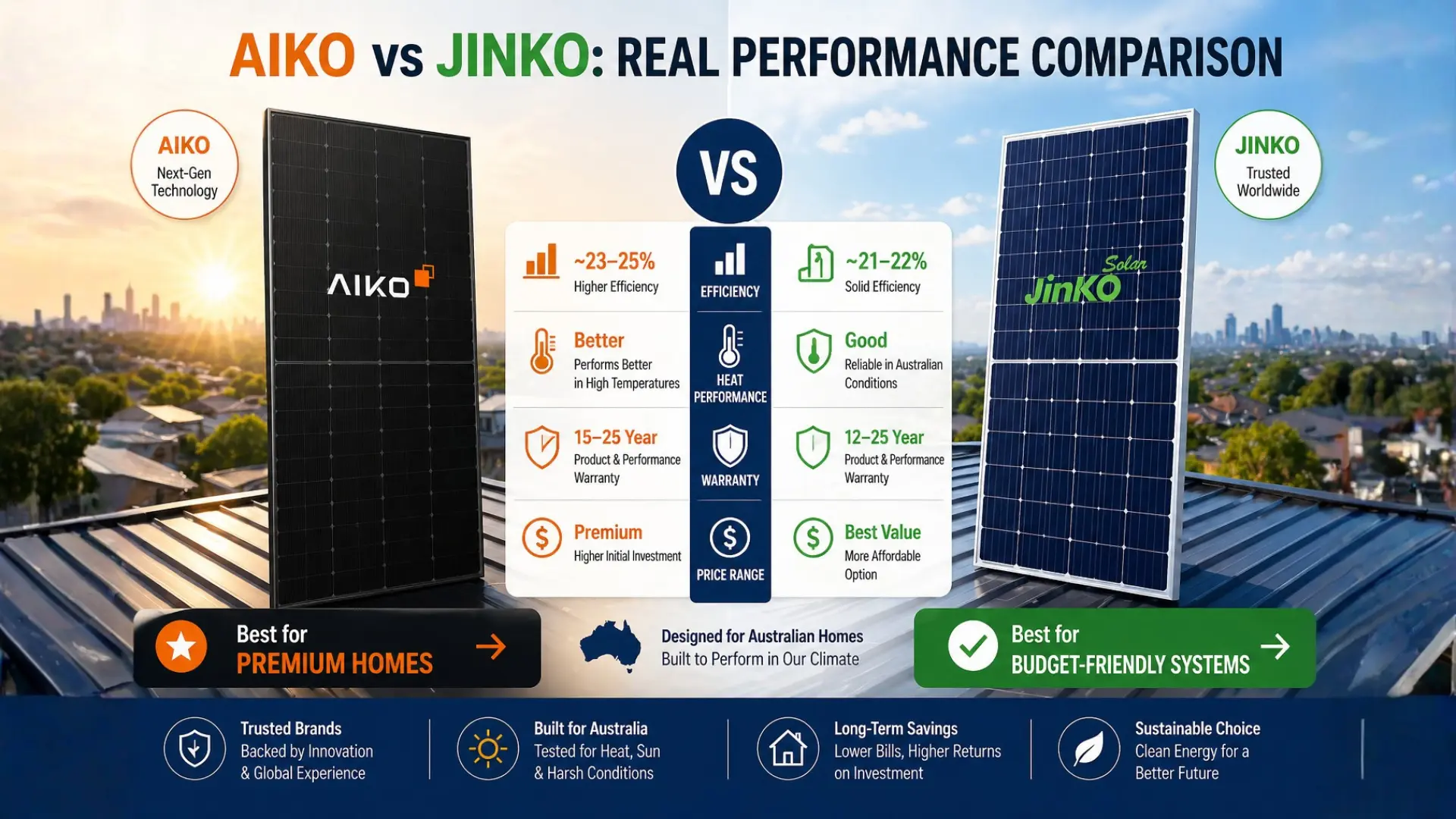
Efficiency plays a critical role in determining how much electricity your system generates. Aiko leads in this category with efficiencies reaching up to 24%, while Jinko follows closely at around 22.6%. Although both are considered high-performance panels, Aiko’s advantage becomes particularly noticeable on smaller roofs where maximizing output per square meter is essential.
Performance in Extreme Heat
The temperature coefficient is a key factor in Australia’s hot climate. Aiko panels have a slightly better coefficient at -0.26%/°C compared to Jinko’s -0.29%/°C. This means Aiko panels lose less efficiency as temperatures rise, allowing them to maintain stronger performance during peak summer conditions. Over time, this small difference can translate into higher overall energy production.
Shading Performance
Partial shading is a common issue in residential areas due to trees, chimneys, and nearby structures. Aiko’s ABC technology offers a distinct advantage here, as it allows panels to handle partial shading more effectively without significantly reducing overall output. Jinko panels perform well but rely on a more traditional cell structure, which can result in slightly higher losses under shaded conditions.
Durability and Degradation
Both brands offer strong long-term performance, but Aiko has a slight edge in degradation rates. With less than 0.35% annual degradation compared to Jinko’s 0.40%, Aiko panels retain more of their original capacity over time. This difference becomes more noticeable over 25 to 30 years, contributing to better lifetime energy yield.
Aesthetics and Design
Aiko panels feature a premium all-black finish and no visible front contacts, giving them a sleek, modern appearance. Jinko panels, while available in black options, have a more traditional look with visible cell structures. For homeowners who value design and visual appeal, Aiko stands out as the more refined option.
Warranty and Local Support
Jinko Solar benefits from over a decade of presence in Australia, offering a well-established support network and reliable warranty service. Aiko, while a major global manufacturer, is still relatively new to the Australian residential market. Although both brands provide up to 25-year product warranties, Jinko’s local track record offers additional reassurance for many homeowners.
Pricing and Value for Money
Aiko panels are positioned in the premium segment, reflecting their advanced technology and higher efficiency. While the upfront cost is higher, they can deliver greater energy output over time, particularly in space-constrained installations.
For Aiko Solar Neostar panels, pricing sits firmly in the premium tier.
- Per panel price: AUD $195 – $240
- Popular models:
- Neostar 2P (470W): ~$195 – $220
- Neostar 2S (440W): ~$228 – $240
- Typical system cost (installed):
- 6.6kW system: from ~$3,999+
Insight: Aiko is priced higher due to ABC technology and ultra-high efficiency, making it a premium choice.
Jinko panels, on the other hand, provide a more balanced approach. They offer strong performance at a more accessible price point, making them an excellent option for homeowners seeking value without compromising reliability.
For Jinko Solar Tiger Neo panels, pricing is more mid-range and value-focused.
- Per panel price: AUD $145 – $180 (typical range)
- Common models:
- 440W: ~$155 – $180
- 430W: ~$150 – $175
- Typical system cost (installed):
- 6.6kW system: ~$3,999 – $5,500
Insight: Jinko offers strong performance at a lower price point, making it one of the best-value brands in Australia.
Note*: all these prices can vary by state and circumstance, so before any purchase, please make sure the current price of that product.
Which Solar Panel Should You Choose?
The choice between Aiko and Jinko ultimately depends on your priorities. If your goal is to maximize efficiency, achieve a premium aesthetic, and get the most power from limited roof space, Aiko Solar is the better option. However, if you prefer a trusted brand with a proven track record, strong local support, and excellent value for money, Jinko Solar is the smarter choice. For more info, click the video below:
Final Verdict: Aiko vs Jinko Solar Panels
Both Aiko Solar and Jinko Solar offer high-quality solar panels that perform well in Australian conditions. Aiko stands out for its cutting-edge innovation and superior efficiency, while Jinko excels in reliability, affordability, and market trust.
For homeowners seeking the latest solar technology and maximum output, Aiko is a premium investment. For those looking for dependable performance and long-term value, Jinko remains one of the safest and most popular choices in Australia.
Get a Custom Solar Solution
Every home is different, and the best solar panel choice depends on your roof size, energy usage, and budget. Exploring both Aiko and Jinko options with a professional installer can help you design a system that delivers the best possible return on investment while ensuring long-term performance.