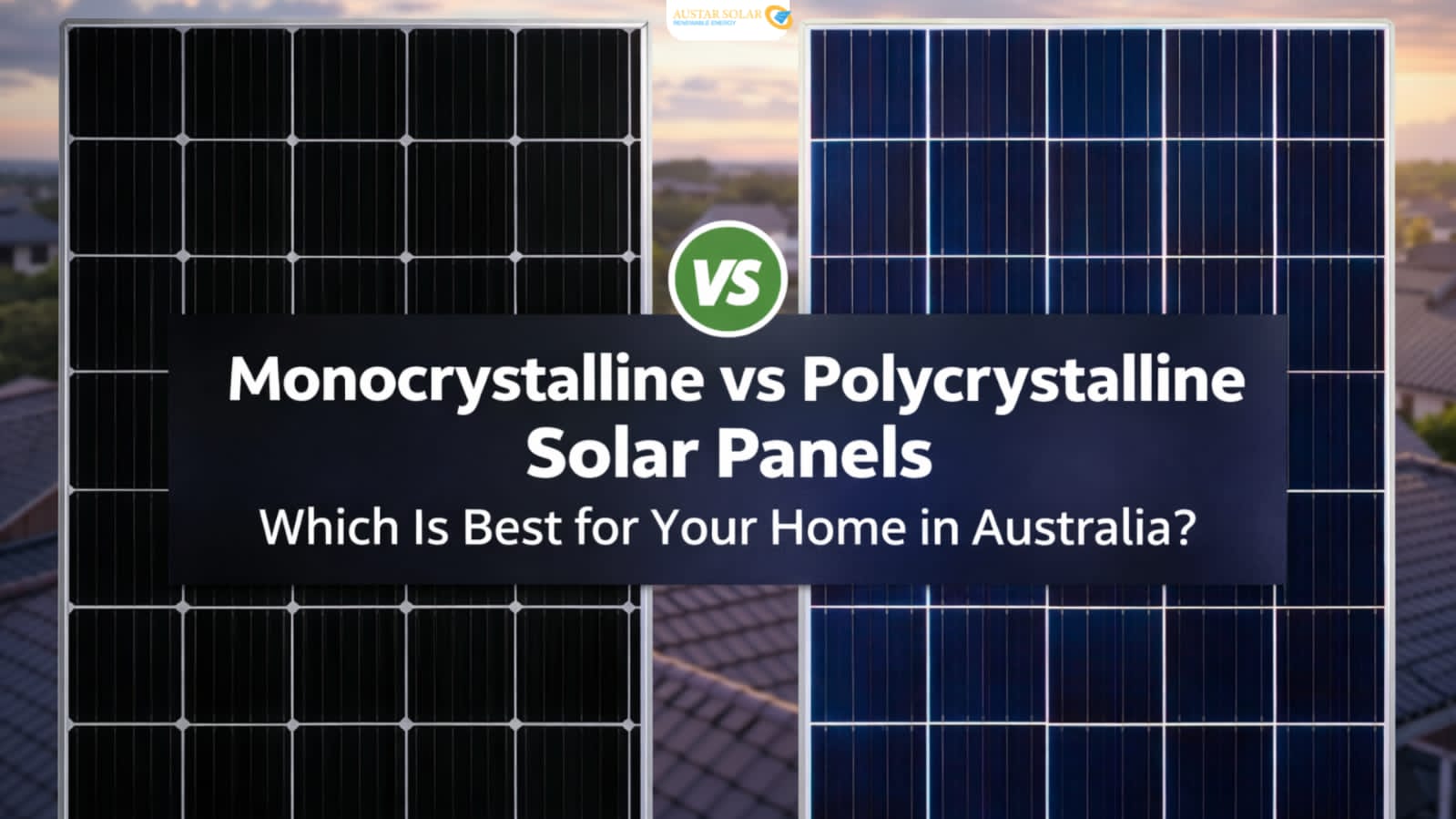
Monocrystalline vs Polycrystalline Solar Panels: Choosing the Best Option for Your Home in Australia
When choosing solar panels for your home or business in Australia, it is important to understand the difference between monocrystalline and polycrystalline panels. Monocrystalline panels ensure high efficiency and a long lifespan, while polycrystalline panels are relatively affordable and effective on large roofs. Choosing the right panel maximizes power generation and saves on costs and maintenance in the long run. This comparison will help you make the right decision based on the weather, sunlight, and roof size of different cities in Australia.
What are Monocrystalline Solar Panels?
Monocrystalline solar panels are a type of high-efficiency solar panel made from a single silicon crystal. They have a long lifespan and excellent power generation capacity. They play a key role in modern premium solar panel technology, as this solar panel technology helps in the most efficient use of solar energy, especially in hot regions like Australia.
What are Polycrystalline Solar Panels?
Polycrystalline solar panels are a type of solar panel made from multiple silicon crystals. They are relatively affordable solar panels that are effective in reducing costs for homes or businesses. These panels produce power while maintaining polycrystalline efficiency and are known as energy-saving solar. This technology ensures long-term savings in the Australian climate.
Monocrystalline vs polycrystalline: Efficiency Comparison
The main difference between Monocrystalline and polycrystalline panels in Australia is efficiency. Monocrystalline is made from a single silicon crystal, producing around 20–23% of the energy per square metre. Polycrystalline is less efficient (15–18%), but is effective as a cost-effective solar panel. Both work as energy output solar panels; polycrystalline is better for smaller roofs or budget constraints, while monocrystalline is best for higher yields.
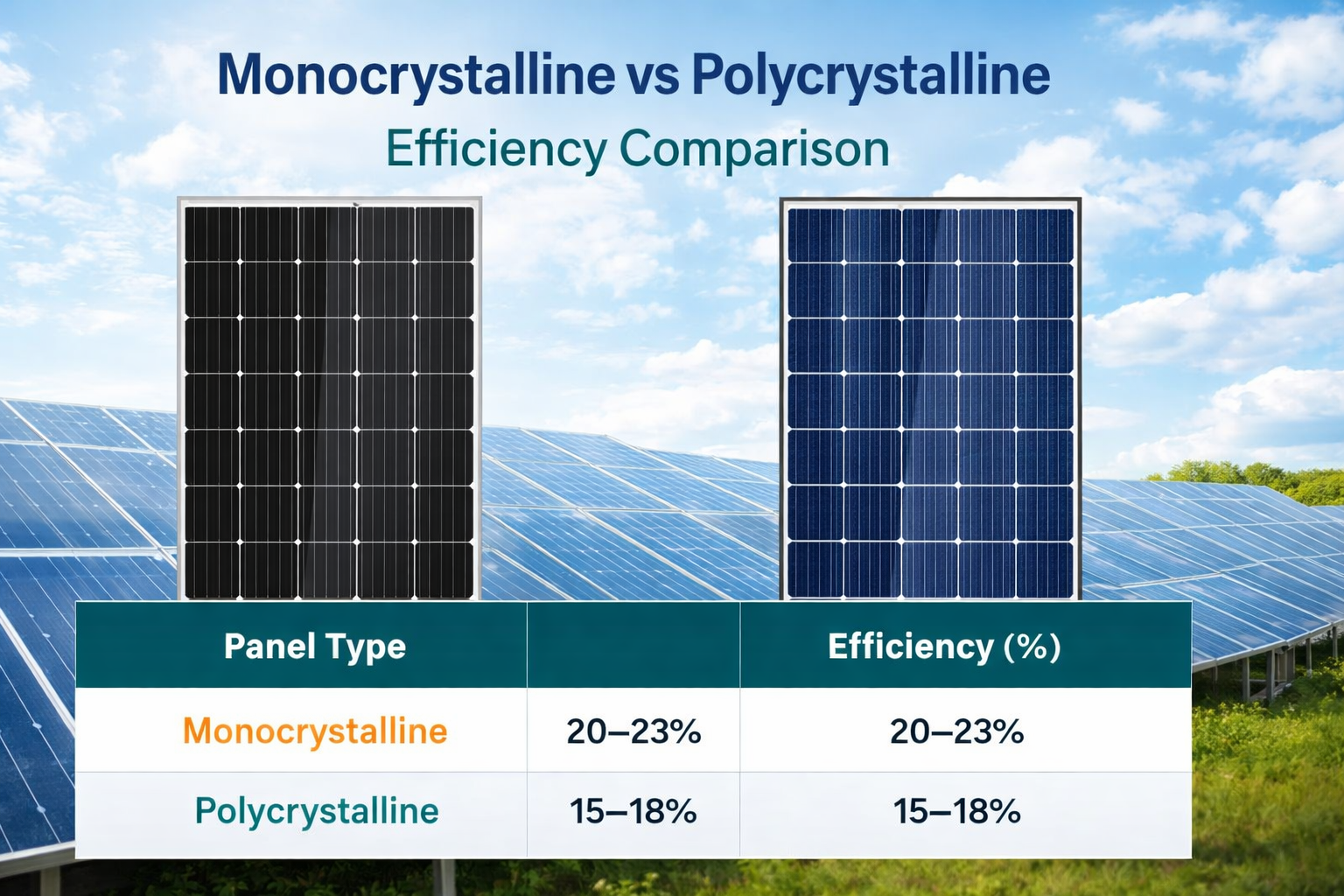
The comparison chart below shows the difference in average yields of both panels per square metre:
| Panel Type | Efficiency (%) |
| Monocrystalline | 20–23% |
| Polycrystalline | 15–18% |
Cost & ROI Comparison: Monocrystalline vs Polycrystalline
| Panel Type | Efficiency | Cost per Watt | Lifespan |
| Monocrystalline | 20–23% | $0.95 – $1.10 | 25+ years |
| Polycrystalline | 15–18% | $0.80 – $1.00 | 20+ years |
ROI Calculation
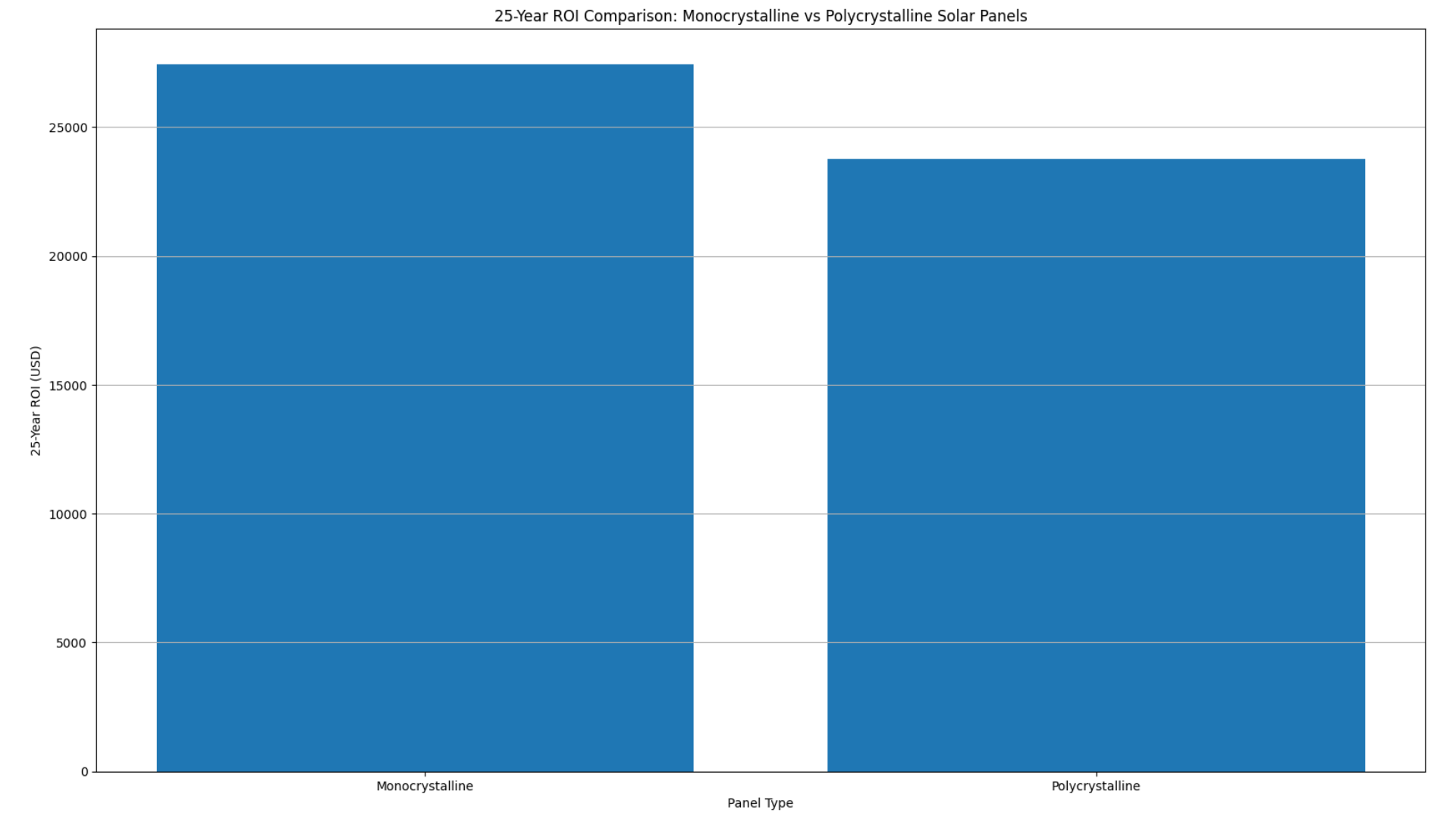
| Panel Type | System Cost | Annual Savings | Payback Period | 25-Year ROI |
| Monocrystalline | ~$6,300 | ~$1,350 | ~4.7 Years | ~$27,450 |
| Polycrystalline | ~$5,400 | ~$1,150 | ~4.6 Years | ~$23,750 |
Lifespan & durability
- Expected lifespan: Monocrystalline panels generally offer slightly higher longevity (often 30+ years) and slower degradation rates than the 20–30-year range for Polycrystalline.
- Warranty: Both panels come with a 10–25 year warranty, protecting against damage or performance degradation.
- Resistance to Heat/Corrosion: Able to withstand hot weather and humidity, especially in Australian cities.
- Long-lasting Solar Panels: Solar panel durability is maintained in the long term if regular maintenance and quality installation are ensured.
Which solar panel is better for Australia?
When choosing solar panels in Australia, it is important to consider the weather, roof size, and power demand. Choosing the right panel according to the location of the city and the amount of solar radiation maximizes savings and energy production.
Monocrystalline Solar Panels: Main Advantages
- High efficiency: Uses a single silicon crystal to produce the highest amount of electricity per square meter.
- Roof space requirement: Larger energy production is possible on a small roof, so it is convenient for city homes.
- Long-term savings: Due to high efficiency, solar panel installation reduces electricity costs in the long run.
- Heat resistance: Suitable for hot cities, such as Sydney, Melbourne, or Brisbane.
Polycrystalline Solar Panels: Main Advantages
- Cost-effective: Comparatively cheap vs premium solar panels, a good option if the budget is limited.
- Open Roof Suitability: Produces enough power if you have a large roof or open space.
- Easy Maintenance: Regular cleaning and stable installation are enough.
- Durable Performance: Able to withstand Australian weather, ensuring a long-term energy supply.
Compared to polycrystalline, monocrystalline is suitable for maximum power generation, but polycrystalline is also viable depending on budget and roof size.
FAQs
Which Solar Panel Is Better in Australia: Monocrystalline or Polycrystalline?
Monocrystalline solar panels are usually better for small roofs because they provide higher efficiency and produce more power per square meter. Polycrystalline panels are more affordable and work well for larger roof spaces.
What Is the Efficiency Difference Between Monocrystalline and Polycrystalline Panels?
Monocrystalline solar panels typically offer 20–23% efficiency, while polycrystalline panels provide 15–18% efficiency. This means monocrystalline panels generate more electricity from the same sunlight.
Which Solar Panel Type Has the Best Long-Term ROI?
Monocrystalline solar panels generally deliver a higher long-term return on investment because they generate more electricity and last longer. However, polycrystalline panels can still provide a strong ROI due to their lower upfront cost.
How Long Do Solar Panels Last in Australia?
Most modern solar panels last 20–25 years or more. Proper installation, regular cleaning, and quality inverters help maintain strong energy production over time.
Are Polycrystalline Solar Panels Still Worth Buying?
Yes. Polycrystalline panels are still a good option for homeowners who have larger roof areas and want a more budget-friendly solar installation.
What Factors Should Be Considered Before Installing Solar Panels?
Key factors include roof size, sunlight exposure, energy consumption, panel efficiency, and government solar incentives. Choosing a trusted solar installer also ensures better long-term performance.
Final verdict: Monocrystalline vs Polycrystalline – Which Solar Panel Suits Australia Best
Choosing the right solar panel for your Australian home or business is important. Monocrystalline panels provide higher power output and a longer lifespan than polycrystalline, but polycrystalline is also a viable option if you’re on a budget. Choosing panels that take into account your roof size, sunlight exposure, and maintenance will ensure maximum energy savings and cost-effectiveness in the long run, making it the best decision for solar investment in Australia.