Leading Solar Battery Solutions in Australia
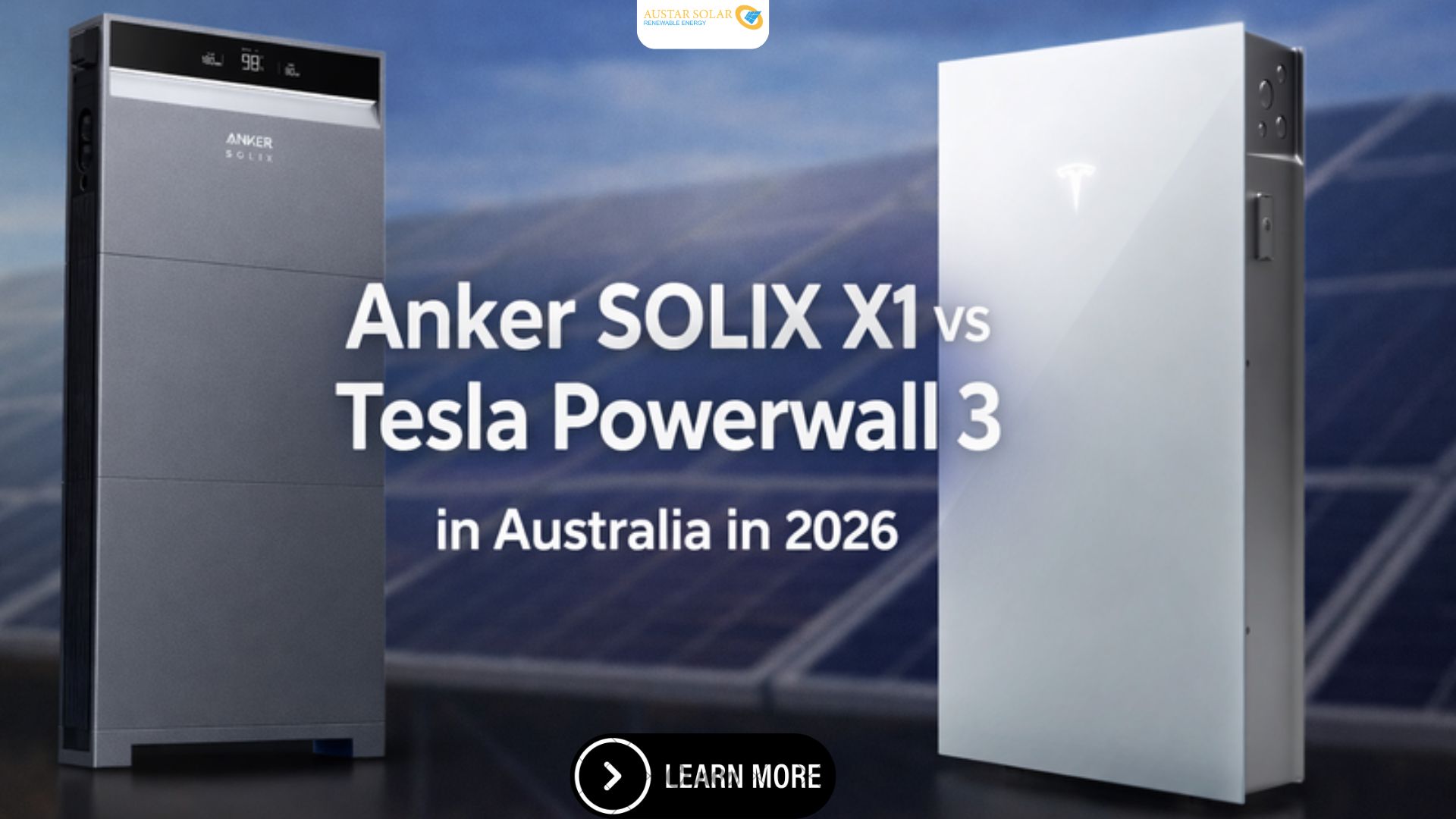
In 2026, Australian homeowners are increasingly looking for reliable and efficient solar battery storage. The choice between Anker SOLIX X1 vs Tesla Powerwall 3 is critical, as both offer advanced technology, smart energy management, and dependable backup power, yet differ in scalability, integration, and cost, making it essential to understand each system’s strengths to select the best solar battery for long-term energy independence and savings.
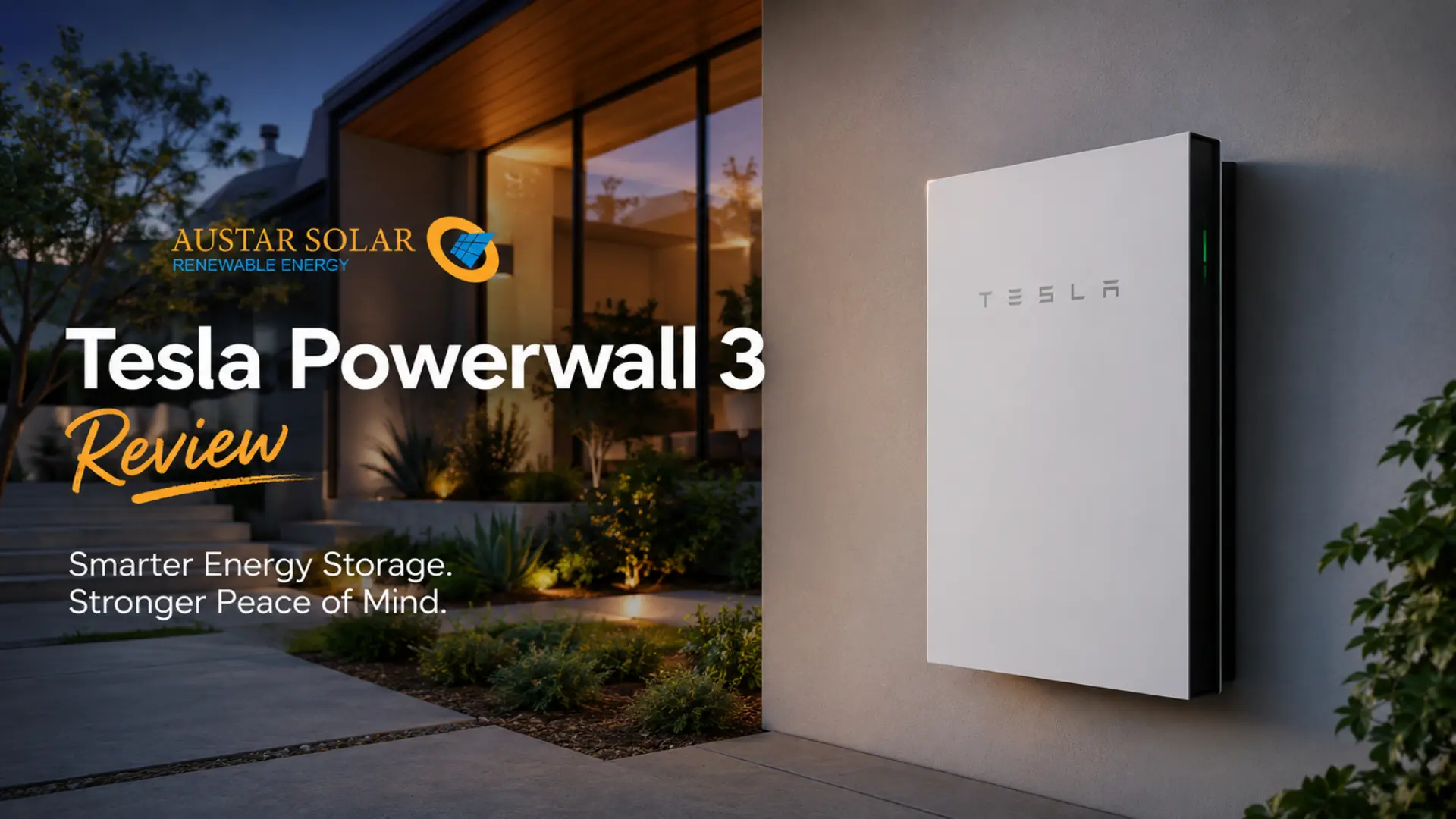
Tesla Powerwall 3: All-in-One Power Solution
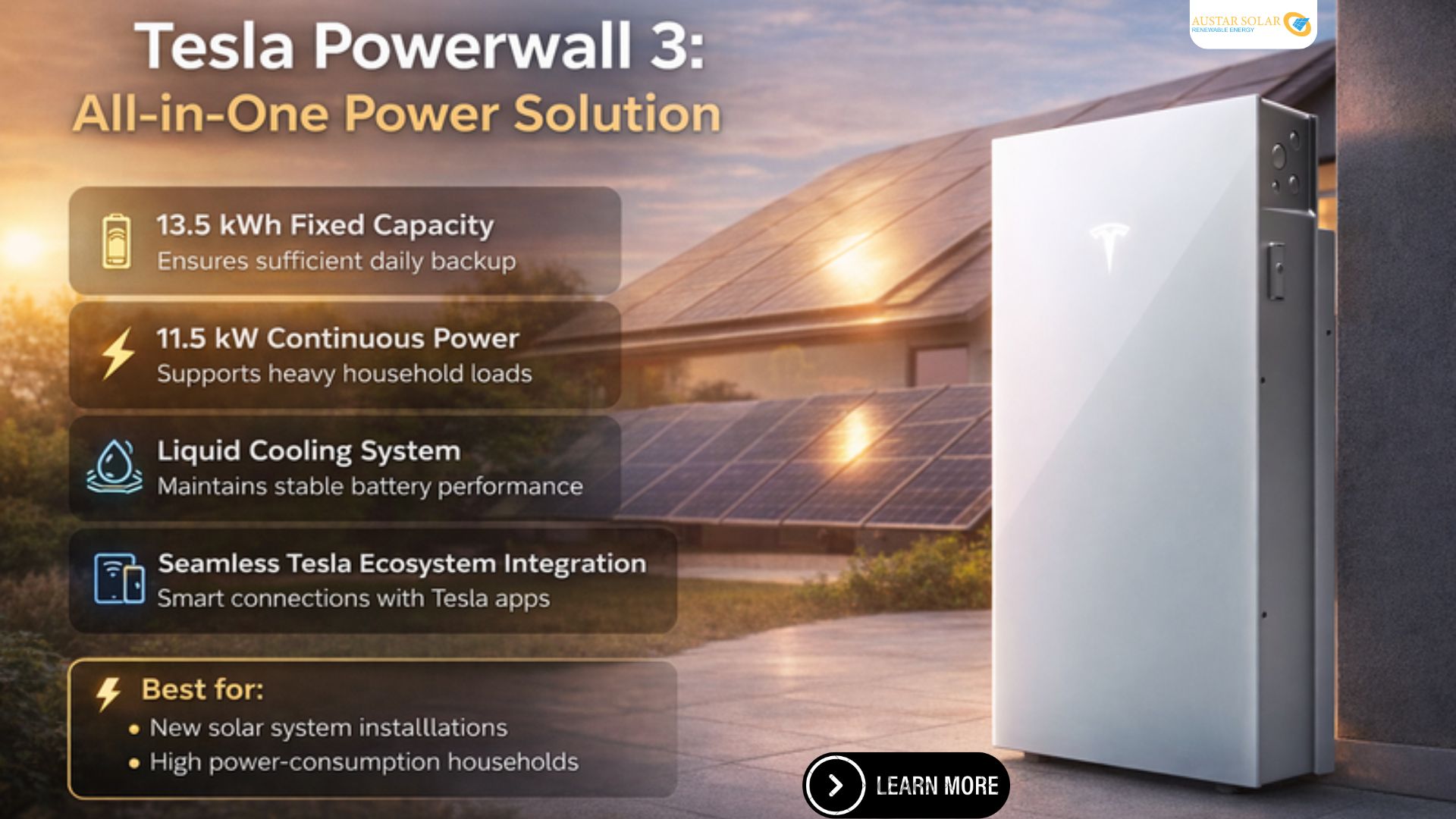
Tesla Powerwall 3 is a premium home battery system that features a fully integrated design and a built-in hybrid inverter that can be easily connected to a new solar setup. It provides long-term, reliable energy support by ensuring uninterrupted backup and stable performance for homes with high energy demands.
key features
- 13.5 kWh fixed capacity: Fixed storage capacity provides continuous energy storage once installed and provides sufficient backup for daily use.
- 11.5 kWh continuous power: High load handling capacity allows devices such as air conditioners, washing machines, and EV charging to run smoothly.
- Liquid cooling system: Advanced cooling technology keeps battery temperature under control, resulting in stable performance over long periods of use.
- Seamless Tesla ecosystem integration: Provides smart connections with Tesla apps and other devices, making automation and energy management easier and more effective.
- Best for: New solar system installations and high-power consumption households that require powerful and uninterrupted backup.
Anker SOLIX X1: Flexible Modular Power
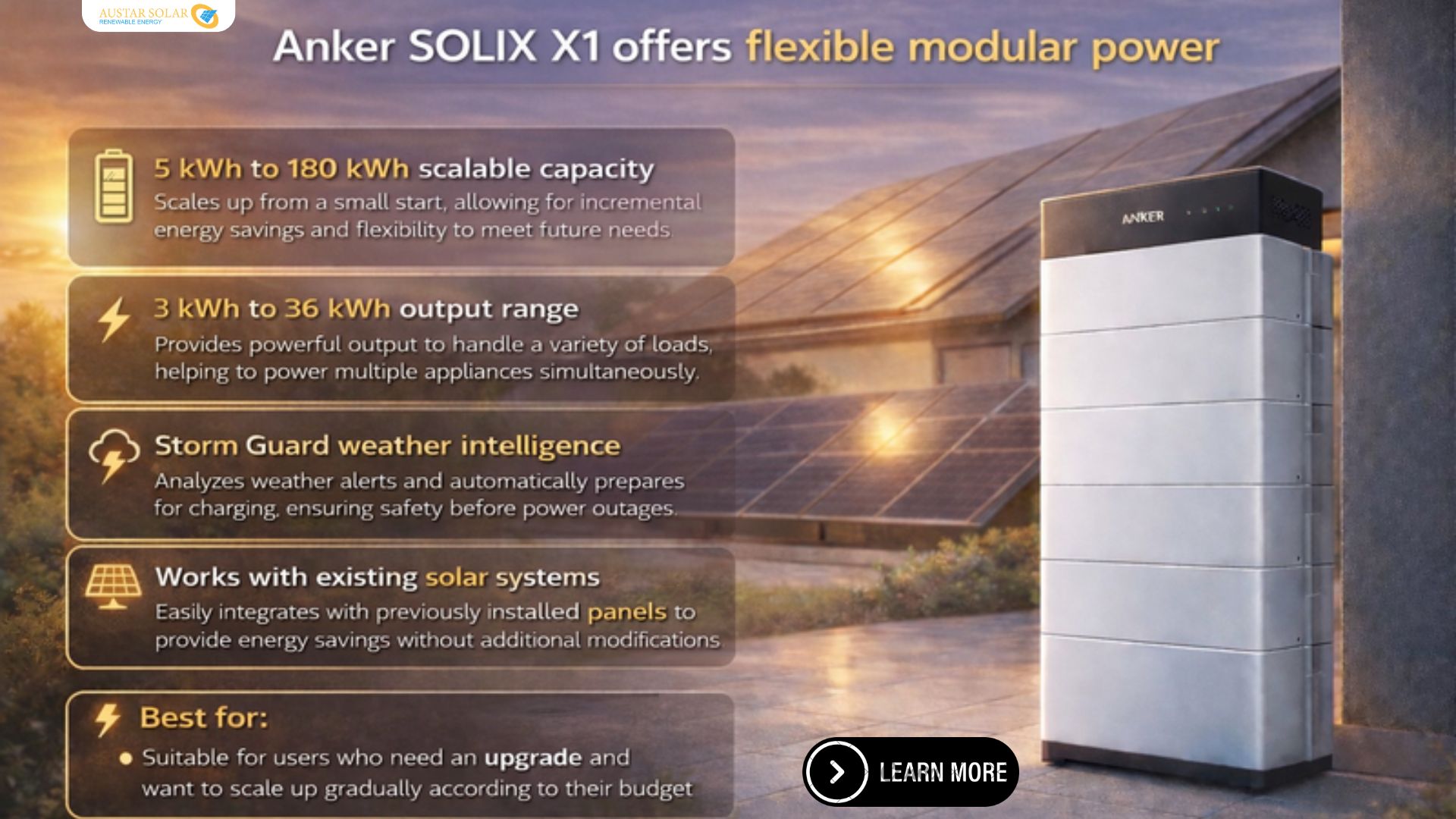
The features and price of the Anker Solix X1 make it a highly adaptable solution for modern home power systems, where its modular structure allows for storage to be expanded as needed. It provides easy integration with existing solar setups, ensuring long-term energy management.
key features
- 5 kWh to 180 kWh scalable capacity: Scales up from a small start, allowing for incremental energy savings and flexibility to meet future needs.
- 3 kWh to 36 kWh output range: Provides powerful output to handle a variety of loads, helping to power multiple appliances simultaneously.
- Storm Guard weather intelligence: Analyzes weather alerts and automatically prepares for charging, ensuring safety before power outages.
- Works with existing solar systems: Easily integrates with previously installed panels to provide energy savings without additional modifications.
Best for: Users who need an upgrade and want to scale gradually according to their budget.
Key Comparison: Anker SOLIX X1 vs Tesla Powerwall 3
| Feature | Tesla Powerwall 3 | Anker SOLIX X1 |
| Capacity | 13.5 kWh | (5 kWh to 180 kWh) |
| Cell Type | LFP (Lithium Iron Phosphate) | LiFePO₄ (LFP) / Lithium Iron Phosphate |
| Power | 11.5 kW | 3 kWh to 36 kWh |
| Efficiency | 97.5% | 90.2% |
| Installation | DC-coupled, pro install | AC & hybrid, flexible install |
| Dimension | 1105 × 609 × 193 mm | 670 × 360 × 150 mm |
| Weight | 130 kg | 51 kg |
| Warranty | 10 years | 10 years + capacity guarantee |
This solar battery storage comparison shows Tesla focuses on simplicity, while Anker excels in flexibility.
1. Scalability vs Simplicity
The most important thing about the Anker Solix X1 compared to the Tesla Powerwall 3 is the expandability and ease of use of the system, where a fixed structure based on a specific capacity on the one hand and a modular architecture that can be expanded step by step on the other hand provide two different experiences. As a result, it is much more effective to make decisions based on the user’s needs, budget, and plans.
- Tesla: Fixed system → Add full unit for expansion: If additional storage is needed in this fixed capacity system, a completely new unit has to be added. This keeps the installation process simple, but requires a relatively high investment in future upgrades and maintains stable performance centered on a single unit.
- Anker: Modular system → Expand step-by-step: Due to the module-based design, new units can be added as needed over time, making it possible to gradually expand the system and control user costs while increasing flexibility.
Overall, the modular solar battery provides a more adaptable solution than the fixed battery, as it ensures custom scaling benefits according to individual needs and helps manage the investment more efficiently in the long term.
2. Performance in the Australian climate
Reliable energy storage is crucial in Australia’s varied climate, where stable performance is required in high temperatures and changing environments. As a result, using advanced thermal control and robust battery design ensures consistent output over the long term and makes residential energy storage systems more efficient.
- Tesla: Strong thermal management → ideal for hot regions: Advanced cooling technology keeps the battery temperature under control, resulting in stable performance and reduced degradation even in hot weather.
- Anker: Works even at extreme cold (-20°C): With a wide operating range, it works effectively even in cold environments and provides reliable backup in various climate conditions.
3. Smart Features & User Experience
User interface and automation play a very important role in modern home energy management systems. Where intuitive mobile applications, real-time monitoring, and smart connectivity combine to make control over energy use easier and more effective, daily management can be completed uninterrupted.
- Tesla App → Simple, automated, EV integration: Simple design and automation make it easy to use, while also providing seamless integration with Tesla vehicles and other devices.
- Anker App → Advanced control + circuit-level monitoring: Detailed control options and individual circuit monitoring allow for more accurate energy usage management.
4. Installation & Compatibility
Tesla Powerwall 3
- Best for new installations: Suitable for direct use in new solar setups, where the entire system is designed together, and the installation process is simple and fast.
- Integrated system reduces complexity: The built-in inverter and integrated design require fewer separate components, resulting in less wiring and configuration complexity and easier overall system management.
Anker SOLIX X1
- Ideal for a solar battery for an existing solar system: Easily connects to previously installed solar panels, adding battery storage without additional modifications.
- Works with microinverters & string inverters: Compatible with a variety of inverter technologies, it provides greater flexibility in retrofit setups and reduces compatibility issues.
Pricing & Value in Australia
- Tesla → The Tesla Powerwall 3 offers strong value for Australian homes, starting at $11,899 AUD. With rebates up to $1,500 and federal STC incentives reducing costs by $1,500–$2,500, the effective price becomes more affordable. It’s a smart investment, providing high efficiency, integrated inverter technology, and the ability to cut electricity bills by up to 70%, ensuring energy independence and reliable backup power.
- Anker →Anker SOLIX 30kWh + 5kW Hybrid Inverter starts from $10,999, offering smart energy savings, lower bills, and scalable solar storage for Australian homes.
Government rebates and grants breakdown
1. Tesla Powerwall 3
Base cost: ~$12,799 AUD
Possible rebates and incentives:
Tesla Rebate: $750 per unit, max $1,500 if installing 2 units
Federal Small-scale Technology Certificates (STCs): ~$1,500–$2,500
Virtual Power Plant (VPP) Program: Extra credits by sharing stored energy with the grid
Effective price after rebates: Can be reduced by $3,000–$4,000 or more, depending on the combination of rebates and VPP participation.
Key point: Participating in VPP programs can provide ongoing credits, further reducing costs over time.
2. Anker SOLIX X1
Base cost: ~$14,899 AUD
Possible rebates and incentives:
Federal STCs: $2,500
NSW Home Battery Scheme: $3,000
Effective price after rebates: As low as ~$5,500
Key point: Rebates differ by state—NSW currently offers generous support, but other states may have smaller or no rebates.
FAQs on Anker SOLIX X1 vs Tesla Powerwall 3
Is Powerwall 3 better than Anker Solix X1?
If you want maximum power and simplicity, Tesla Powerwall 3 is better; for flexibility, scalability, and lower upfront cost, Anker SOLIX X1 is ideal.
Is the Anker Solix X1 battery any good?
Yes, the Anker SOLIX X1 is a reliable, safe, and modular home battery that offers flexibility, blackout protection, and easy integration with any solar system.
Which is the best solar battery in Australia 2026?
Choosing the best solar battery in Australia depends on the user’s needs, with Tesla being the best choice for high power and ease of use, while Anker is a more cost-effective solution for flexible expansion and low start-up costs.
Can I use a battery with my existing solar system?
If you have a pre-installed solar panel, Anker can be easily added, as it is retrofit-friendly and compatible with various inverters, so you don’t have to change the entire system.
How long does a home solar battery last?
Modern LFP batteries typically last 10–15 years, while with regular use and proper maintenance, performance remains stable for a long time, and efficiency does not decrease.
Which battery is better for power outages in Australia?
If you have frequent blackouts, a system with a high output capacity is more effective, as it can run multiple appliances at once and increase backup time.
Is it worth investing in solar battery storage in 2026?
Considering the current energy cost increases and grid instability, solar battery investment is profitable in the long term, as it reduces electricity bills, ensures backup, and helps achieve energy independence.
Anker SOLIX X1 and Tesla Powerwall 3: The Ultimate Choice for 2026
For Australian homeowners seeking reliable home battery solutions, the Anker SOLIX X1 vs Tesla Powerwall 3 comparison shows that both excel in performance, yet the right choice depends on energy needs and budget, with Tesla offering fixed high-power output for new systems, while Anker provides flexible, modular solar battery storage ideal for gradual expansion and cost control.